Image

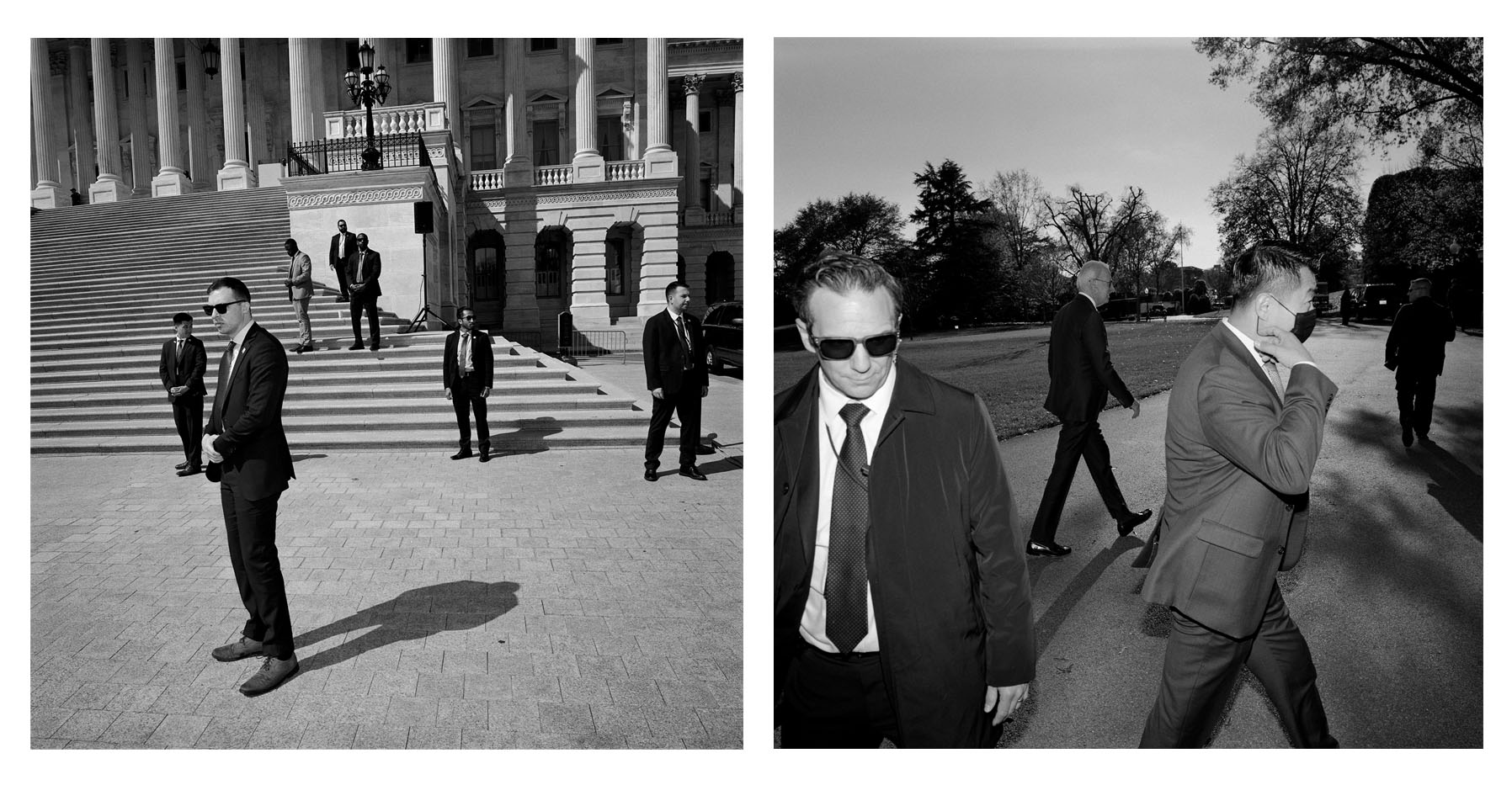
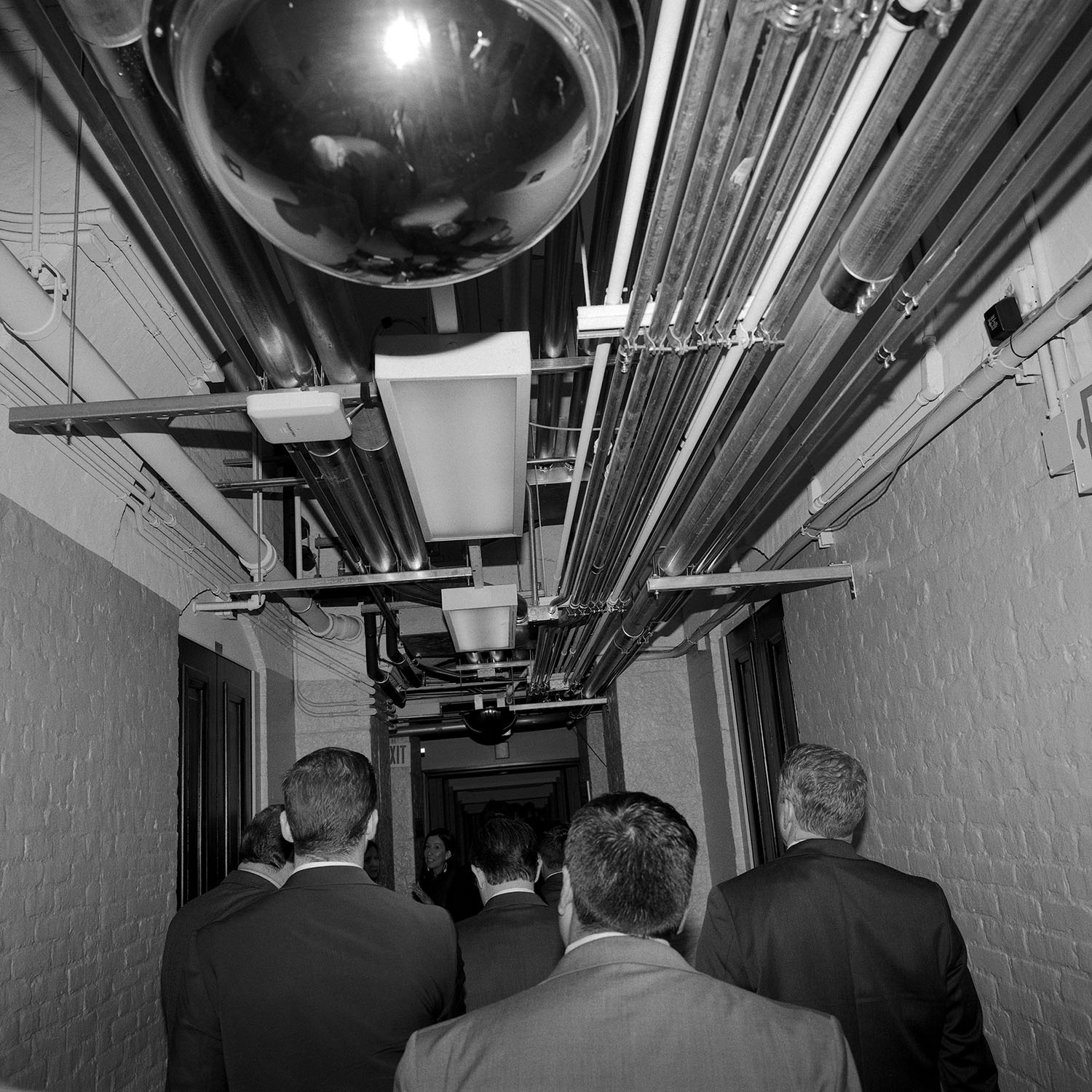
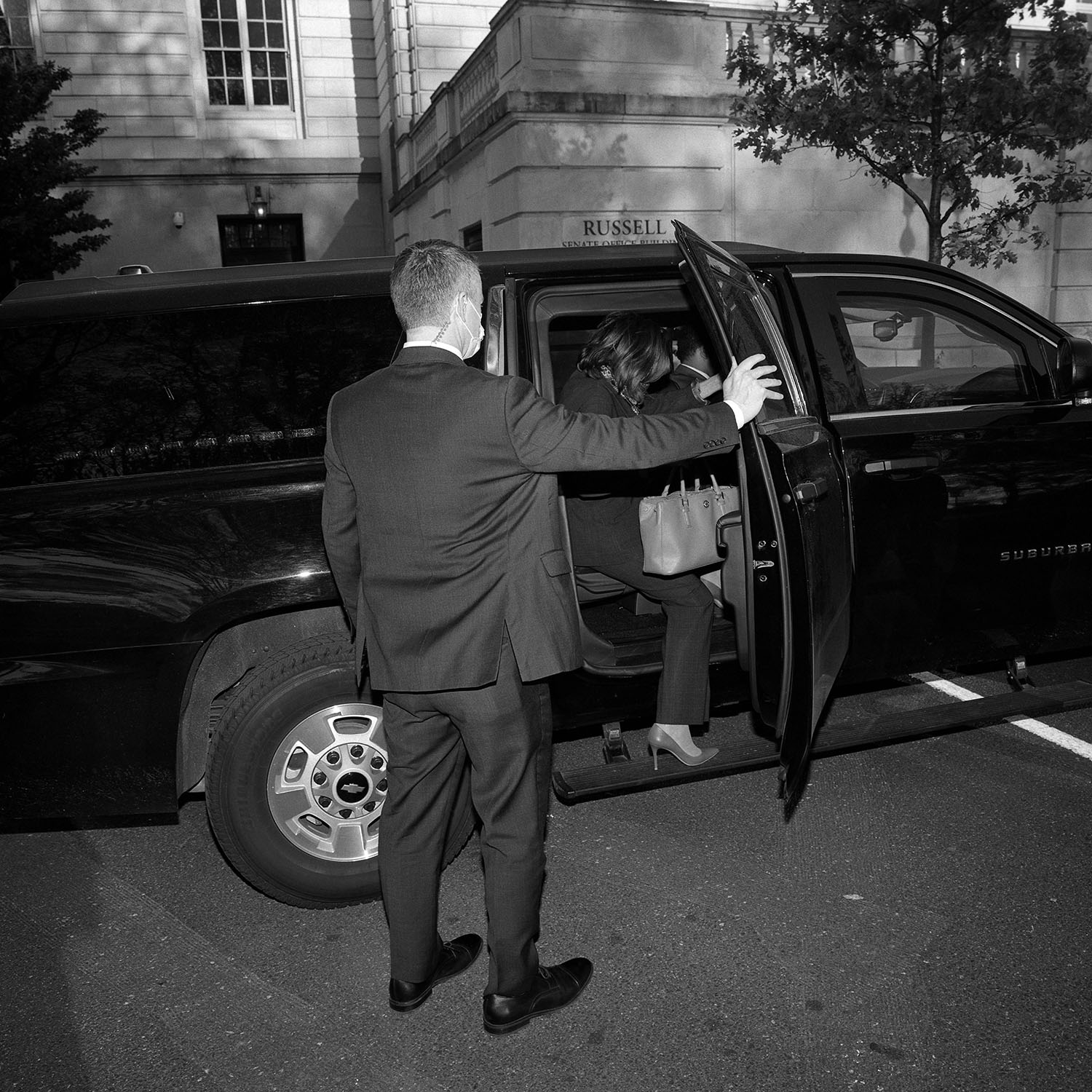
This is the sixth installment of “Seeing Political,” Louie Palu’s #VQRTrueStory column on the theater of politics in Washington D.C., produced in partnership with the Pulitzer Center. You can receive future installments of Palu’s column by following us on Instagram.
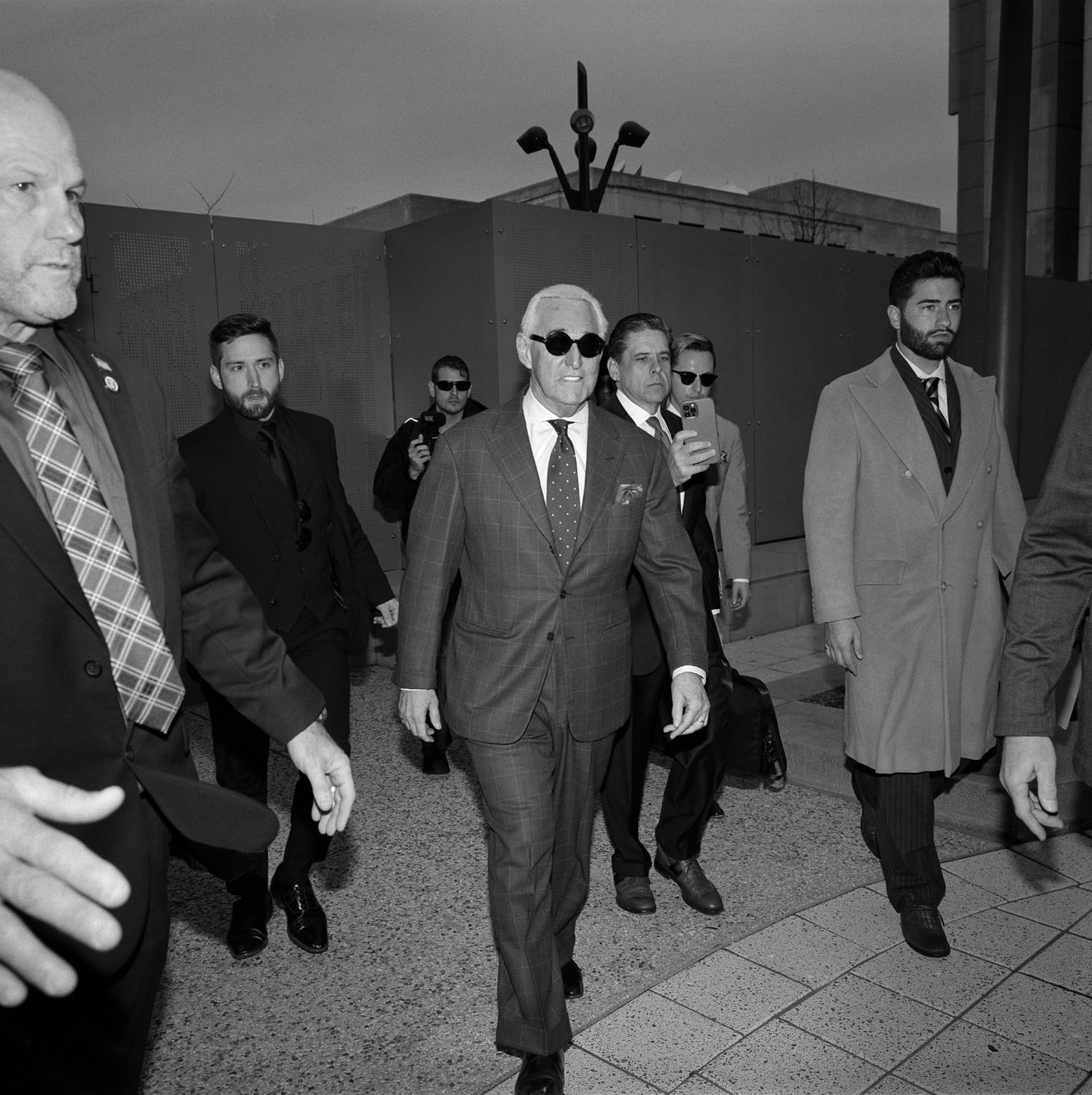
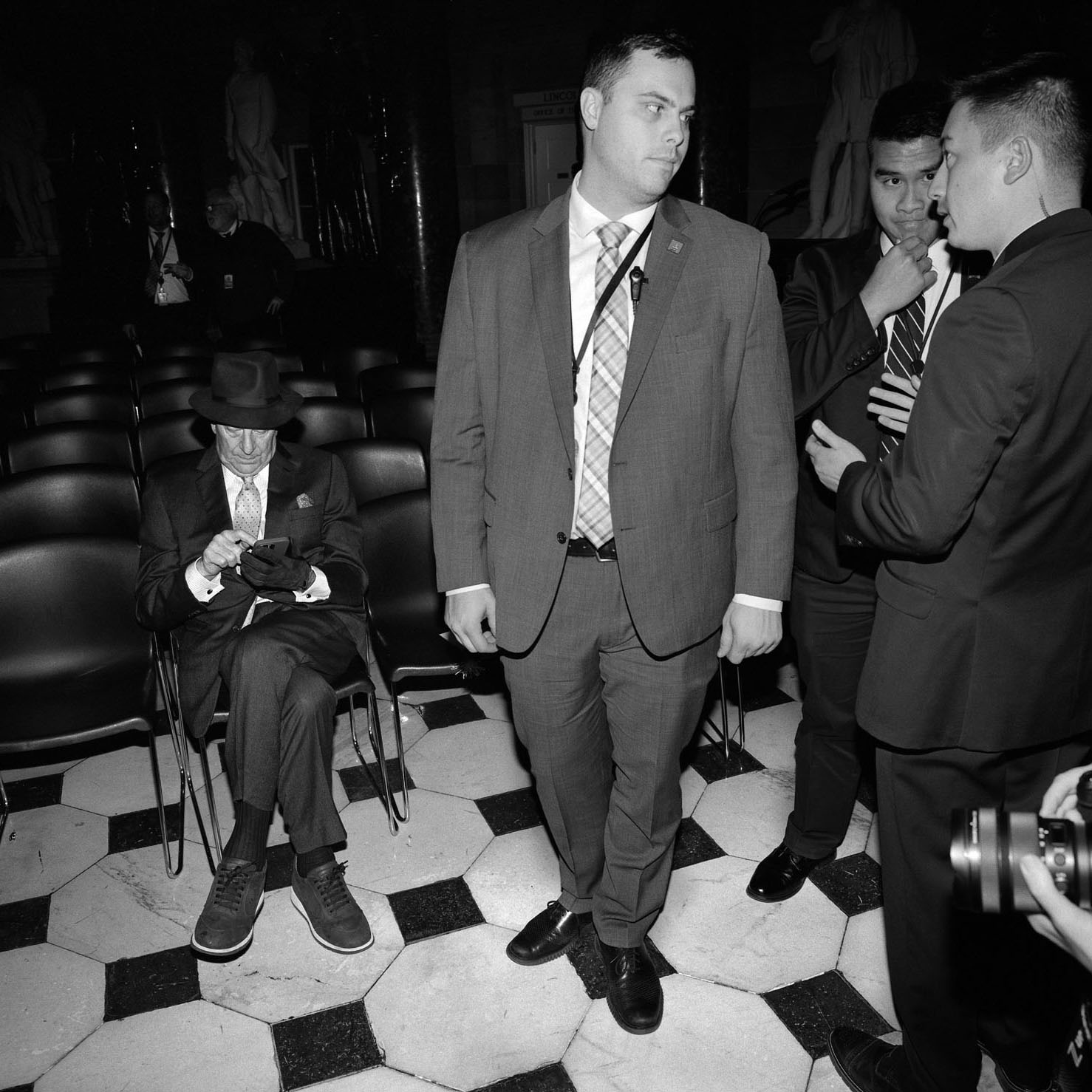
Washington, DC, has the highest ratio of law-enforcement officers to citizens of any state—from uniformed cops to plainclothes police to private security contractors. Navigating around a close-protection detail is essential to photographing politics, a testament to the blunt reality of political violence. This entourage in suits, earpieces, and sometimes sunglasses hovering on high alert around a political figure or whisking a VIP into a black SUV—they’re more than just precaution, they’re key to maintaining American democracy.
After the assassination of President William McKinley, in 1901, Congress assigned the Secret Service to protect the president. They must have foreseen the age to come. Since McKinley’s assassination, threats against US elected officials have ballooned. And yet violence was always part of the equation. Since 1782, political assassinations have felled four presidents, thirteen members of Congress, three federal judges, four governors, thirty-four state legislators, six state judges, and dozens more political figures. (Nearly all were shot; two died in bombings; three were stabbed.) In 2025, Capitol Police threat-assessment cases totalled 14,938, an increase of more than 50 percent from the previous record of 9,625 in 2021. This includes threats to members of Congress, their families, staff, and district offices. Security details have been expanded from simply congressional leadership to include rank-and-file members, but there aren’t the resources to cover every request for protection.
When Congress moved from Philadelphia to Washington, DC, a single watchman was hired to protect the Capitol building; today there are more than 2,300 Capitol Police. The stats seem like an arms race—more threats, more police; more police, more threats.
Digging through the Capitol Police website, unearthing the force’s history and strategy, a solution seems to lie in language, not arsenal: “Decreasing violent political rhetoric is one of the best ways to decrease the number of threats across the country.” Which begs the question: Are we listening as much as we’re talking?

Louie Palu is a photographer and filmmaker whose work has received a Guggenheim Fellowship and World Press Photo Award. Based in Washington, DC, he has covered US foreign policy and politics for twenty years.