Image

This is the second installment of “Seeing Political,” Louie Palu’s #VQRTrueStory column on the theater of politics in Washington D.C., produced in partnership with the Pulitzer Center. You can receive future installments of Palu’s column by following us on Instagram.
The earliest recordings of a US president are of Benjamin Harrison, made sometime between 1894 and 1899. It’s widely believed that Rutherford B. Hayes beat him to it, but that evidence is lost. We can only guess what the first twenty-two presidents sounded like.
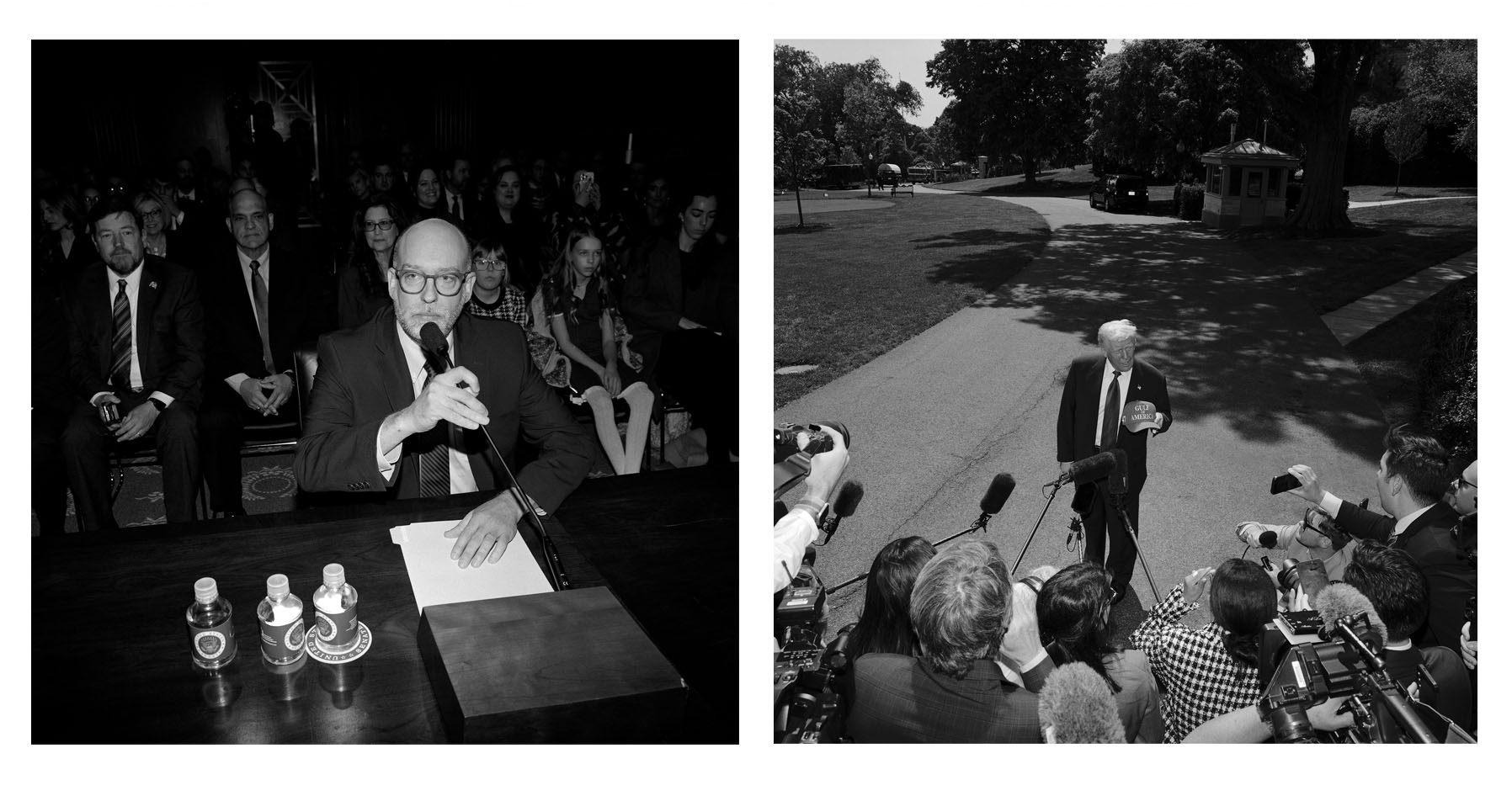
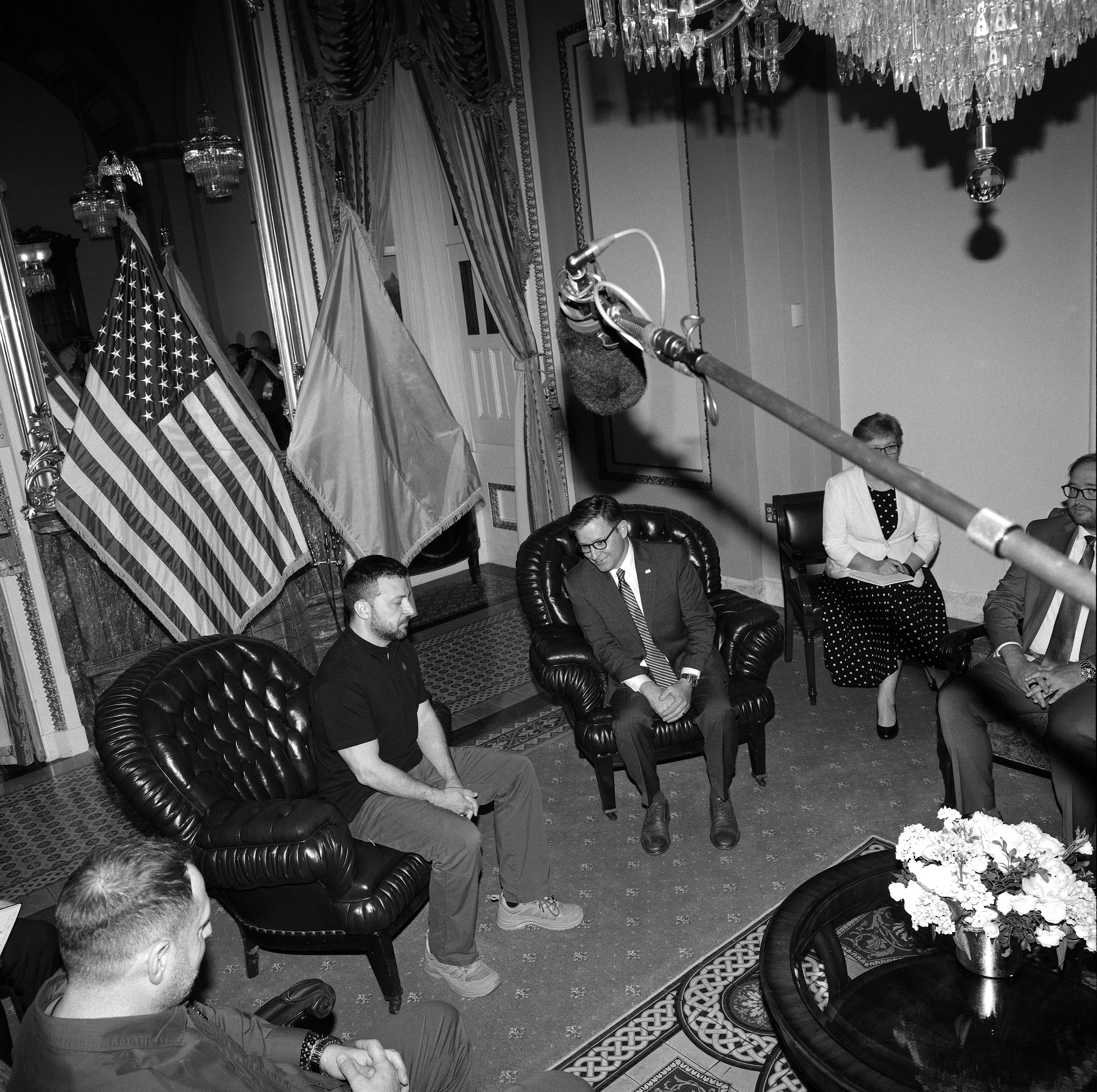
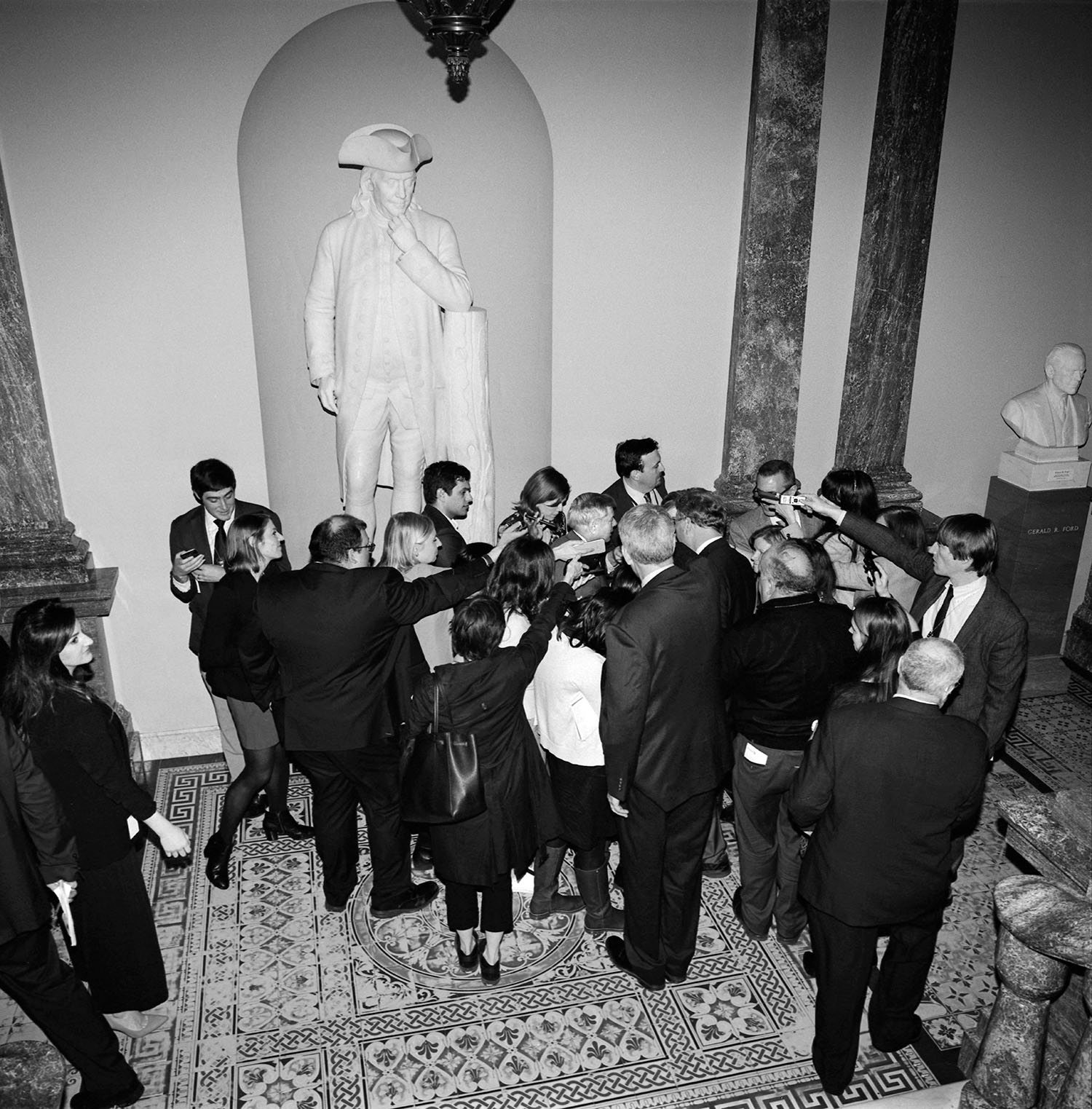
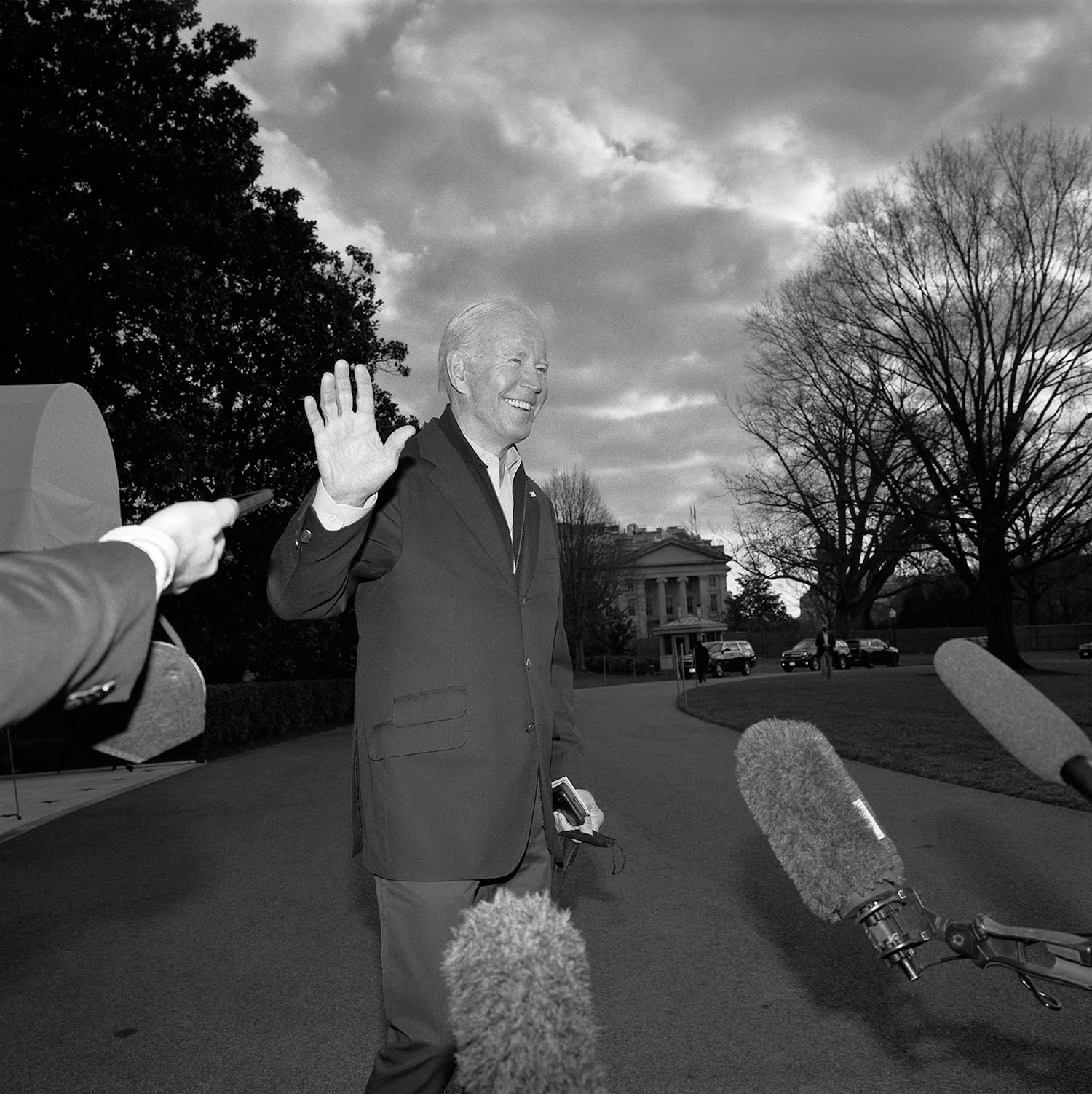
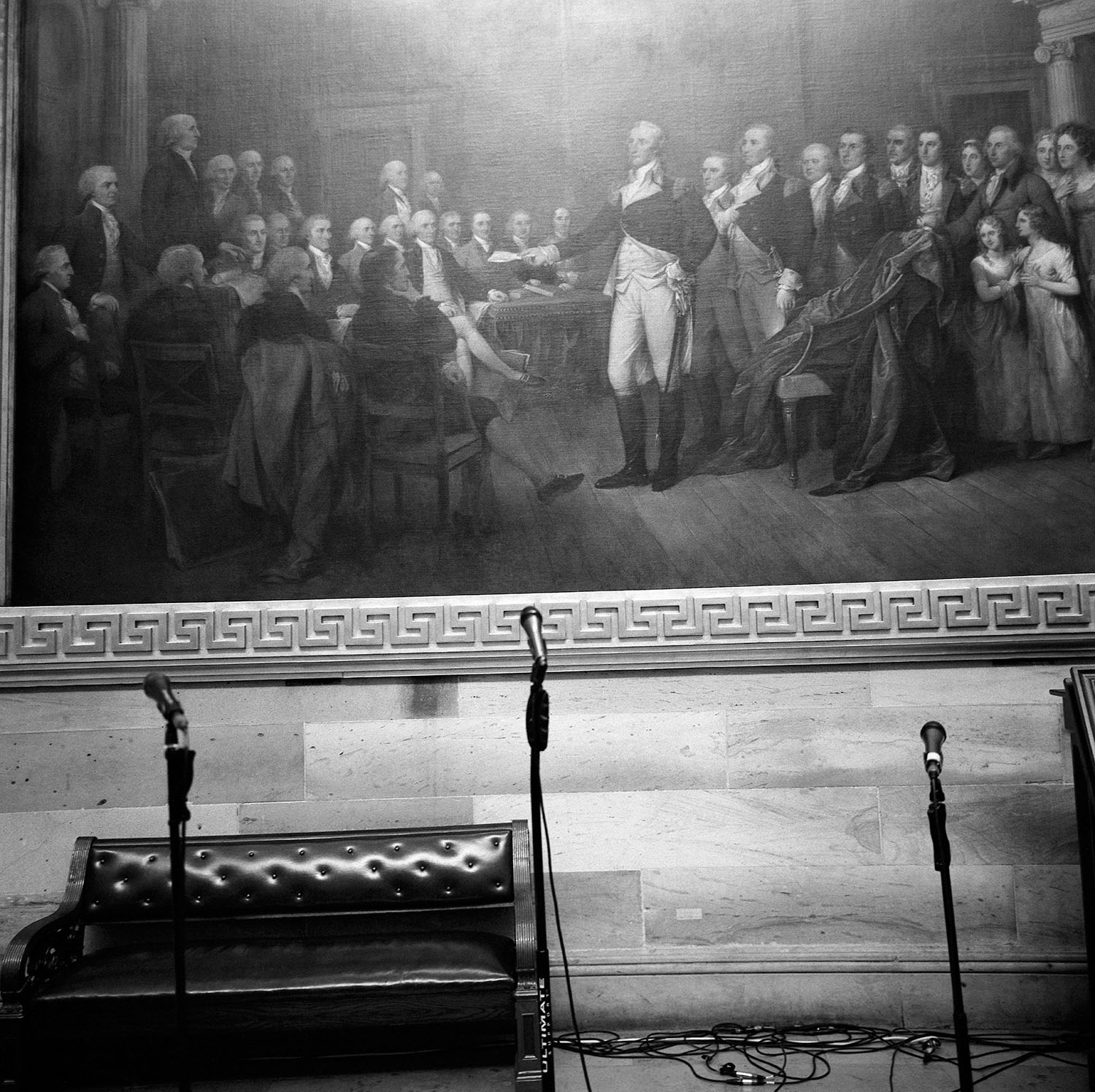
When photographing politics in DC, microphones are always flirting with the frame. Photographers jostle for position just to avoid reporters’ heads and especially their recording devices. Somehow, microphones became an insufferable anomaly to the visual moment, as if the mics were never really there. The various species of invasive mics include podium mics, handheld mics, phones, shotgun mics on boom poles, many of which wear furry covers known as “dead cats” to reduce distorting noise from wind or a breeze. At the Capitol, reporters trail members of Congress between votes or other tasks, peppering them with questions, while the senators’ staff also record what’s being said—insurance that the boss was quoted accurately. By the end of the week, hours of audio have piled up.
Of all the ways in which journalists can record the moment on Capitol Hill, audio has the fewest rules to follow (except for in the Senate or House chambers, where journalists can record only on rare occasions). Photography is limited to specific floors and hallways. Video, meanwhile, is heavily restricted. Most of the audio recorded in politics is to inform written reporting, whereas photography and video are the final product. I have to point my lens at what I want to photograph—a dead giveaway. But a mic can be concealed or held in the vicinity of what one would want to record. A mic can be indirect, and in that sense better at capturing facts when someone’s guard is down. I often wonder about what we don’t hear in rooms where officials can speak without concern for the invasive tools of reporting, the deeper discussion happening off script. Once in a while, a hot mic captures a truth that’s off message, and an unintended headline follows. Arguably, the most infamous political recordings of all time—deleted segments from President Nixon’s conversations in the Old Executive Office Building—are ones that don’t even exist.

Louie Palu’s projects have been selected for a Guggenheim Fellowship, Arnold Newman Prize, and World Press Photo Award. His work has appeared in The New York Times, The Washington Post, National Geographic, the Guardian, Der Spiegel, Le Figaro, and El País. His work...