Image

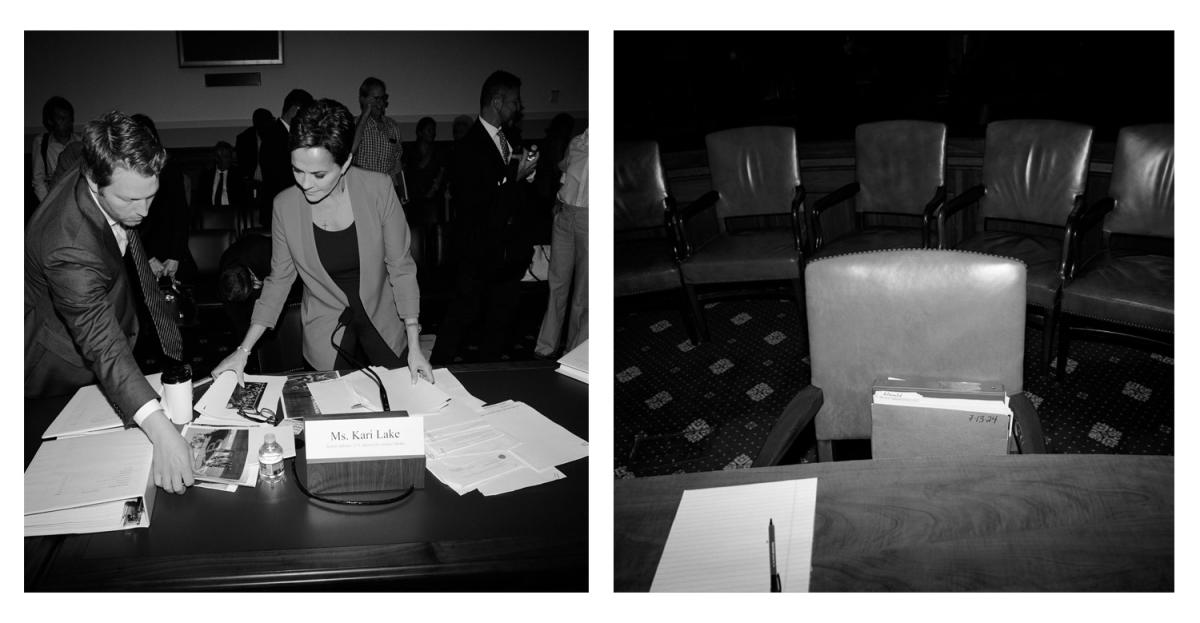
This is the seventh installment of “Seeing Political,” Louie Palu’s #VQRTrueStory column on the theater of politics in Washington D.C., produced in partnership with the Pulitzer Center. You can receive future installments of Palu’s column by following us on Instagram.
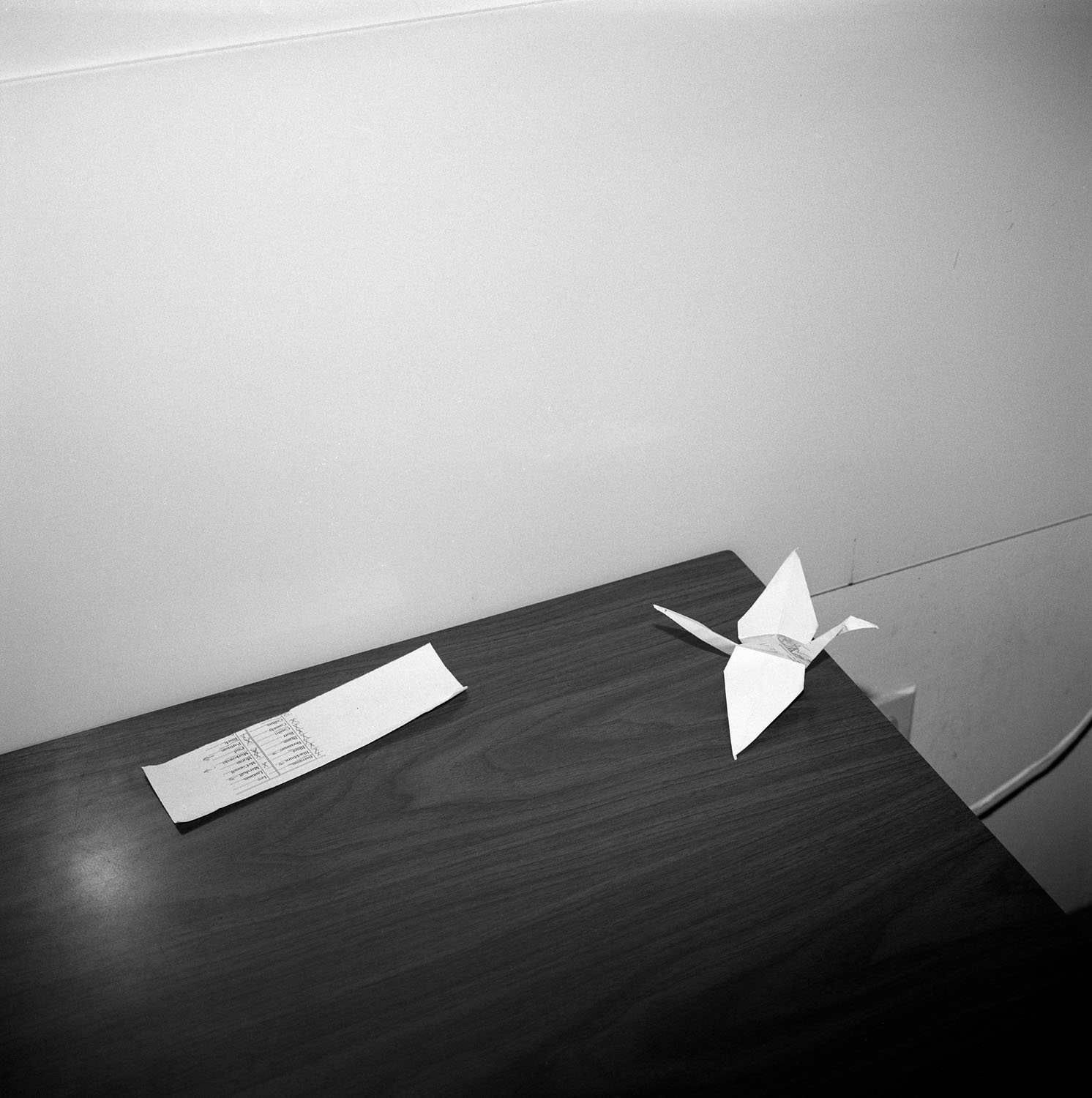
I recently saw an original press photo print of Lyndon B. Johnson taking the oath as president of the United States on Air Force One after the assassination of John F. Kennedy. The photograph, printed on silver gelatin photo paper, was a little worn, an artifact of its time. A caption and credit line were included on the print for attribution by the news outlets that reproduced it. These minor details reminded me of how easy it is to strip digital files of their metadata, including caption and authorship information. In a way, these details emphasized the often-undervalued importance of paper’s physicality.
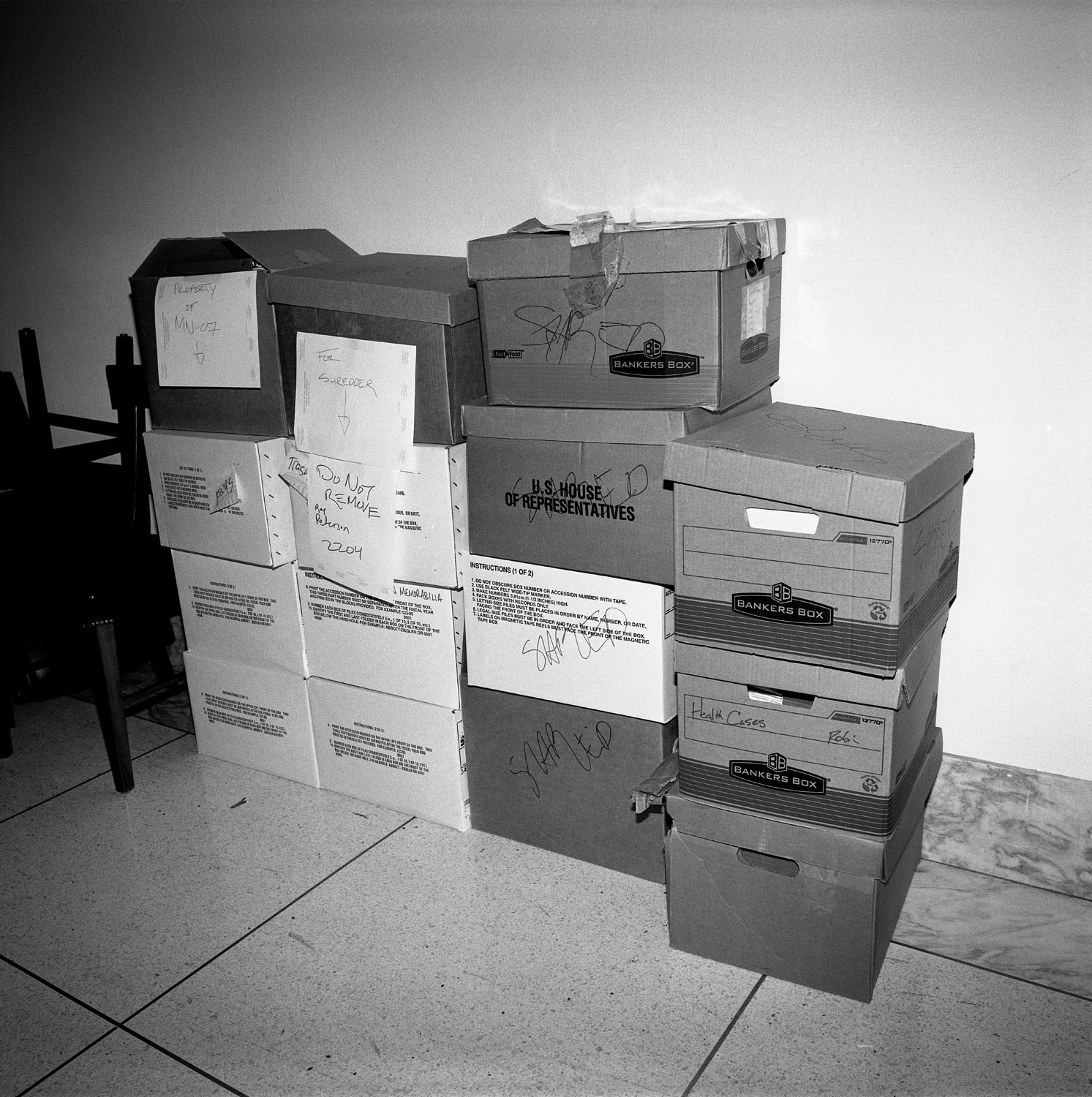
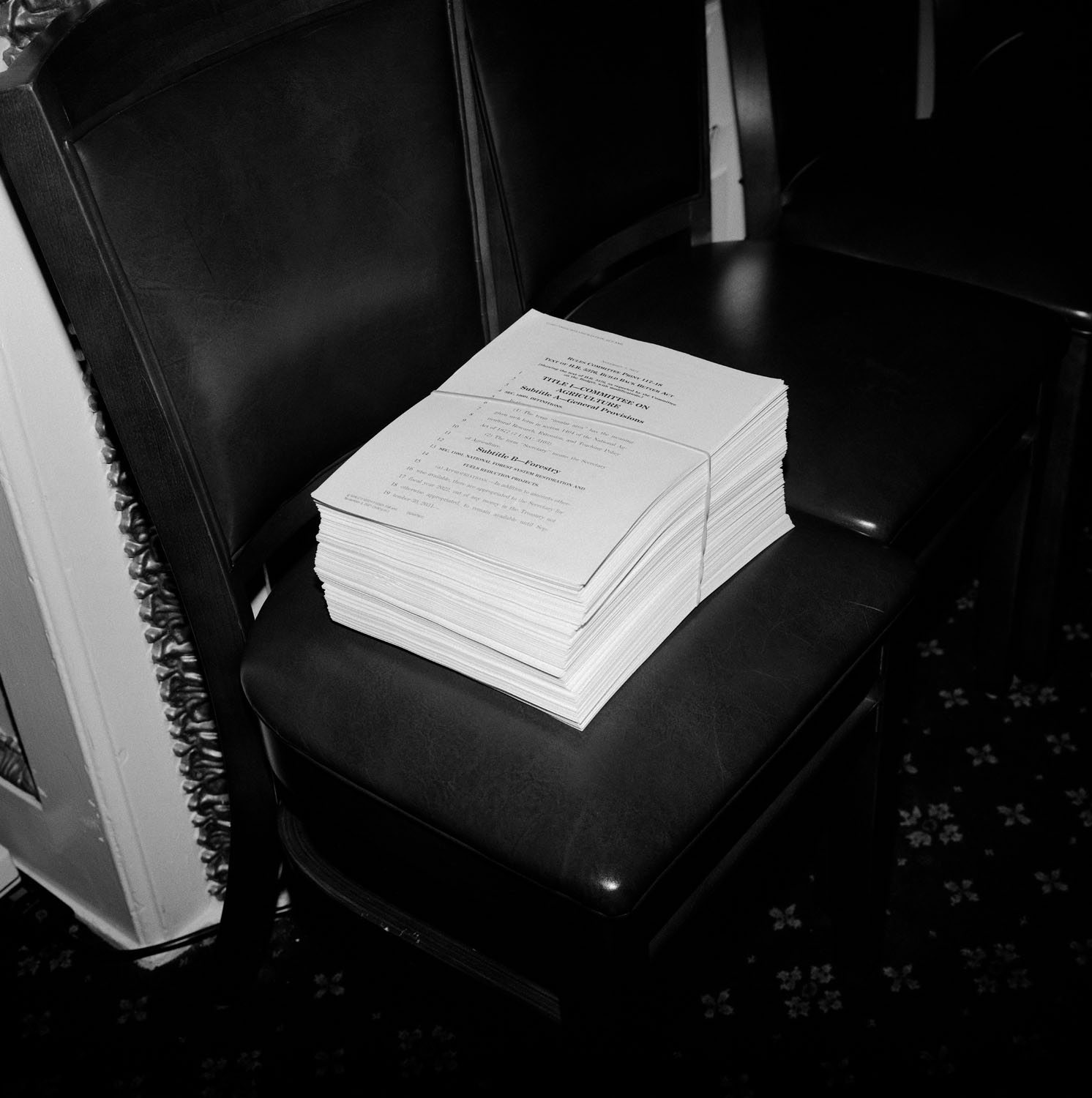
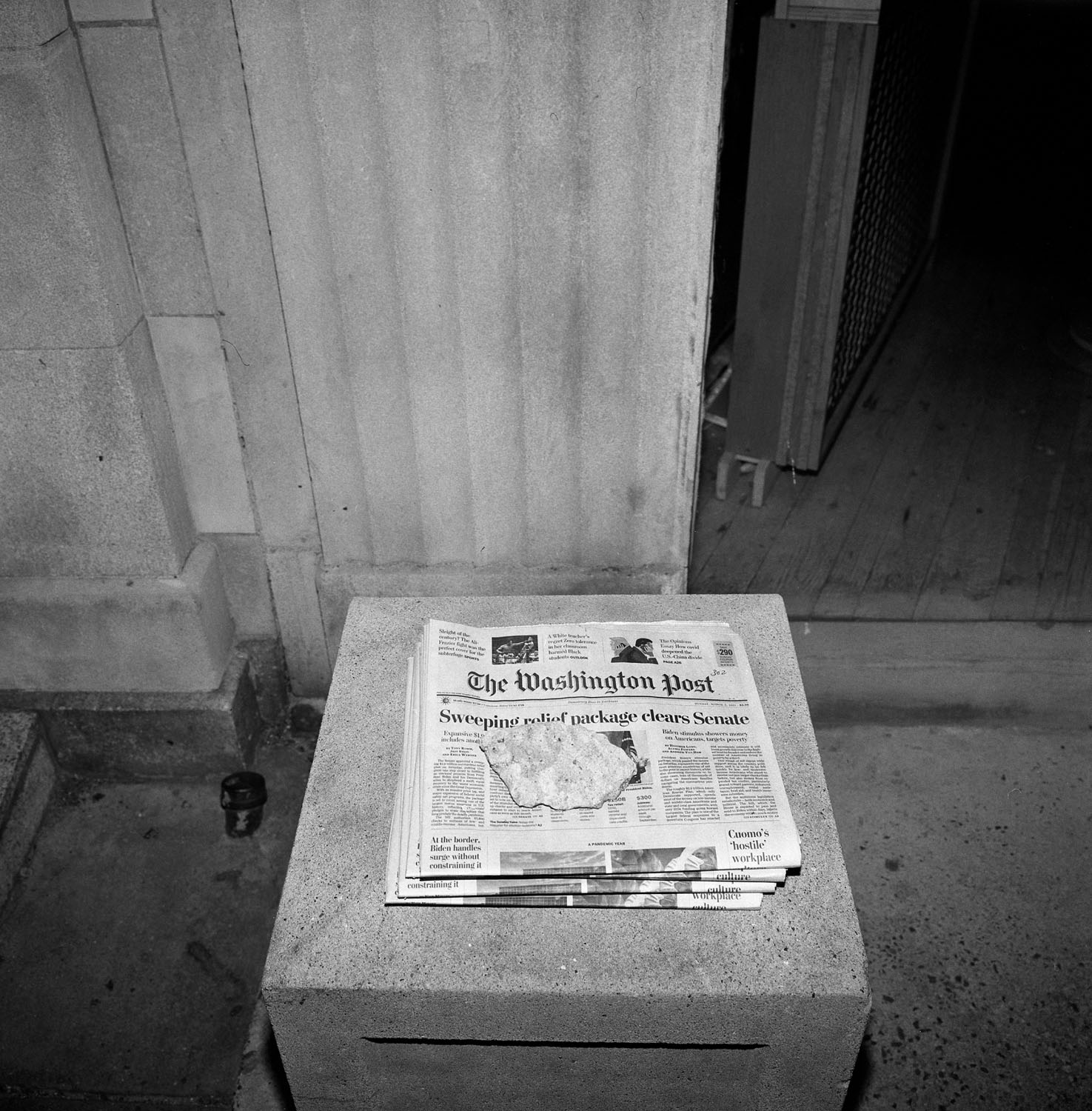
Walk the halls of the vast architectural landscape of bureaucracy on Capitol Hill for long enough, and you’ll see a lot of paper—an incalculable amount of it. These pages aren’t just busy work but a crucial tool of oversight. The tonnage of suffocatingly mundane stacks of paper are the nuts and bolts that hold history together, as well as a measure of accountability. Paper trails are indispensable. If a digital file is hacked, corrupted, or a hard drive fails, there is usually a hard copy as backup. That seems obvious, but it’s an increasingly rarified step. Many of America’s most important documents are stored in institutions such as the Library of Congress, the Smithsonian, and the National Archives, where they can be accessed for purposes ranging from legal to historical research.
As the digital age barrels forward, the digital network has exploded, with digital documents moving to data centers we cannot access physically. I remember seeing the 2021 Infrastructure Investment and Jobs Act—physically, a bill that was nearly a foot thick—in a House Rules Committee hearing room. If stored archivally, someone could touch and turn those pages a century from now, and no technology, electricity, or outdated digital format would prevent them from reviewing it. Despite the assurances of cybersecurity and encryption, preserving history as just code seems dangerously vulnerable. If being aggressively human is a form of digital resistance, the paper trail is evidence of that movement.

Louie Palu’s projects have been selected for a Guggenheim Fellowship, Arnold Newman Prize, and World Press Photo Award. His work has appeared in The New York Times, The Washington Post, National Geographic, the Guardian, Der Spiegel, Le Figaro, and El País. His work...