Image

This is the fourth installment of “Seeing Political,” Louie Palu’s #VQRTrueStory column on the theater of politics in Washington D.C., produced in partnership with the Pulitzer Center. You can receive future installments of Palu’s column by following us on Instagram.
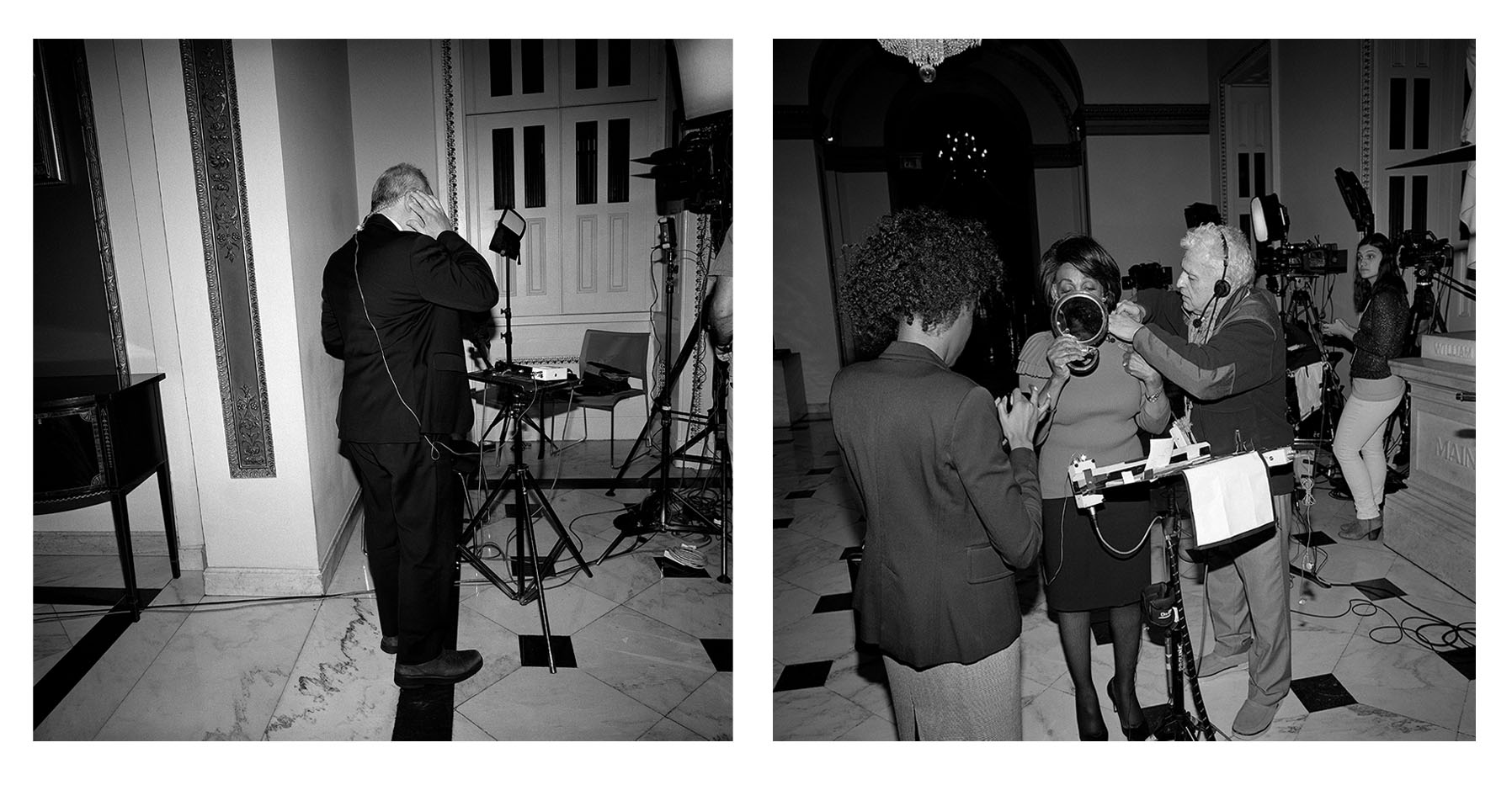
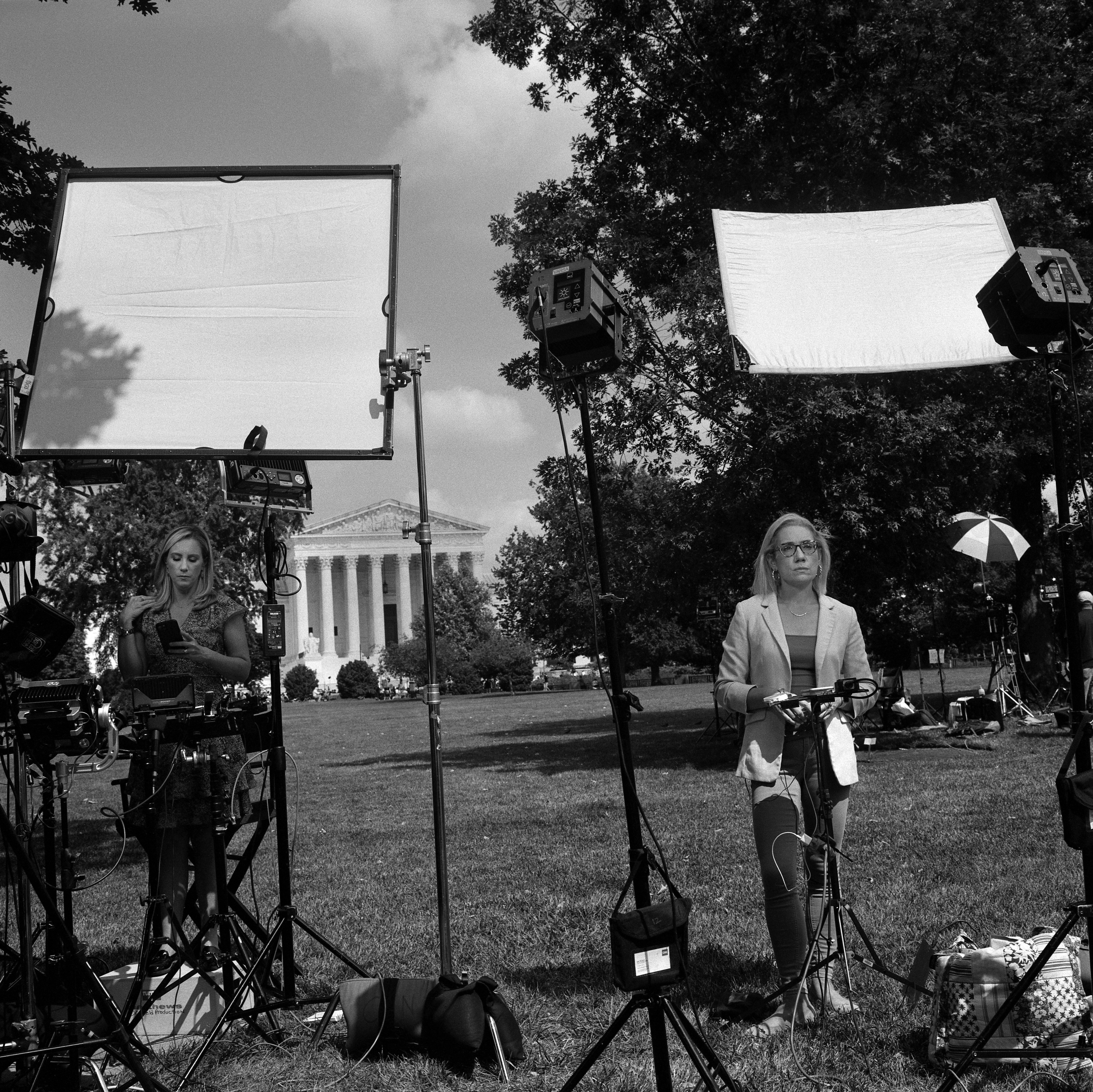
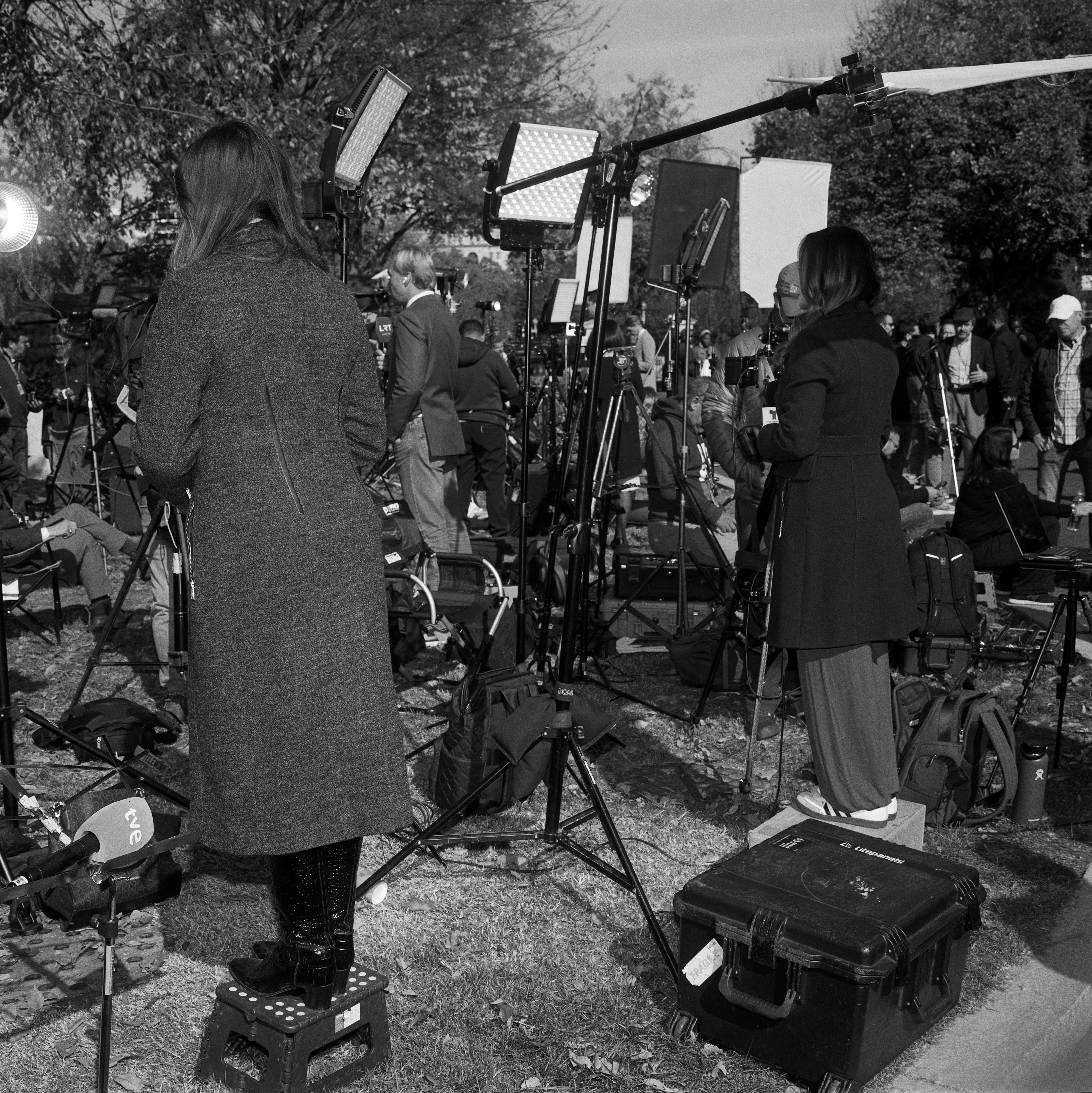
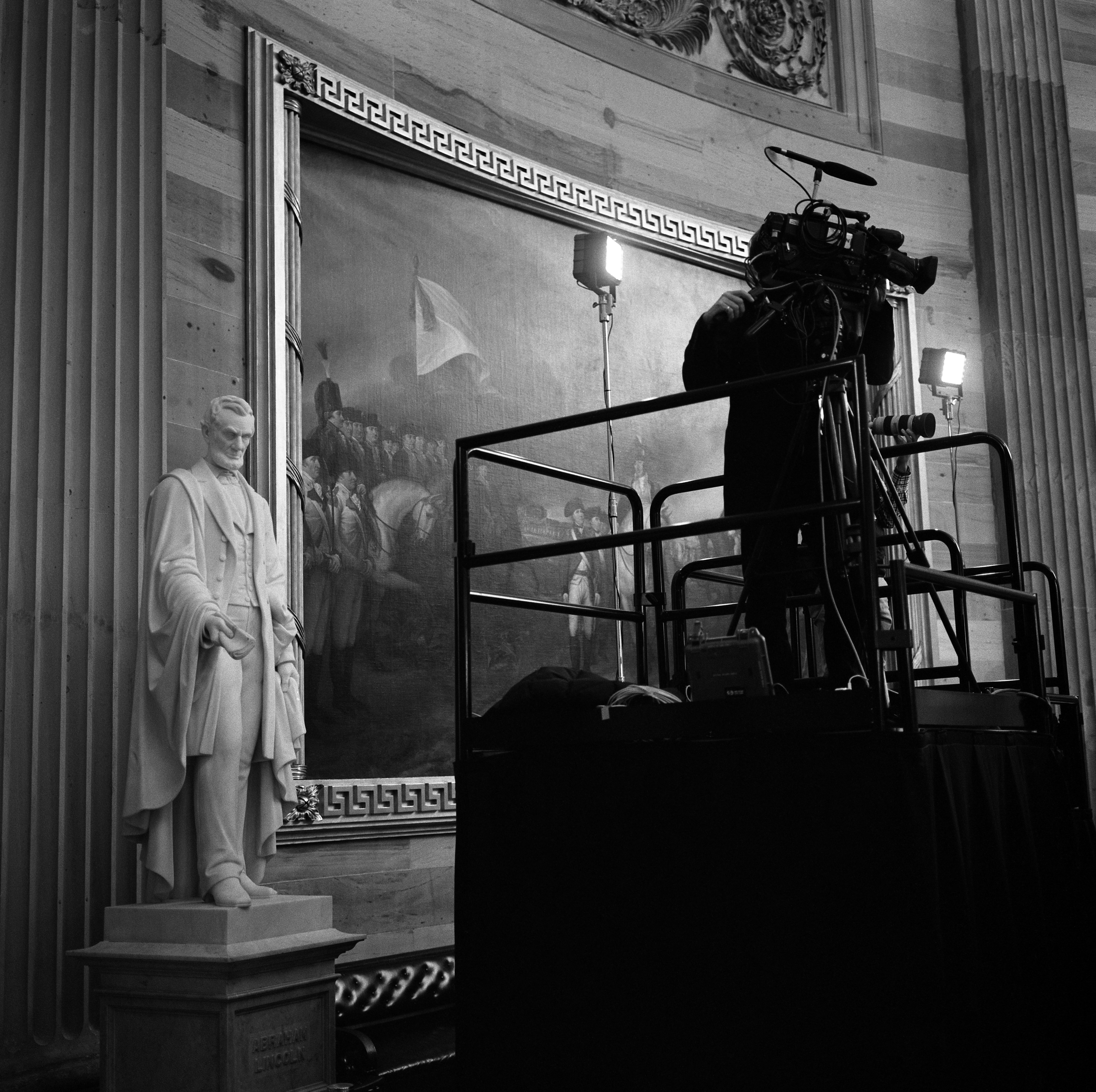
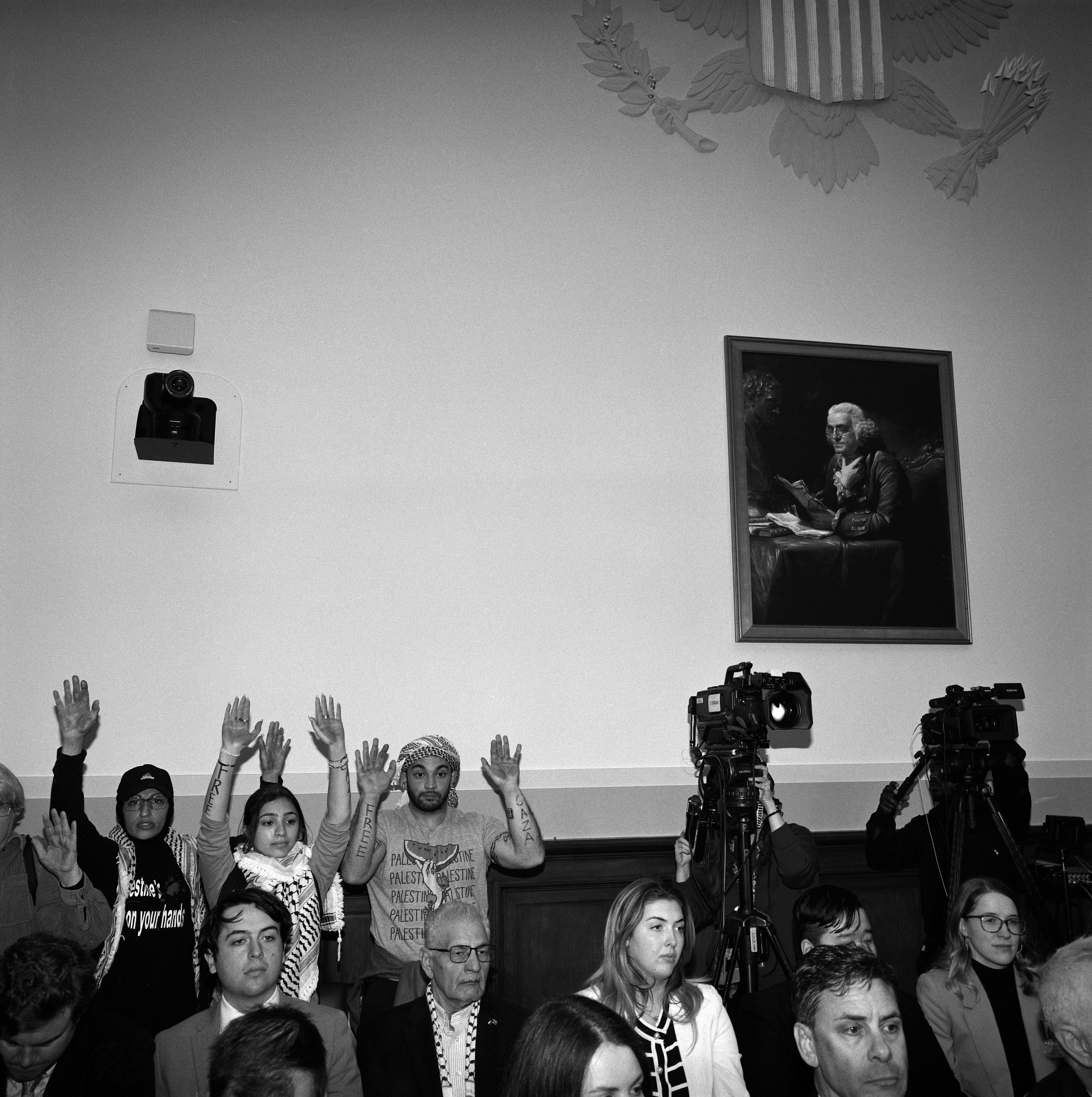
Leaving the White House, a TV-camera operator waves and says, “See you in the wide shots”—a reference to being out of the frame once they’ve zoomed in tight on a designated speaker. The saying is testament to the fact that what is broadcast in those moments isn’t necessarily what is happening on the ground. Absent is the craft of this trade, much of which is dedicated to appearance. Having your makeup done, for instance. Sometimes television reporters stand on a stool or box to line their height with the White House, Capitol, or a tall interviewee. When there are too many of us covering an event, out of courtesy or protocol, the still photographers sit on stools below the TV cameras’ line of sight or are on ladders above and behind them. Occasionally it’s a free-for-all, and we all do our best (or not) to not knock one another over when, say, a witness exits a hearing. Photographers move around a lot, whereas video is usually on a tripod, so we have to be careful not to shake the floor of any staging, resulting in vibrating video. At the White House, there are television cameras (some manually operated, some remote-controlled) on 24/7 in case something requires a last-minute network broadcast. A veteran camera operator told me that the most TV cameras he’d seen before was during the Monica Lewinsky affair. Now there are millions of cameras everywhere, including in our pockets, which can live stream without a satellite truck. At a press conference related to the Trump administration’s takeover of Washington, DC’s police force and deployment of the National Guard, I counted fourteen professional video cameras on tripods, four lights on stands, and seven microphones wired into the same single output. Both Republicans and Democrats held press conferences nearly every day of the government shutdown, one criticizing the other and the other dishing it back. The visuals were redundant: same podium, same lighting, similar background, a straight-on angle. Repetition is revealing. The speeches were different, but the faces, the body language...these revealed the mechanical ritual of the political act.

Louie Palu’s projects have been selected for a Guggenheim Fellowship, Arnold Newman Prize, and World Press Photo Award. His work has appeared in The New York Times, The Washington Post, National Geographic, the Guardian, Der Spiegel, Le Figaro, and El País. His work...