Image


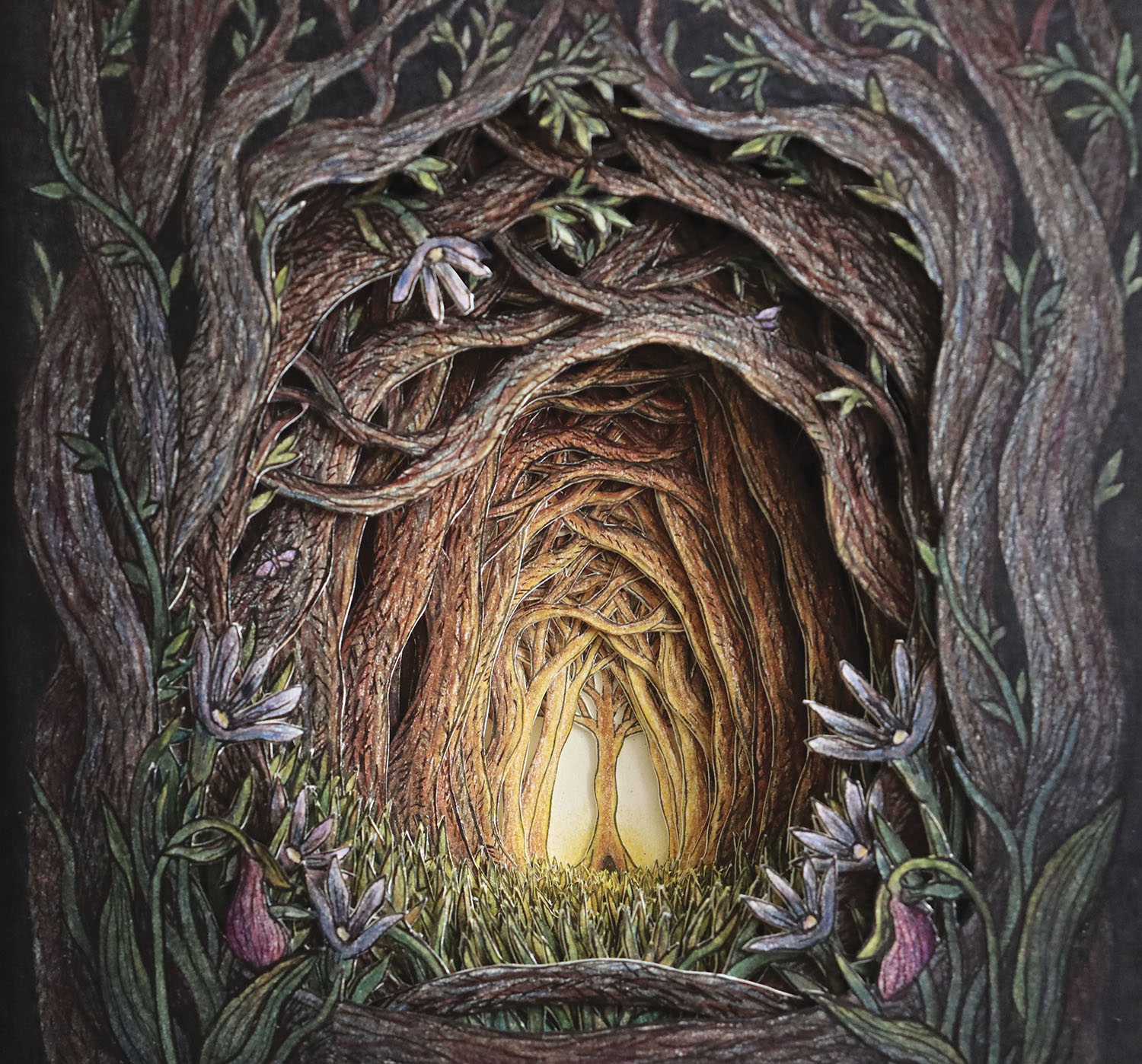
That’s a dangerous game. It has consequences. The forest avenges itself.
—Henrik Ibsen, The Wild Duck
There were four huts along the trail, which followed the remains of a forgotten road hewn into the side of a forested ridge. The goal was the Whanganui River, some twenty-five miles away, where hikers with money could arrange to meet a boat to take them back to civilization. I had no money, so I would make it a weeklong trek, doubling back to the same trailhead where I started.
In New Zealand, almost nothing in the forest can hurt you. There are no venomous snakes, lizards, or scorpions, no wild animals with a taste for human blood. The only dangers are accidents, other human beings, and yourself. When I made the trek in 1985, the risk was so minimal that I planned to hitchhike home after tramping to the river and back.
I had been living for several months on a small but prosperous farm on the west coast of the North Island. The local industry was sheep farming; the landscape—gentle hills covered with a luxurious carpet of grass—was perfect for it. My father’s cousin, with whom I was staying, had left America in the 1960s to marry a New Zealand man, Richie, in whom she found the perfect embodiment of the taciturn but good-humored, self-reliant farmer that was an endangered species in her homeland. I had never met Jean, but my father spoke fondly of her, and her Christmas cards came with postage-stamp views of snowcapped Mount Egmont and kiwi birds. Before matriculating at university, I decided to spend a half year in the Antipodes, working on my cousin’s farm and exploring New Zealand and Australia.
I worked hard and held my tongue when the topic turned to politics. I was reading Marx and Freud and fancied myself a radical, like one of those poetic revolutionaries who anatomizes the quaint customs of the local gentry in a Turgenev novel. I kept quiet and listened, rising with the family, gathering eggs and fetching the mail before breakfast. I aided Richie as best I could, and he eventually found ample amounts of unskilled labor to fill my time. I built fences; sprayed poison on the weeds that grew in great, tufted clumps in the paddocks; and helped to gather and stomp into bales the filthy wool that fell to the shearing-shed floor when the sheep were fleeced.
My cousin didn’t quite know what to do with me. I worked all day and read in the evening, ate and slept with the family, and showed no interest in riotous living. Perhaps they felt they were taking advantage of me. One evening, over dinner, Jean proposed I take a holiday from my holiday, and hike to the Whanganui River. I had said I loved to hike and inflated my experience of the outdoors with stories of winter ski treks in the Sierra Nevada and nights sleeping alone under the stars on the desert sand. I told these stories rhapsodically, and they were mostly true, but they left an exaggerated sense of my competence. I had indeed gone skiing in the Sierras, but in the company of skilled guides; in the summer, I occasionally slept outdoors without a tent, but those were restless, anxious nights.
When the Whanganui hike was proposed, I demurred for want of proper equipment. But Jean kindly bought me a backpack, found me a bedroll, and supplied me with food that required no cooking: a large block of cheese, some bread, fruit, and dried cereal. The prospect of a week alone in the forest of New Zealand became a reality faster than I could think of an excuse to avoid it, and suddenly I was in the car being driven to the Kohi Saddle trailhead, doing my best to sound excited.
And then I found myself alone, on the side of the road, staring at an opening in the dense green thickets of brush and trees. I thought I’d wait until the first car passed, just to gauge the frequency of traffic, to get a better sense of how hard it would be to hitchhike home in a week. But I felt rather foolish standing there idly, looking up and down a narrow, two-lane road, listening for cars as my ears adjusted to the buzzing noises of the forest. It would be easier just to get on with it.
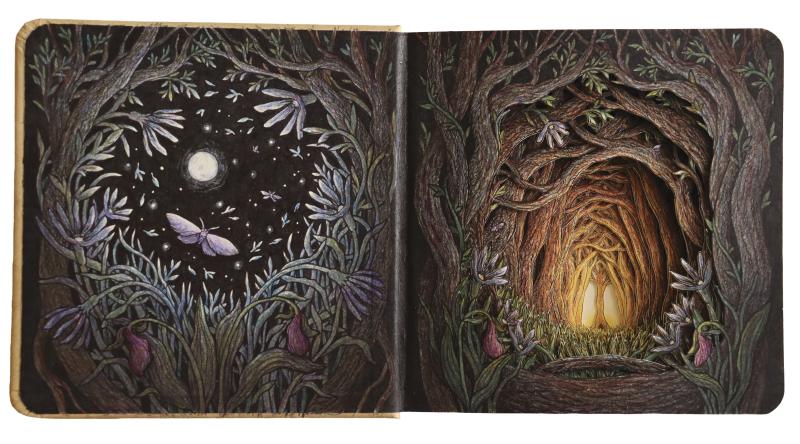
The trees cast a heavy shade, and ferns and grass crowded the margins of the trail, which was matted with fallen fronds and foliage. The leaves were thick and rubbery, and the forest smelled sickly sweet, wet, and rotten. The trail ascended gently from the saddle to a ridge, and as the green canopy thickened above, the light grew dimmer. It was difficult to know if the sky had clouded over or the sun was setting. When the path joined the ridge, the left side dropped off steeply, and if I slipped, I would have to scramble my way back by clinging to the sturdy ferns and tree trunks.
But the trail was level, wide in most places and well made, and while everything seemed to ooze moisture, and the leaves glistened with it, I had good boots and the ground wasn’t slick. As I walked, I repeated to myself a litany of reassuring facts: no snakes, no scorpions, nothing with jaws that bite or claws that clutch, no Bandersnatch. If I was alone in this forest, then I could be sure of no other human beings to threaten me. I had simply to keep to the trail and control my thoughts.
The first cabin was in a clearing, less than two hours from the road. I could have easily reached the second cabin before dark, but the light pouring into the grassy opening outside the hut in front of me was an enormous relief after the confines of the forest. I thought it made more sense to settle in here, pull out the book I had brought, read for a few hours, and get a good night’s sleep. In the morning I could begin afresh, perhaps more cheerfully, open and alive to the unaccustomed smells, sounds, and tenebrous light of the trail.
After laying out my sleeping bag on one of the dozen empty bunks and surveying the grim options for supper—cheese that was already oily and a dozen well-bruised apples—I went outside with my book. I had just perched on a rude bench when a piercing, anguished shriek came from the forest, like someone grievously wounded or affrighted by death. This was the kiwi, which cries with a facsimile of human anguish, like a child on the rack. I had wanted to hear a kiwi, and better, to see one. And now I heard it unseen in the forest, and it unnerved me. I scurried inside.
The book I’d packed was a paperback copy of plays by Ibsen, four works written between 1879 and 1884, masterpieces of his middle period, when he pioneered a trenchant, unflinching realism. The volume included A Doll’s House, about the stifling sepulcher of conventional marriage; Ghosts, which broached the taboo subject of syphilis; An Enemy of the People, satirizing the hypocrisy of liberal society; and The Wild Duck, a piercing cry of bloody murder against smug reformers who care more for ideals than humanity. These were the “dramas of ideas,” the classic “well-made plays” admired by George Bernard Shaw and, later, Arthur Miller, who recast An Enemy of the People as an American fable of heroic individualism.
I’d brought Ibsen because the book fit neatly in the top flap of my backpack. It was lightweight, only about three hundred pages, and I didn’t anticipate needing much to read while on the trail. Ibsen was new to me, and I wasn’t prepared for how quickly he draws the reader in, how efficiently he casts a spell. Inside the cabin the forest disappeared, and I was sitting in a well-furnished room, with a piano, books, and fine china, and it was Christmas. Nora was bustling about in her doll’s house—cheerful but not happy—frivolous and kindhearted to the porter who has carried the Christmas tree from the market and lugged it upstairs to her apartment. But there was a sharpness to Nora’s banter with her husband, a disconcerting, dangerous edge. The wallpaper began to fray, and the furniture looked cheap and worn. And then suddenly, Christmas was over and forgotten. The enchantment dissipated and Nora was transformed, a woman with purpose if no plan. She fled her home, angry and disillusioned, awake to the want of real love in her marriage, saddened by an egregious betrayal, aware with a keen sense of despair that her brilliant, scintillating show of domestic life was a performance for others, not a true expression of herself.
“The sound of a door shutting is heard from below.” Thus reads the final stage direction at the end of Act III, which sounded like a thunderclap in the silent cabin. Nora leaves behind her whole life up to that moment—all the lies, all the pretense, all the carefully curated propriety. For much of the play, she has been listening for that door below. It is the percussive herald of visitors, her intimate friends, and her husband, Torvald, who has shown himself not just pompous and overbearing, but cruel, volatile, and cowardly. My father sometimes slammed the downstairs door after screaming arguments with my mother. His constant travel and her mental illness strained their rocky but rock-solid marriage. He always came back, but a child can’t be sure of that when a door is shut so violently that the whole house rattles.
Hours had passed, but there was still a bit of twilight when I finished the play. I decided to go out, somewhat nervously, for a breath of air. The sun was no longer visible, and the faint shadows on the grass were so long they faded into the underbrush. There were other sounds from the forest now, avian chirrups and gibbering, mysterious and unknown, no less unsettling than the shriek of the kiwi. I stood in the clearing, trying to relish the solitude, telling myself I was exactly where I wanted to be, far away from everything I knew. But the whole world and my little patch of it were fraught and uneasy.
So, I went back in, and in the last of the light I began to read Ghosts until I could no longer make out the words on the page. Someone had kindly left a large box of paraffin candles. I lit three or four of them, and as their wax melted and pooled and hardened, Ibsen’s gloom was summoned into the flickering light.
In a dark and empty house on the rainy coast of Norway, young Oswald, the prodigal son back from Paris, resists the love of his cautious, careworn mother. He bristles at a noxious parson, sententious and smug, full of terrible advice, oozing moral certainties like the forest outside oozed with water and rot. If I were Oswald, I would have throttled the old hypocrite, but Oswald was already dying from syphilis, already losing sight of the sun. He had lived in the City of Light, a city I dreamed of visiting, and he was an artist. He knew more of the world than his elders back home, and he had the courage to reprove Pastor Manders’s priggish moralism on matters of sex. In America, there was a boy whom I loved intensely, whom I was following to college, but who didn’t know my feelings for him and would almost certainly not return them. There was, too, a disease going around that found boys like me and chased the light out of them. At the end of the play, the relentless rain stops for a moment, and the sun breaks out on a bright, clear morning, but Oswald cannot see it. In New Zealand, it was dark, so I cocooned myself in my sleeping bag and tried to think away a fear I couldn’t name.
It was raining when I woke up the next morning. Breakfast was as dreary as dinner the night before, and for a while the rain fell so hard I couldn’t leave the cabin. By midmorning it stopped, but it was still overcast, the forest as dark as ever, and wet. I thought perhaps I would stay one more night in the first cabin and sought some reasonable excuse to do so. But I could think of none, and I was angry at my cowardice. I had told too many people, including myself, that this is what I wanted, to be alone in a wild place, independent, self-reliant, capable. It was silly to be spooked by shadows. So, I packed my things, paced the cabin, and settled my racing heart with deep breaths and stern lectures to myself, and started once again on the path.
It continued mostly level. To one side, the forest plunged into a valley too overgrown to be discerned; on the other, it rose precipitously, not to the sky, which wasn’t visible, but to the ridge line covered in a carapace of greenery. I had walked less than an hour when I heard a stirring in the thick brush under the trees—not some small scurrying creature, nor a bird or the still-unseen kiwi, but something big, broad, and heavy. I froze and the beast did the same. I began walking again, wary and nervous, and went on a few paces when the beast stepped directly on the trail in front of me, an animal larger than a dog, smaller than a bear, four-footed, shaggy, and mottled, with grotesque yellow horns, gnarled and long, like the fingernails of a beggar I once saw squatting on a street. From somewhere under a muddy carpet of fur hanging from its head, it stared at me, then bleated with fear and ran off again into the forest. In New Zealand, sheep sometimes escape the flock and take to the forest, where they become feral and filthy, with great shocks of unshorn wool clinging to their frame in disreputable clumps. It can weigh them down, catch them up in the thickets and immobilize them. Escaping domesticity can be deadly, for sheep.
It took a few moments to realize that this animal was, like everything else in the forest, entirely harmless. This shaggy thing, a sorry creature, had frightened me, and I was embarrassed to be so jittery. I thought of turning back, was ashamed to turn back, and turned back all the same, with the feeble excuse that I had two more Ibsen plays to read, and it would be pleasant to spend another lazy day with a book in the cloistered confines of the now-familiar cabin. But I was overwhelmed by a growing sense of failure, and I wondered if I would ever see the Whanganui River.
In my head, Doctor Stockmann from An Enemy of the People would be played by Jimmy Stewart, with the joie de vivre and endearing foibles of George Bailey from It’s a Wonderful Life. Stockmann’s house, like his mind, is open to the world, and his table always has room for one more. That little detail, his delight in hosting others, establishes his character, his generosity, his ease in the world, and his arrogance, because hosting isn’t just about giving, it’s about control. For nineteen years, I had been a guest of others, a child in his parents’ home, a student in a teacher’s classroom, an interloper on my cousin’s farm. Children are always guests, never hosts, which is perhaps why they play at hosting, especially little girls and certain little boys who imagine a world of lively banter over the clatter of fine dishes and silver.
When I had arrived at my cousin’s house, after an all-day bus ride from Aukland and still jet-lagged from the plane the day before, she fed me stewed mutton. With the meat, which was swimming in a dish of too-fragrant fat and roasted potatoes, she brought an old bottle of wine from under the kitchen sink, dusty with a crumbling cork and a label faded and stained.
“We never have wine, but you’re welcome to a glass,” she said. I knew better than to accept her offer, and the ancient bottle was returned to its tabernacle, where it shared space with sponges, soap, and borax. At every meal, after we had eaten the apportioned dishes—hearty and delicious, because Jean was a good cook—she brought me a loaf of white bread and a dish of butter. I was always hungry, especially at lunch, and she was too sensible to keep serving me from the family fare. I filled up on rich, golden New Zealand butter, but I ate it alone with the family watching me, amused and slightly horrified by my adolescent rapacity.
In New Zealand, almost nothing in the forest can hurt you. There are no venomous snakes, lizards, or scorpions, no wild animals with a taste for human blood. The only dangers are accidents, other human beings, and yourself.
I wish I could remember what I thought of Stockmann by the end, when his table was deserted, the sanctity of his house shattered by a rock through the window, and an angry mob clangoring outside. Could Jimmy Stewart play the character that Ibsen reveals, a man whose defense of truth and commitment to science are just one facet of an ingrained elitism? Stockmann must have read Nietzsche and Kierkegaard, just as I had read Nietzsche and Kierkegaard, and I know that at that age I was susceptible to the Overman’s conceit and contempt for little things, trivial people, public opinion. Part of my arrogance, which coexisted with fathomless insecurity, came from the deep loneliness of being queer. When the world loathes your secret self, it is tempting to loathe the world back, secretly. Today, it seems a matter of good taste and personal dignity to amend this: When the world loathes whom you openly are, love it back as best you can. And if you fail, from time to time, as you inevitably will, well, fuck ’em.
It seems likely, almost to the point of certainty, that I didn’t detect Ibsen’s irony, that when Doctor Stockmann, who has been violently abused by the townsfolk, says you should never wear your best pants when confronting a mob, that I didn’t hear the humor. And if I missed that, then I certainly missed Ibsen’s more nuanced critique of intellectual arrogance in The Wild Duck. I could appreciate the playwright’s frontal attack on the false ideals of family life, the pretense, dissimulation, and lies; I could see portents of an unwanted future in a young man returning home, sick and broken; and I could overlook the contradictions of Doctor Stockmann and whittle him into a conventionally heroic figure, fighting against collective stupidity. But what to make of The Wild Duck, in which lies are essential to love, illusions a source of genuine happiness, in which the overexamined life isn’t worth living? I finished the whole book and had nothing else to read, so I began to read it again.
Late in the second day, I was joined at the cabin by another hiker, a rugged young man who was also hiking alone. He had better gear and finer boots, and he had just begun his trek. Everything about him was fresh, clean, and energetic. He gave me the friendly but diffident greeting of a practiced hiker, someone glad for company but wary of imposing on another’s solitude. He brought a small alcohol stove and prepared a dinner far more appealing than my cheese and fruit. He offered to share, and I declined. We sized each other up with small talk, and when he offered food again, I accepted.
He was from Auckland, down from the city for a short vacation. He had made this hike before and thought it one of the finest in the country. The Whanganui River was a spectacular sight, well worth the long walk; the cabins were comfortable and rarely crowded; and the trail was full of diversions, including a short detour to a high, barren knoll with good views, which he proposed we take the following day. I told him about the farm where I was staying, my plans to visit Australia, and that I would be heading back to college in America just before Christmas. He wasn’t much older than I was, but he already had a job and independence, and I felt like a box of spare parts next to a finely engineered machine. He was sleek and solid, and when he undressed for the night, his body reminded me of a racehorse or a greyhound. It seemed rain would pool up and run off him like water off a statue.
We walked together all the next day and took the detour to the overlook. I was, of course, scared of him, scared of his easy charisma, scared of my attraction to him, and that made me reticent. We exhausted our conversation long before we reached the second cabin, where he shared another meal with me. Before going to bed, he announced that he would leave at dawn, though he didn’t ask me to join him. I pretended not to hear judgment or rejection and joked about wanting a lazy morning. He woke, as planned, before the sun was up, but I stayed in my sleeping bag with my head turned to the wall, faking sleep until he was gone. I sulked for a bit and eventually drifted back to sleep. By the time I woke up again it was midmorning, and it seemed foolish to feel abandoned by someone who was barely more than a stranger to me, someone I’ve remembered with strange precision for more than forty years.
The path to the third hut felt as dreary and forbidding as my first glimpse of the path on the day they dropped me at the trailhead. I reasoned that I should give the other hiker his distance, that it would be uncomfortable if I were to overtake him and we had to renew our awkward acquaintance.
So, I stayed alone in the second cabin and wandered again in the depths of Ibsen’s darkness. I read all four plays a second and third time, then read them again. I have never read as intensely, nor read and reread the same works as many times in a single stretch, as I did those four plays. What I remember most about them is fear. Ibsen’s world is steeped in fear, and his characters are haunted by the fragility of bourgeois society, which seems to them a precious vessel riven by fissures that might crack open if agitated by the slightest tremor of truth. They are particularly suspicious of the world “out there,” the wider world of modernity that is undermining the defenses of their small-town complacency. They don’t trust themselves or their neighbors to manage the change that is inevitably coming.
I was only halfway to the Whanganui River, but when I saw my pack and boots sitting idle in the cabin, I knew I had already given up any thought of finishing the hike. The forest had spooked me, and I was suddenly frightened of the whole world, of disease, death, and shame, of losing everything in an instant, of waking up after many years and hating my life. Outside, the sun broke through the clouds, and the birds chattered, and I felt like I was malingering in a sickroom.
In Ghosts, the insufferable Manders frets over books from the mainland, books from Paris and other fleshpots, books he hasn’t read, books full of ideas that will agitate his parochial seclusion. The townsfolk dread what a new train might bring, people from America, perhaps a visiting circus troupe, or a theater company. In A Doll’s House, they are perpetually anxious about the world they have made, the rules they have imposed on each other. Their comfortable lives of insular kindness and platitudes feel frail and vulnerable. They are terrified of things that are genuinely terrifying, like illness, loss, and abandonment. But they also fret over the loss of face, reputation, or wealth. They live in a state of perpetual economic, social, and personal precarity, which is to say, they live in the world I knew I was about to join when my New Zealand idyll was over.
There are no happy endings in the four plays I read, but in three of them there is a confrontation, a moment of personal truth, an acquiescence to pain and openness that closes the drama on a note of possibility. Amidst great grief, uncertainty, or conflict, truth is still a beacon. In A Doll’s House, Ghosts, and An Enemy of the People, a fear faced up to can be borne and possibly transcended. And this was the model of society and what it meant to be a man within that society, that had governed my sense of self since I had a sense of self. One mastered fear, or it broke you. Unless you pushed on, into the green gloom of the forest, or other unknowns, you would stall out in life, perhaps holed up in a cabin unable to move on. You must do battle with your fears, acknowledge your ignorance, confess your desires, build up your box of spare parts into a sleek machine for moving through the world.
But in The Wild Duck, there is another possibility, an alternative strategy for survival, and you must have walked a great deal farther than the Whanganui River to have any sympathy for it.
In the mid-career plays of Ibsen, the greatest fear of all is the fear of falsehood, hypocrisy, and lies. In his later works, he moves on to new preoccupations—aging, the loss of inspiration, and the allure of May-December romance. This reflects his own trajectory as an artist, a bourgeois, and a public figure. The final plays exist in a curious land of blunt symbols, archetypes, and fable, but are full of conventional figures for whom the idealism of his earlier characters is felt as an intrusion on domesticity, an inconvenience, an unsettling call to battle for people who have learned to trim their sails. The grand tragedy and redemptive epiphanies of the middle period have yielded to moments of failure, futility, and tawdry despair.
The Wild Duck was written in 1884 when Ibsen was already moving into his later period, away from strict realism. He saw with greater clarity—and distinguished with more rigor—the difference between lies that damage others and lies that are essentially victimless crimes. He knew we need fables to make life bearable, perhaps even to make us tolerable to ourselves.
The idealism of characters like Doctor Stockmann was hardening into a deplorable absolutism in a new cast of fanatical crusaders, sinister zealots, and drawing-room psychopaths. In the 1891 Hedda Gabler, a broken girl turned broken woman breaks everything, including herself. In the 1892 The Master Builder, another pillar of society has lied his way to success but will not confess his deceit. And in Ibsen’s last drama, the 1899 When We Dead Awaken, the central characters are murderous, suicidal, despairing, and live in a world of Wagnerian inversion, where life is death, and love is violence.
In his 1891 The Quintessence of Ibsenism, George Bernard Shaw anatomized Ibsen’s characters with categories that sound odd to us today given our distance from religion and the reflexive moralism of late nineteenth-century Europe. Among the basic types in this menagerie are the Idealists, like Gregers and Stockmann, deluded enforcers of a curious mix of traditional and progressive values, inspirited by religion and relentless in their conviction. They are the paladins of a society in which Christianity seemed the best defense against not just sin, but the depredations of commerce, industry, and economic upheaval. There are also Philistines, who compromise most of society, who go along for the ride, neither believing entirely nor publicly challenging the values of the Idealists. They are aware of the lies but are too weak to renounce their position or privilege.
And then there are the Realists, who see the world as it is, recognize its falsehood and depravity, including the flimsy systems of belief and meaning erected against the crushing weight of truth. They are the lonely heroes of the drama, and they are one in a thousand according to Shaw. Neither shepherd nor sheep, they stand apart. Young people, reading Ibsen, are obliged to admire the poetic loneliness and romantic solitude of the Realists, standing in the light above the endless sea of clouds. I went into the forest aspiring to Realism; I came out chagrined to learn that I was mostly Philistine.
When the world loathes your secret self, it is tempting to loathe the world back, secretly. Today, it seems a matter of good taste and personal dignity to amend this: When the world loathes whom you openly are, love it back as best you can. And if you fail, from time to time, as you inevitably will, well, fuck 'em.
In The Quintessence of Ibsenism, Shaw was writing more about his own Shavian drama than the theater of Ibsen. The English critic had particularly admired, perhaps envied, the scandal Ibsen provoked among Victorian audiences. Almost a half century later, H. L. Mencken found Ibsen rather tame stuff. In his 1935 introduction to the Modern Library edition of Eleven Plays by Ibsen, Mencken says, “He believed in all the things that the normal, law-abiding citizen of Christendom believes in, from democracy to romantic love, and from the obligations of duty to the value of virtue, and he always gave them the best of it in his plays.” The arc of Ibsen’s reputation is inseparable from the social issues and mores he dramatized. Today, divorce is a misfortune but commonplace; syphilis is easily cured; corruption is practiced openly by politicians and corporate leaders. And why keep secrets when they can be monetized on social media? Ibsen, today, is a little passé.
In his work and in his life, Ibsen found a way to survive in a society he found both comfortable and toxic, which is to say he adapted, and perhaps grew, not from acorn to oak, but from sapling to potted bonsai. To many readers today, that evolution looks like an acceptance of the sins he had earlier indicted in his characters. What happened to his insistence on a trenchant clear-sightedness? Truth was downsized and localized in private life, perhaps hyper-localized in individual memory and ego. Things like honor, candor, political conviction, even our acceptance of mortality, must coexist with the myriad harmless lies that bind us together as people, and persons.
The road to that accommodation with a hypocrisy and myth begins with a creature of the water and the forest, a duck, who lives in a small, attic room carefully tended by an addled old man whose pleasure in life has been reduced to two things, love of family and alcohol. There is an unsettling, almost vulgar pathos to the attic and its prized inhabitant, rescued from the real forest a bit like the real toads in Marianne Moore’s imaginary gardens. The duck functions like Mimi’s muff in Puccini’s La bohème or a toy clutched by a child in a photograph of famine or natural disaster. It is a sentimental relic that can never be surrendered of a past that can never be recovered.
What goes into the attic? For old Ekdal, it is a memory of prosperity and life lived in harmony with nature. But the attic is an adaptable metaphor, an expandable suitcase, and we might include in it the irresolvable small stuff of life, the caprice and inconsistency of our dreams, the prejudices and superstitions which harm no one so long as we keep them to our ourselves, all those things which, like the birthmark in Nathaniel Hawthorne’s tale, are mysteriously and inextricably linked to who we are and which, if discarded, might be fatal to ourselves. I might put there fears that were never confronted, shame that lingers on like a stain, no matter how hard we worry at it with the soap of reason and maturity.
A day before I was expected back at my cousin’s farm, I’d had enough of Ibsen. The spine of the book was broken, and the pages were beginning to fall out. I returned along the path I had walked six days earlier, more slowly, drawing out my time, marking my steps with recriminations. After a long hike, I usually felt some sense of triumph or accomplishment. I tallied the days I slept out of doors, the way a runner measures miles, convinced that each night away from plumbing and electricity placed a small weight on the scales of redemption. But when I got to the trailhead, I was deflated and waited impatiently for several hours for a car to pass by. The first car that came stopped for me, of course. This was New Zealand, where nothing in the forest can hurt you.
Over dinner, I told my cousin and her family about my magnificent adventure. The path had been level and easy, the huts were welcome and comfortable, perhaps too comfortable for a proper outdoorsman. The smell of the forest, the call of the kiwi, the dappled light through the trees, all of it was enchanting. “The river was sublime,” I said, and I’m sure it was. When you discover you have been lying to yourself, the lies you tell others seem trivial. Perhaps this explains the deceit of Ibsen’s most infuriating liars.
My copy of Ibsen went into my suitcase, back to America, onto the shelf, and it followed me unopened through at least five moves. I was called on, recently, to review a production of An Enemy of the People, which recast the play as a rousing call to arms, a paean to truth and science in the dismal age of Donald Trump. And it all felt wrong. I went to a movie based on Hedda Gabler, set not in the bourgeois society of academics and professionals, but the decadent world of voluptuous aristocrats, which is all wrong too. So, I pulled out my tattered copy of the plays and reread them.
The Wild Duck baffled me as a boy. Now, it seemed urgently true. Ibsen’s attic, this gently seething repository of the unresolved, is more palpable and tangible as a place than all the overstuffed parlors or suffocating towns of his other plays. There is something pejorative to the names we give to spaces that can never be kept quite orderly, spaces that lack transparency, that serve to hide or store things that have no immediate use in life. The junk drawer, or baggage, now synonymous with unprocessed trauma or emotion, or the closet, where we keep the messy stuff out of sight, even to ourselves. Ibsen never suggests we should admire the desperation with which his characters cling to the promise, the illusion, the memories stored in the attic forest. But for a brief time, while he tends to his forest, Old Ekdal may be the happiest character in all of Ibsen.
For years, when I thought about my time in the forest, it was with the alienating grammar of the perfect infinitive: It must have taken courage to go to New Zealand, to become a writer, to come out to family. Today, it seems silly to have been ashamed, for so long, of that fear. I was nineteen years old, nearly ten thousand miles from the world I knew, all alone, channeling a host of more existential anxiety into something immediate and palpable, like the cry of the kiwi. I thought of it as a failure to reach the Whanganui River, a chastening of adolescent pride, the iron-hot brand of Philistinism scorched onto my soul. I remain both proud to have gone there and ashamed to have been anxious so much of the time. The lies I told afterward still embarrass me.
It all remains unresolved, which is to say, stuff for the drawer, or the attic, baggage, perhaps. It is essential stuff that cannot be properly fitted into a coherent sense of self yet stuff that cannot be left behind. When I have occasion to revisit the attic, I can’t quite understand how it became so full. Writing gives it the semblance of order, but that is a lie, and I can live with that.

Philip Kennicott is the Pulitzer Prize–winning culture critic of The Washington Post and author of the critically acclaimed memoir, Counterpoint: A Memoir of Bach and Mourning (Norton, 2020). Kennicott’s essay “Smuggler,” which appeared in the Fall 2014 issue of VQR, was a finalist for the National Magazine Award.