Image


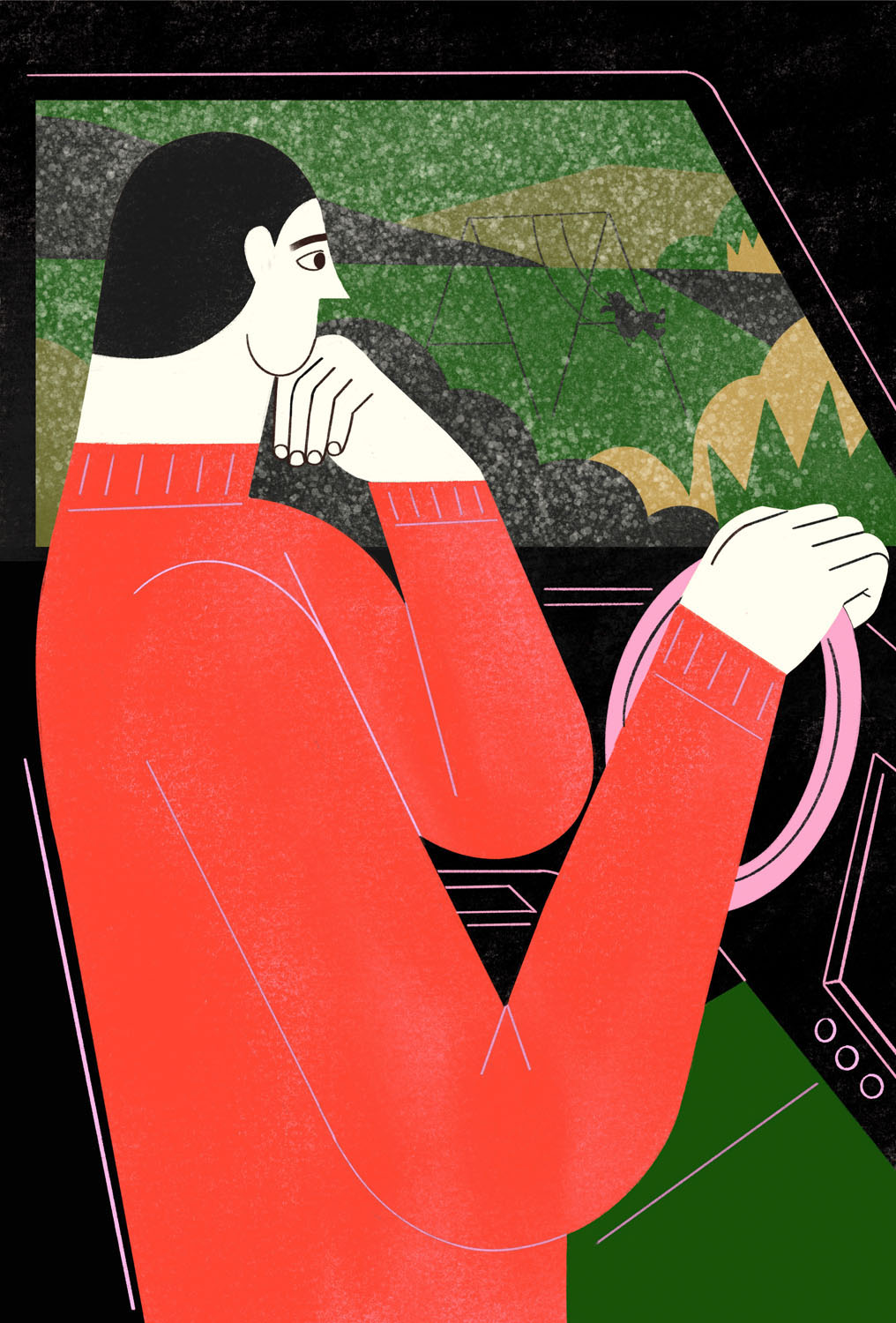
Certain lives are harder to tell. The mind spans a great distance: the worn shag carpet of his boyhood, where Jimmy would lay reading from the ragged set of plays; college nights playing chess, wrapped in the plaid robe he’d bought in town. Always Jimmy, never Jim or James. His boyish pretensions and haphazard flashes of brilliance; all the drunken nights at Gunnar’s after he moved his family back from Zurich.
“It’s occurred to me lately that the way we think about truth is wrong,” Jimmy said, leaning back in Gunnar’s tattered easy chair.
Seth’s eyes drifted up. “Yeah?”
“In a way, imagination is truer than what we think of as truth.” He reached forward for his wine glass. “Truth is wed to the past, whereas imagination is boundless.”
“Hmm.”
“Just think about it,” Jimmy pressed.
Outside the snow fell heavily. It had taken him nearly an hour to drive from the Saint Paul neighborhood where he and Kate had recently bought a bungalow, near the small liberal-arts college where he now taught. They were gathered for Gunnar’s annual Ides of March dinner party: Jimmy and Kate; Seth and Tara; Milo, who was Gunnar’s colleague at the community college. Gabriel, whom Gunnar had known since his semester abroad, and his new wife, Charlotte, were yet to arrive. Gunnar’s wife Judy was absent also, attempting to settle their three girls to bed upstairs.
In the cramped drawing room with its mismatched furniture and homemade bookshelves, the assembled sat lambasting the war in Iraq, eating smoked oysters on crackers, washing them down with the cheap wine that was Gunnar’s stock-in-trade.
“So?” Jimmy said. “Seth, you were the philosophy major; does this land or what?”
“What?”
“That imagination is, like, truer than truth. Has anyone said that?”
“Jesus, let me think.” He had a deliberate way of speaking, the slightest of lisps. “Blake, maybe? It’s just—”
“What do I know, right? I’m only a math guy.”
“A poor kid from the Iron Range,” Gunnar called from the kitchen, riding his Upper Midwest vowels. It was Jimmy’s well-worn refrain, this reference to the mining town where he’d grown up, its population shrunk now to almost nothing, Jimmy the only one among the group from a working-class background.
“Don’t forget Catholic,” Kate called back, flashing a placating smile at her husband.
In the brief silence, Gunnar could be heard clattering away. It was always a long wait for dinner, the house slowly filling with the heavy aromas of his cooking.
“Is that goat?”
“Jimmy,” Kate scolded.
Jimmy grinned to reveal whitish gray bits of cracker and oyster behind his small teeth. “No, I’m pretty sure it’s goat.”
“Beware the Ides of March,” Seth said, and they laughed.
“Who wants a cocktail?” Gunnar said, summoned form the kitchen by the sudden bloom of mirth.
“Let’s see what you’ve got.” Milo stood and made his way to the scarred oak buffet in the dining room, where the bar was set up.
“Something colorful,” Gunnar said gamely.
“Is it just me, or is it a little drafty in here?” said Tara, a slender woman with a mass of prematurely silver hair.
“Not just you,” Seth said. “It feels like an army of angry sprites is biting my ankles.”
“Meanwhile,” Jimmy said with a far-off look, “there’s the more enduring problem of sustainability.”
These associative leaps only Jimmy could fully track; earlier that year he’d begun research into alternative forms of energy, stubbornly working toward a scholarly paper well outside his field. He poured himself another glass of wine and drank half of it in one swallow. “This has opened up a bit.”
“You’ve just gotten drunker,” Kate said, then turned to Gunnar and mouthed Only joking. He shrugged and moistened his chapped lips and handed Milo a martini glass filled with a lime-green liquid.
“Unfortunately I’ve come to the realization,” Jimmy went on, “that the only viable future is nuclear.” He gazed at the oysters by way of invitation.
It was then that the doorbell rang and Tara disappeared into the cramped vestibule to answer it. For a few seconds he listened to her struggle with the door, which stuck, then the moan it made as it swung open.
When she stepped into the room, her hair and eyelashes were still flecked with snow.
“Hello everyone, I’m Charlotte?” she said with a slight lift of her voice, as if posing a query. “Sorry we’re so late. Gabriel’s just parking the car.”
As he watched her, the night air rushed over his shoeless feet, coldest where the sock stretched thin over the ankle. Tara must not have closed the door.
“Can you even believe this snow? Isn’t it utterly beautiful?”
A quarter of an hour later they filed into the dining room. Gabe had arrived, as annoyingly handsome as ever, looking fitter than the rest of them. He’d been a freshman when they were seniors, a football player, which made him, by Jimmy’s standards, a fool.
“Over there,” Jimmy said when Gabe made to sit, pointing to the name card at the far end of the table. It was part of the anachronism, the supper-club atmosphere, that Gunnar’s dinners had assigned seating. In this, as in everything, he took his cues from his parents, even at forty. He’d placed Charlotte beside himself.
“I love this!” Charlotte said as she picked up her card with its laminated pen-and-ink drawing of a winged cat, her name written just above in erasable marker. “Aren’t they marvelous, though?” she said. She turned it toward the rest of the table like show and tell.
“I think I’ve probably gotten all of them at least once or twice by now,” said Kate.
Seth nodded toward her. “What are you tonight?”
“The snail.” She crinkled her nose.
“I’m so curious,” Charlotte said, turning back to Gunnar, “why you celebrate the Ides of March?”
Gunnar paused, his face bunching as he assembled his thoughts.
Jimmy was seated directly across from her. He leaned in as if in secret. “He’s about to tell you his parents were Shakespeare scholars who loved dinner parties,” he said.
“So much for curiosity,” Seth said.
Gunnar, ignoring them, had begun to speak about his semester in London as an undergraduate and all the plays he’d seen. Suddenly realizing that people were waiting on him, he gestured for them to begin serving. He shook out his napkin and asked Charlotte if her mother had ever directed Julius Caesar. Charlotte tilted her chin up to think. Her mouth was slightly parted; there was a small gap between her top front teeth. The upturned nose, the pale gray eyes. She was almost too fine, like an old Flemish portrait you stare at, unable to comprehend the trick of realism. Looking at her filled Jimmy with a sort of shame.
“Goat?” Jimmy asked, reaching the platter of meat toward Charlotte. “Gunnar, is this actually goat?”
“It’s lamb.”
“You never said where you’re from, by the way.”
“I suppose Western Massachusetts.”
“You suppose?”
“I was born in London, so technically I’m a British subject.”
“Explain why you moved,” Gunnar prompted. “You’ll love this, Jimmy.”
“My mother was hired to be the artistic director for the Shakespeare company at The Mount.”
For a beat or two Jimmy allowed himself to be subsumed by the hum and chatter of other conversations, the faint, arhythmic clink of silverware against dishes. He could feel Gunnar’s fixed stare, waiting for his reaction. “You know, Edith Wharton’s estate,” Gunnar prodded.
“Never heard of it.”
“Yeah, right.” Gunnar was sawing a piece of meat with his butter knife, looking slightly pained.
Jimmy leaned back in his chair. “But did you actually live in the house?”
“We did.”
In spite of himself, he began to ask questions: whether it had been given to them furnished; how many rooms there were; the bedroom where she slept. Charlotte answering, yes, the house was lovely, it was vast, conjuring in a rambling monologue the vanished world of her girlhood; the rooms smelling of lemons and old books, the cool dampness of the grass she ran across in summer reciting lines from the many plays she knew by heart, the cast parties at which she danced and got drunk with all the actors. “Gabe doesn’t approve of my upbringing,” she said breezily, “but in most ways it was a pretty normal childhood.”
“Yeah, it sounds a lot like mine,” Jimmy said.
“Really?”
“Never mind,” Jimmy said, waving his hands. The seminal event from his childhood had been buying a complete set of Shakespeare’s plays from the town library, bound in worn red cloth which he read in mystification, splayed on ugly shag carpeting, imagining their provenance; some house with wooden floors where classical music played as sun streamed through casement windows. He was on the brink of revealing all this, recklessly; how even now the books were waiting for him at home, as irreplaceable, as encoded with private meaning as his sleeping children. Willing himself back, he turned to Seth, saying:
“Have you been following this? She grew up in Edith Wharton’s house. Edith fucking Wharton.”
“Did you give tours in the summer?” Seth asked her.
“People were allowed to stroll the grounds.”
“Grounds,” Jimmy repeated, shaking his head.
Charlotte had drawn quiet. “It’s really not as impressive as it sounds,” she finally said.
During the car ride home they didn’t speak. Jimmy drove. Past midnight; the dark, snow-edged freeway deserted. As they were nearing their exit, Kate said: “Well, she was really something.”
“Meaning?”
In his periphery he could see her podgy cheeks, raw from the long winter, the bulky outline of her woolen hat.
“What?” he demanded. “Why are you looking at me like that?”
“Come off it, Jimmy.”
He reached forward to adjust the heat. “Do you have enough cash for the sitter?”
“Men are such boys,” she said, turning to the window with a short, indelicate laugh.
That night, as he lay on his side of the bed, he imagined what it would be like to be with her. Not her, per se, but that particular type he’d thought extinct if not purely literary, fledged from the great Avenues, or ivy-covered houses where horses were stabled out back. Small-boned and pretty in the way of swallows. Well-spoken, cool, erratically blithe. As sleep washed over him, he imagined himself stroking into her with excruciating slowness as she bent over a bed that he somehow knew, as you know things in dreams. The windows were open and he watched the curtains billow inward and the brown tips of her breasts melt into the ivory sheet with each tentative push, a doorway he barely entered.
They saw each other twice a year at Gunnar’s, at the Ides and then again on the Fourth of July. After Gabriel took a job as drama teacher at the same prep school where Kate taught science, there were holiday parties and get-togethers to mark the beginning and end of school. Jimmy was still on his professional ascent. His life expanding, Kate pregnant with their third child, a boy. Charlotte didn’t work, but she always had things to say about books, places she’d visited, people they knew in common from the school. Now and then her fingers brushing his wrist lightly or briefly gripping his shoulders, the unfamiliar savor of her breath washing over him for a moment. When he spoke to her about his graduate work—his hopes for tenure, his research—she listened with a focus he scarcely felt himself, asking about his reasons for loving math; whether he shared her belief that, at the highest level, the furthest margins of meaning, all disciplines converged on the same unanswerable questions.
He had always understood that life was movement. There were men like him going up, others going down. It stood to reason that at a certain point everyone must arrive at their highest possible moment, and he wondered if he would be wise enough to recognize it. Then he thought, My God, maybe it’s already behind me.
The year he was refused tenure, the prep school where Kate and Gabriel taught held a Christmas party at the Minneapolis Institute of Art. She’d been hoping he would come, Charlotte said.
He could have cried. “It’s cold as hell out there,” he said.
“But so exhilarating, right?”
He laughed in spite of himself. “Only you would say that.”
They drifted away from the crowd. Charlotte did not share the news he’d already heard from Kate: she was pregnant, and in August, they were moving to El Salvador for a year, where Gabriel planned to study political theater. Neither did Jimmy mention his not getting tenure. Instead, standing with their plastic cups of wine before an English landscape painting, draining the bottle he’d lifted from the bar, he said he’d been listening to Glenn Gould’s Goldberg Variations.
“You’re talking about the older recording?” she said. “His first?”
“I’d read they were classics, but I didn’t know how great.” He was aware of his inarticulateness, like a badly fitting suit. “Some parts are so beautiful I can barely stand it.”
She nodded, glancing into her cup as she recalled an image of herself and her father listening to records. They had snuck into the living room, just the two of them. It was the last summer before her parents divorced. She could still see the fat slanting bands of sunlight falling over the rug, and the searching way her father watched her, listening.
“I especially like the first piece.”
“The G major,” she said absently.
He gaped at her. “I don’t know whether to love you or hate you for knowing that.”
Glancing down, a strand of her hair falling forward, “It’s only because my father was a pianist.”
“Really. You’ve never said anything about him.”
“People always say it’s so cheerful, but he used to say G major was the saddest key.”
“He was a pianist—meaning, it was his hobby, or he earned his living that way?”
“He was the musical director at The Mount.”
“Hold it. You’re saying he worked for your mother?”
“For a few years, anyway.”
He stood, taking this in. “And then what?”
“She fired him.”
His eyes widened. “Fucking women…”
To his immense relief, her laughter was as instantaneous as it was uncontained, echoing loudly through the gallery. Only as it wore on—her shoulders trembling, her cheeks flushed—did he sober a bit, startled by the depth of her pleasure.
The school year ended. It took less than an afternoon to erase himself; a single cardboard box and several trips to the dumpster behind the math wing. His formal position, at forty-three with a wife and three children to help support, was that academia had betrayed him; if he was going to be forced to eat shit, he should at least get paid well. He applied to the University of Minnesota Law School and was accepted. That fall he sat in lecture halls with people who could have been his children, taking notes, struggling to keep pace. He had no time for anyone’s concern. Gunnar’s, Seth’s. Charlotte was away, it was unclear for how long. She’d had a girl.
“A poor kid from the Iron Range,” Gunnar called from the kitchen, riding his Upper Midwest vowels. It was Jimmy’s well-worn refrain, this reference to the mining town where he’d grown up, its population shrunk now to almost nothing, Jimmy the only one among the group from a working-class background. “Don’t forget Catholic,” Kate called back, flashing a placating smile at her husband.
The year he took the bar, Jimmy was hired at a well-regarded firm downtown. Patent law. Kate and the children had just begun their summer vacations. Alone at his small desk, with its mountain of paperwork, the reality of what he’d done presented itself, its intransience and incumbrance. It was as if he’d opened the door to a band of unwanted houseguests, their bags massed behind them. For days, maybe a week, he allowed himself to wonder if it could be undone.
Late one morning, he slipped away from the office and ended up on Highway 62, heading west. He was driving the Mercedes, just a week off the lot, a car he’d convinced himself he deserved and which still felt unfamiliar to him. Various scenarios played in his mind: He would accidentally hit the accelerator instead of the brake; he would black out and drift into oncoming traffic. He saw himself waking in a strange town, beginning again.
It was a surprise, then, when the exit for his son’s grammar school appeared. He took it, almost automatically, a passenger in his own life. He passed through the school’s entrance, bisecting manicured lawns, the car seeming to coast up and around toward the main building. Idling in the empty traffic circle, he scanned the shallow woods that bordered the campus, the playground at the foot of the hill where a group of children played at recess. With a sudden, almost painful contraction of love he saw Liam on the swings. At least, he thought it was Liam. It was his jacket, blue with white stripes on the sleeves. But what if it wasn’t? What would it look like, his sitting here in an idling car watching these children? Still, he didn’t move, rapt by the beautiful motion, the boy’s pumping legs. He was swinging quite high, his body drawn nearly parallel with the earth at either end of that great lazy arc. Jimmy had begun to cry; he didn’t know why.
Suddenly the boy’s hands lost the chains, and Jimmy watched the small body fly through the air, then land, crumpling forward in a heap. In the next instant the boy lifted his head and in a single motion unfurled, heels spraying earth as he sprang forward.
One February, four and a half years after she’d left, Charlotte returned. Gabe had taken a long-term sub position for a middle-school drama teacher on maternity leave. Charlotte had not aged. Her daughter was named Antoinette.
“So, how was Costa Rica,” Jimmy said, sidling up to her after what seemed an hour trying to steal glimpses, overhear whatever it was she was saying.
“El Salvador.”
“Oh right, right.”
She was sitting in the largest of Gunnar’s armchairs while he balanced awkwardly on its wide arm. “And what about you? My God, a lawyer! I thought at first Gunnar must be pulling my leg.” She seemed faintly embarrassed. “But, so, how is it?”
“You know,” Jimmy said, “slogging away at the mines.”
“Remind me what kind of law it is again?”
“Patent.”
“Oh.” For seconds her eyes scanned the ceiling. With a laugh she said, “What exactly does that entail? I haven’t a clue.”
He embarked on a fumbling explanation. Patent lawyers, he said at length, were the nerds of the profession.
“So how does that scarf fit in?” Seth cut in. “I mean, since you’ve become a nerdy lawyer.”
Jimmy rolled his eyes. “I got it last summer, when we were in Oxford.”
“Which tells you how crappy English weather is,” Kate said. “This was July.”
“I didn’t realize you were in Oxford,” Charlotte said, glancing first to Jimmy, then Kate, who said: “It was a professional development thing.”
“She’s an Oxford scholar now,” said Jimmy, making quotation marks with his fingers.
“It was fun,” said Kate.
“Yeah, we loved it. The whole fam dambly,” he said, swinging the longer end of the scarf over his shoulder with a theatrical flourish.
“Is that actually Burberry?” Seth said with his slight lisp. “You used to hate that sort of thing.”
“Well, I think it’s completely dashing,” said Charlotte. This somehow was the first comment that truly discomfited him. He felt his face redden. He could see Kate smiling, about to laugh. Charlotte had rested her tiny hand onto his leg. “Really, Jimmy, it’s handsome; it suits you.”
“Gunnar,” Seth called, his voice raised to carry into the kitchen, “you’ve seen the scarf; what do you think of it?”
“In the abstract, it’s a nice scarf.”
“What, a guy like me can’t have a thing like this? It was on sale, all right? It’s a fine thing. What the hell?”
“Just get your fill, Seth,” Kate said, “because you’ll never see it again.”
An uncomfortable silence had settled. Charlotte was looking from face to face. “I don’t get it. Gabriel, explain it to me.”
Gabriel, Jimmy repeated silently, disgusted; as if someone with that name could ever speak for him.
Abruptly Charlotte stood. “Fuck it, I’m going outside for a cigarette. Does anyone want to come with me?”
“Thanks,” Jimmy said, “but no.”
He was into his third year at Stern and Liebowitz. It was spring break but still frigid outside. Gunnar was hosting solo, Judy having taken the girls to Finland to show them their “ancestral homeland.” Kate was visiting her mother in Arizona.
Somehow, on top of everything, Jimmy was wading through Finnegans Wake, wrestling it in the mud, sentence by sentence. Seth had joined him, a masochistic reading club for two. They would not let it get the best of them. Though Seth freely admitted his confusion—he almost took pride in it—Jimmy refused to give in and allow that he wasn’t up to it. He sometimes fell back on the defensive posture that Joyce was a fraud who’d managed to pull the wool over everyone’s eyes.
“I may be a patent lawyer, a kid from the Iron Range,” he shook his head, his cheeks trembling. “But, look, at the end of the day, I’m as smart as anyone, right?” Seth opened his mouth, and Jimmy went on, “Because I’m willing. And you’re a smart guy too, in your way.”
“Gee, thanks.”
“My point is, if the two of us can’t get to the bottom of what Joyce is trying to say…I don’t know. It could be that, you know, he lost the reins.”
“Oh, undoubtedly he was crazy.”
“You’d have to be, to attempt something this batshit,” Gunnar said as he spread a bit of brie over a cracker.
“But what if in the end it’s nothing more than self-indulgence?” Jimmy said.
Milo was there, sipping something pink that Gunnar had made him from the ancient bottles. “It’s not nonsense so much as a bore,” he drawled, taking a long sip.
“Who asked you?”
Seth waved his hands between Jimmy and Milo, as if erasing Jimmy’s rudeness from a chalkboard. “Don’t force it, Jimmy,” he said. “Listen to me. There are a million great books out there that are brilliant and graspable.”
“Please, graspable. What are we, schoolkids? Charlotte, what do you think?” She had just come back into the room from helping Judy clean up the kitchen. “Have you read it?”
“I think—wait, hold on.” She raised her finger. The small chime could be heard. After some rummaging in a yellow leather handbag, trapezoidal, with large gold fastenings that were somehow elegant, she drew out her small black phone and opened it. “Sorry, I have to take this; it’s the sitter.” She strode toward the back hallway beyond the kitchen.
All night he had been unable to talk to her. At dinner, the name cards placed them at opposite ends of the table.
Later, when he was standing in the frigid foyer saying goodbye to her, with Gabriel already gone to warm up the car, Charlotte asked him if he ever regretted leaving academia.
He laughed, a little spitefully. “You realize I got fired. That’s basically what not getting tenure means.”
She stood hugging herself, her thin coat unbuttoned, her face drawn together, her silence goading him.
“It could be worse,” he shrugged, “I could have gotten divorced.”
As soon as he said it, it struck him as a strange thing to have said. He could see by her face that she was trying to parse it. When he’d first come into the foyer, before they began to speak, she had rested her hands onto his shoulders as though readying herself to kiss him goodnight. Things had been different between them since her return, but for a moment they’d been about to kiss, to embrace, the old Charlotte and the old Jimmy. He was aware of his combativeness, the cruelty in the teasing way he spoke to her when he said, “You can’t really believe everyone has the luxury to like their life.”
In the ensuing silence Charlotte regarded him steadily, with an air of dissent. He stared back at her, feeling oddly powerless, as if his words, his tone, had issued from someone else’s mouth. Somehow it reminded him of the primate house at the zoo; as if one of them were a chimpanzee, staring through thick glass, beginning to comprehend the freedom of the other. She was as lovely as ever, and as unattainable—not because of him, his looks or his mind, but because of the choices he’d made. Given a different set of decisions, he could have been with her.
“The truth is, I’m just some kid from the Iron Range who happened to get into a good college, and then a great grad school, who somehow managed to get all these important jobs, in Boston—in Zurich, for Christ’s sake—and then the professorship at Macalester.” He swept his hand aside. “My luck changed.”
“But why?”
It seemed to him almost willful. She was like those women who are incapable of putting a bookcase together, for whom instructions, for all their keys and illustrations, are unfathomable.
“Well, that’s the thing about luck, Charlotte.” He glanced toward the street, seeing that Gabe had pulled the car up. “Look,” he said, firming up his voice. “I have massive debt from law school. I have, as you well know, a family.” He wasn’t angry, exactly. He was waiting for something he couldn’t quite articulate, aware of how absurd it was, like waiting for the tooth fairy. Gabriel gave a succession of short honks to which she didn’t respond. In the other room, he could hear Tara speaking loudly, the high strains of a horn from a jazz record Gunnar had put on.
“If you think about it, my life should have never gone this well.” He laughed, as if he’d said something funny. “I’m nobody, right?”
“Jimmy.” She drew in a breath, seeming to consider for a moment. Her face closer to his than it had been a moment before, her mouth. “You have to realize that you’re special.”
“So that’s what you think of me,” he joked. He’d had to lower his head so she wouldn’t see his eyes, and for several seconds he stared at his suede shoes, olive-colored, a type of shoes he’d never seen another man in his family wear, before managing to hold her gaze just long enough to thank her for noticing. In the slender gap of silence he felt his heart beat uncomfortably, once, twice. Then she opened the door with her coat still unbuttoned and was gone.
He’d entered a protracted period of desolation. He sensed it lurking at the margins, a shadow incrementally extending through the day that, in a fluid rush as he was bending down to adjust the covers over Liam, finally overtook him. His girls were already lost to him. They carried on conversations through tiny black phones, they walked around attached to iPods that housed a cache of untold life—photographs, music he didn’t know. Kate held whispered talks with them about boys, their periods. They were closing ranks. Standing in their doorway as they called goodnight in their high singsong, he sometimes felt a secret and shameful disappointment in the fact that his long journey had brought him to this place of shiny sterility; these daughters, tucked in their cocoons of expensive bedclothes, who bore no relation to his childhood self, who knew nothing of hardship, or longing. And then he would think with a feeling almost like nausea of those clear fathomless nights in Switzerland when he’d walked home through solitary darkness to stand beside their beds, bend toward a shell-pink ear, overcome with love when his lips brushed against it.
Only Liam still belonged to him. He had managed to track down a copy of the most beloved book from his childhood—who knew how his parents, in their simplicity, had come to possess it—the story of a poor mouse from a snow-strewn hinterland who, improbably, becomes a great musician. Jimmy read it to him almost nightly. He had made a mix of music to play afterward, when he was lying on the floor beside him: Chopin nocturnes, Satie’s Gymnopédies, a Brahms adagio to which he furtively allowed his eyes to well with tears. With his head pressing the edge of Liam’s mattress, he conjured the shag carpet of his boyhood, its mustiness, the itch against his elbows and knees as he crouched setting up his plastic soldiers or, later, read in awed whispers lines from a play written three hundred and fifty years before.
Sometimes, in the midst of this reverie, Liam’s small hand would drop down and touch his shoulder. For several seconds it would rest there, and Jimmy thought to himself, How much longer before he’s lost to me too? Liam, who he hoped might somehow escape the version of adulthood that he himself was resigned to.
Other times Liam would fall asleep quickly, and Jimmy would think of Charlotte. It occurred to him that she knew things about him no one else did—not because he’d confided in her, but by virtue of who she was; the keyhole at which he stooped to discover another version of himself too fragile to be brought into the light. She had been pregnant again and given birth to another girl. At the Ides, she’d sat in the living room nursing for everyone to see while she drank Gunnar’s cheap wine, waving her hands about, free with profanity. He’d had to avert his eyes when her areola suddenly emerged, big and dark gold like a harvest moon.
That Memorial Day, they were all invited to a picnic at Gunnar’s. In his bald, scorched backyard, Seth milled about, squinting, a lukewarm beer in his hand. There was no shade, no breeze, nothing to mitigate the suffocating heat. Jimmy arrived nearly an hour late, taciturn, exhausted. His hair on either side of his mirrored aviators was suddenly graying. Where were his kids? Seth asked him. The girls were with their boyfriends, he said, Liam asleep at home with Jimmy’s mother-in-law. “Liam and I were sleeping in a tent up north the last two nights,” he said. “None too restful.”
Seth nodded. “Camping was good, though?”
“Oh, great. Lake Shamineau. Tons of fish.”
“Big ones?”
“Oh, huge, like this.”
“Really?”
“No, not so much.” Jimmy laughed, his sudden turn toward joy infectious. “First night,” Jimmy wobbled his head, weighing things, “we’re sitting under the stars, I’ve got a fire going, we’re roasting hot dogs, the whole thing. And suddenly he goes, ‘Hey Dad? How do we know this world is the real world, instead of dreams? How do we know it’s not the other way around?’ ”
“A philosopher,” Seth said, raising his beer.
At the far end of the yard, Tara and Gabriel were stretching a badminton net, the box cast on the parched grass. Seth’s son was throwing a Frisbee with two of Gunnar’s daughters. Cars drove by at intervals, windows down, radios blaring. Charlotte sat off to one side in a director’s chair, one hand cupped over her eyes. After he’d opened his second beer, Jimmy slowly made his way over. He kissed her cheek, asked after her girls; were they here?
“One.” Charlotte gestured to a car seat a few feet away, in the sole pool of shade beside an outsized hydrangea. “I missed you at the school’s end-of-year party.”
“Work.”
“Oh, that.”
“What about you?”
“Well,” she paused, seeming to consider. “No…nothing.”
“What?”
“It’s kind of a secret.”
He lifted his sunglasses onto the top of his head. “Now I’m intrigued.”
After a pause: “I’m writing.”
“You mean essays? What?”
“Litrachoore,” she said in a cartoonish English accent, then, lifting her slender shoulders, “It’s only a short story.”
“So, what’s it about?”
“Oh, I—you know.” She glanced into her lap, blushing and interlacing her fingers, her eyebrows knit together in something like consternation.
“What?”
“This is so awkward.” As if suddenly coming to a decision, “It’s about you.”
He stared at her. “You’re kidding. Me? Some failed academic son of the Midwest?” He shook his head playfully, adding, “It’s not quite enough for a tragedy, is it.” Charlotte replied that it wasn’t that literal.
“Anyway, it’s fiction,” she said, “things play out differently.”
“Oh?” He snorted a laugh before looking away. Kate was at the edge of the yard holding a badminton racket. He was suddenly seized by the thought that she would fall, or worse, overreach for a shuttlecock and split her pants. She had, in certain contexts, a very competitive nature. She’d begun passing the racket from hand to hand, smiling.
“Come on, Gabe,” she said. “What d’you say?”
He had always understood that life was movement. There were men like him going up, others going down. It stood to reason that at a certain point everyone must arrive at their highest possible moment, and he wondered if he would be wise enough to recognize it. Then he thought, My God, maybe it’s already behind me.
Fall advanced, and the world began to reckon what a few had known for years: the housing market had been built on sand. The news was of nothing else. Banks were failing. Meanwhile, Jimmy’s father had grown ill with something as yet undiagnosable. It was as if the private sense of dread Jimmy had never been able to keep at bay had now erupted into the world at large. He braced himself for the disaster he couldn’t identify but knew was coming.
When it finally happened, it was the one thing he’d never dared imagine. The unthinkable. He was at work when he got the call from the head of school: Liam had fallen from one of the structures on the playground. He’d hit his head. An unbearable pause followed. Liam had been taken to the hospital, he was told. Pressing the phone against his ear, Jimmy understood that this last detail was a formality, that what had happened could not be undone. He found himself in his car. He had resisted buying a cell phone and could not call Kate, and so he drove the eleven miles in a suspended silence, direction itself no longer having any meaning.
Somehow, he parked, said his name at the desk, was led along a corridor, through a second waiting area. In the vaultlike room his son lay on a bed with a white sheet tucked up under his chin. Jimmy was strangely calm, almost impassive, as if by this emotional refusal Liam might cease to be dead.
After a few minutes, Kate appeared, pausing in the doorway, still braced by whatever was left of her competent demeanor. A few steps from the bed, she became sick. He watched her hunch at the floor. He should have gone to her, he knew. Instead, a woman appeared and held her arm, wiped the mess from her shirtfront as she stood back up. When she began to scream, this same woman and a white-clad nurse he’d somehow not noticed surrounded her and led her out to the corridor where he’d briefly waited. A row of chairs. A vending machine. He could still hear her, muted. Then, for a time, nothing. Not the chime of call buttons and telephones, footfalls; not even his own breath or heartbeat.
How many minutes passed like this, staring in adoration at his son? That still perfection not of life but something exceeding it? His fine mouth, the marble smoothness of his chest, the delicacy of his hands, his sandy hair. Death. The fact of it kept slipping from his grasp. He could not bring himself to touch the boy or comb his fingers one last time through his hair. To bend over him and verify the absence of breath. He could not traverse that void. It was then he knew definitively that there was no God, no reunion in another world. Only this one, where never again will my son put his hand on my shoulder.
The day of the funeral was bitterly cold and spitting snow. At noon they gathered in the cemetery, heads bent, the priest reciting all the customary things. The coffin looked like a toy, Jimmy thought, watching it lower into the dirt. He barely stood as a long line of people shuffled forward: friends, Liam’s teachers, people he’d known forever. He focused on random details—the cleanliness and propriety of his girls in their matching, red-buttoned coats; how, when Kate turned from him to greet people, their bodies hinged apart like an indelicate shell; how the center of his cheeks held the cold. He was numb, his body sedate.
Only when he noticed Charlotte, far back in the line, was he roused from this stupor. She had not been to the church, and in her arms—he could hardly believe it—she held her baby. It was unforgivable. With a kind of hatred, he watched her shuffle forward, holding the small form swaddled in a bright green snowsuit far back on her hip, as though trying to conceal something stolen. Charlotte herself wore only a raincoat, no gloves or hat, her hair unraveling and damp. The moment she reached him, she dissolved into tears.
“I’m so sorry,” she sobbed.
Jimmy nodded and said nothing, refusing to take her hand.
“Oh, Jimmy, oh my God, how can this be?”
Why, he wondered furiously, did she never dress appropriately? The baby had begun to squirm and fuss in her arms, its mouth leaking the small sounds that presage bigger ones, filling him with panic. Kate had turned to her, gesturing for the baby. Incredibly—indefensibly, he felt—Charlotte passed the baby to her. In mute horror he watched his wife receive it into her arms, press her waxen face to its plump pink one, and close her eyes, inhaling its perfume while two rivulets of tears wended toward the corners of her mouth. Jimmy felt in that moment a fierce and almost fraternal love for her; a need to protect her from Charlotte and her baby.
“You shouldn’t have come,” Jimmy told her gruffly.
Charlotte had reached her freed arms toward him. “But of course I came—I would never…I care so deeply—”
She had begun to cry. It enraged him, the way she stood there sobbing, her shoulders trembling and lifting. He must have made some gesture, because she finally gathered back her child and began to move away. He watched her grow smaller, her body bent beneath the snow as if it were a heavy pelting and not the day’s blustery weightless flurries, the baby shrieking as it struggled in her arms. All the while he threw stones at her back: East Coast bitch. Go back to the Berkshires, no one wants you here. And for God’s sake get a fucking winter coat.
“Can you believe her?” he said, settling his arm around his wife.
“Everyone’s been so nice, Jimmy, haven’t they?” Her voice had risen slightly, and he braced himself for what was coming. But rather than break down, a steely stoicism swam slowly across her face. Her eyes seemed to settle darkly on a remote distance, some brutal, undiscovered continent. It was as if she had aged twenty years at once.
The following Monday he let the firm know he would be taking a leave of absence. He couldn’t say for how long, a month maybe. As ever, it was a question of money. Around five o’clock, as the first employees were turning over their phones to voicemail and heading home, a stooped figure appeared in his doorway.
“Let us set things up for you, Jimmy.”
It was Barry Liebowitz, the sole remaining founding partner. Jimmy stood up and wondered if he should offer him a chair.
“We could take care of everything,” Liebowitz continued, leaning against the edge of a low oak bookshelf. “You’d barely be bothered. These private schools, they’ve got insurance up the wazoo.” He waved an arm. “Deep, deep pockets. Endowments and whatnot.”
“That’s okay,” Jimmy said. “Forget it.”
It was an emptiness like nothing else. Like having drowned, your last breath displaced by seawater. He tried to remember his emotions upon first becoming a father, sixteen years before. Always, Kate had been the anxious one about the children’s safety. They might choke on an ice cube, catch some particularly virulent strain of flu, go for a swim and drown. He’d worried only about when they were grown and no longer need him. All along, he believed his fears were worse, if only for their inevitability.
“It really happened,” Kate had said the night before—or maybe it was another night, he could no longer distinguish them—then suddenly gripped his arm, her eyes grown huge.
His one small act of retaliation—feeble, really—was to let the plant in his office starve, the mound of brown and curling leaves slowly collecting on the rug. He looked at its woody skeleton now, contorted behind the gentle figure of Barry Liebowitz, and he shook his head no.
Liebowitz lifted a palm in mild protest. “Look, what’s happened here, no one should have to live through that. I know.”
“You know?”
Barry lowered his head and pressed his hand to his chest. When he spoke, his voice was low, and he didn’t look up. “We have people who can handle this.”
Jimmy was momentarily baffled. It occurred to him there was something supernatural in the offing: Perhaps he could give away some part of himself—his liver, half his heart—in return for Liam’s resurrection. He saw Liebowitz’s friends, their judicial robes, stepping toward him, their weathered hands poised above the earth. It had not even been a week since they put Liam in the ground.
“I can’t,” he said quietly.
“Think of your family, Jimmy.”
Jimmy glanced at the older man accusingly. “You’re talking about litigation. Depositions. I can’t speak about what happened.”
“I doubt it will come to that.”
“It can never come to that.”
Liebowitz fell silent, as if in disapproval.
Night had come on. In the window that the darkness had made into a mirror, Jimmy noticed himself. In the slightly blurred reflection he appeared younger, like a kid in a school play pretending to be old. It was so incongruous that he fleetingly wondered if it even was him—any of this real; his job, his son.
Only a few details stubbornly persisted: He was from the Iron Range…his father had fought with the union…the miners had taken everything, the land by now barren, even the taconite spent—and then these fragments, too, were gone. Deep within this cave, he felt the delicate thread tethering him to himself slip through his fingers. He was lost.
Liebowitz had somehow crossed over to him, settled his hand onto Jimmy’s shoulder, making him flinch. In the whole of his tenure at Stern and Liebowitz no colleague had ever touched him, nor he them.
“You have to think of your family.”
He strangely wanted to protest—the very thought of profiting from something like this sickened him. He was a Catholic, after all—but even that, he realized, was no longer true. It had somehow been extinguished, like so much else. He closed his eyes, trying to find his bearings. He saw a shag carpet, a sofa covered in plastic. His father had had three strokes. Gravediggers had just buried his son.
“I have to think,” he muttered. More than anything, he wanted Liebowitz to leave.
Liebowitz patted him and turned to leave, then paused at the door. “You wouldn’t have to work so much. You could spend time with the family. One day you’d be grateful for at least that.”
Jimmy felt himself give way. He said nothing, his heart beating wildly, hidden within his suit, the cage of his ribs. He didn’t know what his face told. He had turned from his reflection toward the inner office—its cubicles and flickering lights, its taupe carpet. This place where ideas were patented and imagination reached its end.

Leslie Bazzett is the author of MIA (Scribner, 2026). Her work has appeared in Carolina Quarterly, West Branch, and New England Review. She was a finalist for the Rona Jaffe Award and won the NER Award for Emerging Writers.
Helena Pallarés is a Paris-based illustrator whose work has been featured in The Washington Post, Glamour, Libération, and Madame Figaro, among others.