Image


The Austin Zoo had been closed for an hour, but Josie was still waiting for her boyfriend in its oblong parking lot. She sat on her truck’s tailgate, watching the sky darken above the mesquite that cloistered the property. The air was sharp and particulate, tinged with the scent of woodsmoke from some far-off chimney. Josie had stopped checking her phone but couldn’t help listening for the squeal of Jack’s fan belt. She pinched the collar of her jacket together. It was New Year’s Eve, and cold. Her truck’s battery cables and hold-down dangled into an empty compartment, limp and attached to nothing.
The zoo was actually outside Austin, tucked into the contoured landscape of the Hill Country to the west. Every year they issued a call for used Christmas trees because giving them to the animals was preferable to dumping them in a landfill. Josie didn’t know why. On the morning news, she’d seen gorillas peel off branches for toothpicks and cougars drag entire Douglas firs to the bottom of watering holes. She’d fantasized about getting to choose which animal would receive their tree. The orangutans? Capybaras? A python? The possibilities resembled a version of hope.
That morning, she’d arrived before anyone else, dragged the tree from the truck bed and deposited it by the ticket booth, then drove and parked at the far end of the empty lot. She waited and eventually decided to gift the tree to the ring-tailed lemurs. When the zoo finally opened, though, a teenager with sleep-mashed hair said that decision had to be made by the zookeeper, who was off for the holiday. The news briefly flattened her, but then the kid gave her a day pass in exchange for the tree and she felt flush again. After she texted Jack a photo of the void where the battery should’ve been, she walked the zoo to stave off the cold. She wore the turquoise cowboy boots he’d given her for Christmas. With two pairs of socks, they just about fit.
The animals were all rescues. They’d been spared on exotic game ranches and confiscated from mansions owned by eccentrics and drug lords. A cheetah and a bald eagle had been seized from the estate of a personal injury lawyer; they’d appeared in his zany commercials. Aside from some zebra and axis deer, most of the animals were out of sight as Josie passed their habitats. She sought out the reptile house, thinking Jack might want to see it after installing the new battery. (At home, whenever he spied a lizard bobbing its head on the fence, he’d take her by the hand and say, “He’s doing push-ups!”) She imagined them eating Frito pies at the zoo’s snack bar, then maybe he’d convince the teenager to let them give their tree to the lemurs. Persuading people to do what they didn’t want to was Jack’s specialty.
Around lunchtime he texted that he’d gone to three AutoZones, but everyone was sold out of the size he needed. Really? she thought. She called and got his voicemail. She googled “Do car batteries come in different sizes?” The answer seemed to be sometimes, which was better than no. She bought an ice cream sandwich to hold her until the Frito pies. She yanked handfuls of bluestem grass and fed the goats. Their lips were as dexterous as fingers. Their eyes freaked her out a little.
The zoo sprawled over acres and was meant to be viewed from the seat of a kiddie train, but the engine was under repair. Josie considered walking the track to see the other animals but didn’t want to miss Jack. If AutoZone sold candy, he’d bring her a Hershey’s bar like he always did from Home Depot. She passed the same habitats again and again—deer and goats and porcupines, alpacas and ostriches and a pair of lions. On one lap, an ostrich bit the fence and shook it like an inmate.
Families with strollers and aggressively bundled toddlers started appearing on the zoo’s dirt trails. Peacocks, too, and stray cats. A very pregnant woman waddled by talking into her earbuds: “Five days! I’m trying to dislodge her at the zoo. Apparently walking helps? It’s beyond boring.”
Josie’s face and ears and fingers had gone numb, and when the numbness gave way to a low-grade searing, she dipped into the gift shop to thaw out. It was just a trailer, what they’d called “Portables” in high school, and was packed with animal figurines and animal T-shirts and animal magnets and a bucket of deer antlers. Her nose kept running. She was flipping through a milk crate of Pollock-y paintings done by the zoo’s monkeys and pigs when she warmed enough to realize a blister had split on her left heel. The pain was raw and radiating but tolerable if she didn’t put weight on her foot. She limp-hopped to the truck and planted herself on the tailgate. She called Jack again. She told herself he wasn’t answering because he was concentrating on the two-lane road leading to the zoo. A mile away, she thought. Half a mile.
Clouds stacked. The temperature fell. Josie liked wearing Jack’s Carhartt jacket when he wasn’t at the job site, but this morning she’d pulled on her denim one instead. She hadn’t planned on being here this long. By now she had raised the truck’s hood like a flag, and yet each time someone offered help—including the pregnant woman—she made it sound like she’d just then alerted her boyfriend and he, all chivalrous, had dropped everything and would be arriving momentarily. Eventually she started saying fiancé instead of boyfriend. Why not? They’d been talking about it, and when he was sleepy or sappy, he’d call her his bride.
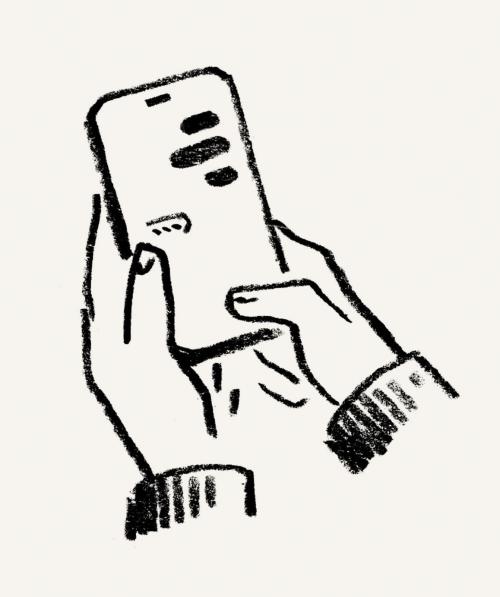
The only times her phone vibrated were when county push alerts arrived to encourage fireworks caution given the ongoing drought—first in English, then Spanish. When she texted Jack to say the zoo was closing, the wiggling ellipses of his reply appeared, disappeared, reappeared, disappeared. Row by row, cars and SUVs receded from the parking lot like tides. By dusk, a lamp staked in the middle of the lot started flickering but never really came on.
Then, from across the way, a voice: “Still nothing?”
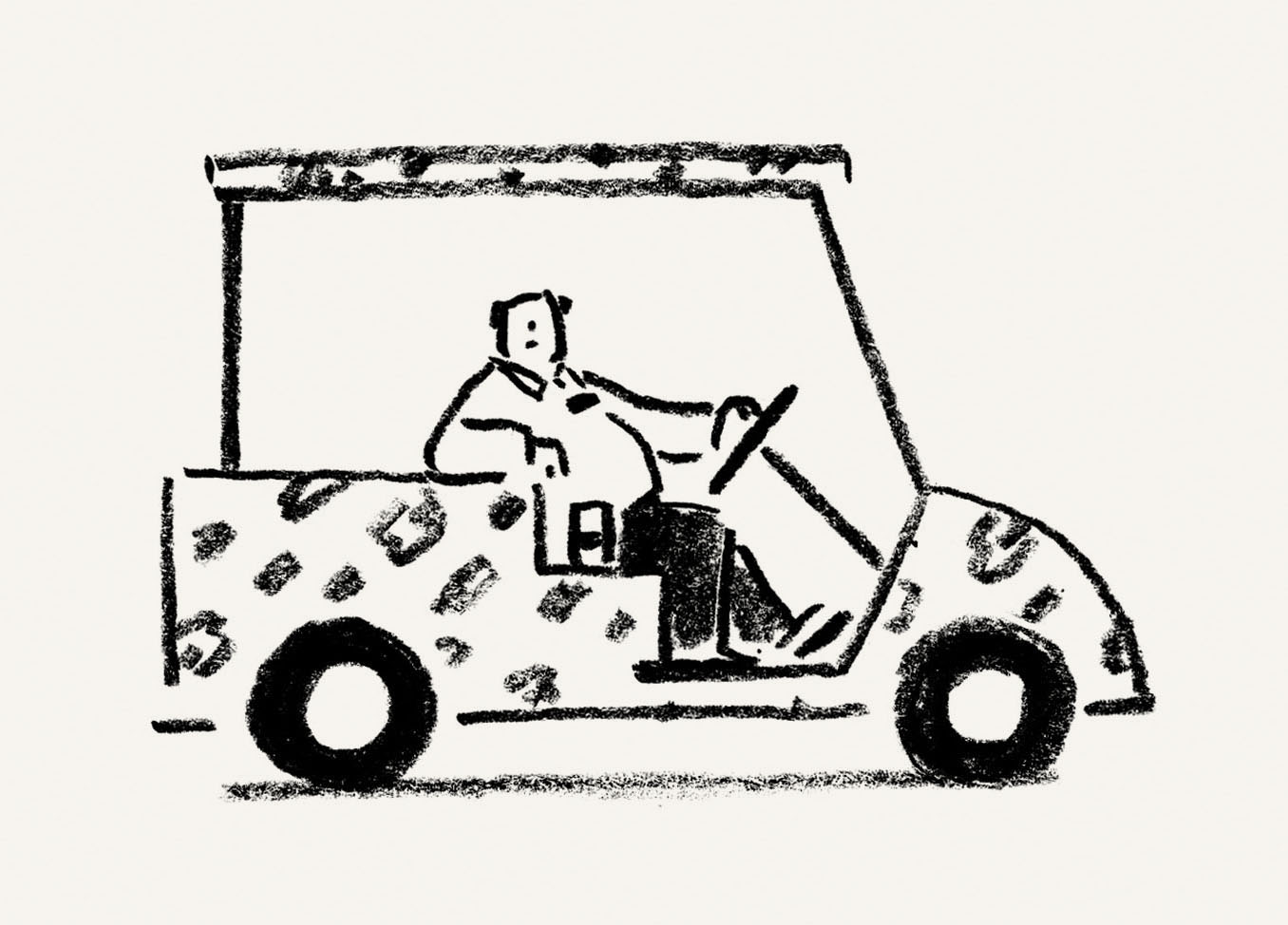
The security guard sat in his safari-themed golf cart by the zoo’s entrance. He had pleated cheeks, a gut, and a stainless steel Stanley mug, which Josie imagined full of hot coffee. She’d told him about the battery on one of his early drive-bys. A meddling retiree, she’d thought, a grandfather working part-time to avoid cardiac arrest. A watcher of birds and Fox News.
“He hit more traffic,” Josie called out. “People buying firecrackers. Won’t be long.”
The guard pursed his lips, cocked an eyebrow: If you say so. He fished in his jacket and produced a flip phone. When the dinky screen illuminated, he brought it close to his face, then extended his arm like he was playing trombone. Maybe it was another county push alert, but most likely he was checking the time to justify kicking her out. He tossed the phone onto the seat, released the parking brake, and glided in her direction. The cart was quieter than she’d expected. Faster, too.
When he’d halved the distance between them, the guard slowed to a stop. He shook his mug like a maraca. Ice rattled. Sweet tea, she thought. Vodka and Coke.
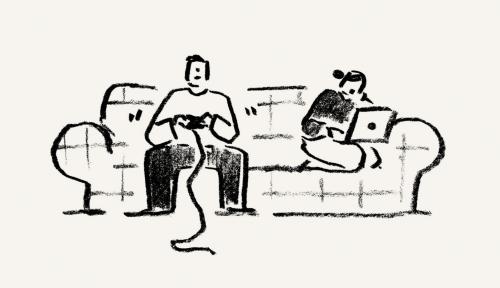
With the guard that close, she had the urge to dart into the woods. Also, her capacity to give Jack the benefit of the doubt curdled. How clearly she could see him on the couch, his thumbs furiously mashing controller buttons. When she realized she was crossing and uncrossing her ankles, she made herself stop.
The guard dragged his hand down his face. She sensed him running numbers, gauging her for a liar or a fool. He said, “I saw that bit on the news this morning.”
“About the tree donations?”
“About them battery bandits. I guess it’s happening all over.”
“I don’t know why anyone wants an old battery,” she said.
“What they want is a new battery, and come tomorrow morning, they know right where one’ll be.”
“Then my bandits should’ve waited till I got home.”
“It raises questions, I’ll say that,” he said and glanced around with his chin raised, assessing the threat level. “Could be they plan to follow y’all and snatch it after you’re asleep. Could be the culprit couldn’t organize a two-car parade.”
Josie watched her feet. She was already twenty-four—When would she hear the starter pistol of her life? When would the play button get pressed?—but her turquoise boots swishing through the mottled dusk gave her the dizzying sensation of girlhood. She didn’t mind that the boots had come from the pawnshop or were too big or had already drawn blood. Honestly, she loved them. What chafed her was Jack buying them so late on Christmas Eve. She’d visited Loan Star that afternoon to check on the engagement ring she’d pointed out to him. It was still there, and so were the boots. Jack did everything last minute, so she shouldn’t have been cross—and she should’ve known today would play out exactly like this—but she kept wondering what she’d have gotten if the boots had sold. Probably something indulgent. An electric toothbrush? A jade-stone heating pad? Too late it occurred to her she could’ve bought the boots herself and forced his hand.
She’d gotten Jack the PlayStation he wouldn’t shut up about, plus two upgraded controllers. She’d pictured them playing games shoulder to shoulder, forging alliances against zombie battalions, covering each other amid enemy fire and restarting numberless lives. Instead he’d been binging a first-person shooter game since Christmas. He’d commandeered their TV, so she’d spent evenings beside him on the couch, asking annoying questions and binging Battlestar Galactica on her laptop. She’d considered plopping down in nothing but her turquoise boots just to see if he’d notice, but she worried she’d wig out if he didn’t. She’d been shocked—and, what, relieved? disappointed? reproached?—when he rallied this morning and loaded their tree into the truck. It had almost been enough to keep her home.
The guard had been talking, though she only clocked it in the silence he clearly expected her to fill.
“Do what?” she asked.
“Lake Superior, ever been?”
“It’s on the list,” she said to be polite. The only place she and Jack ever visited was the Choctaw casino in Oklahoma. He watched YouTube videos on blackjack strategies that always almost worked. She spent the weekends swimming, playing keno, and imagining returning for their honeymoon. On each trip, she made sure to squirrel away enough gas money to get home if he went bust. In a bottle of Advil, her bra.
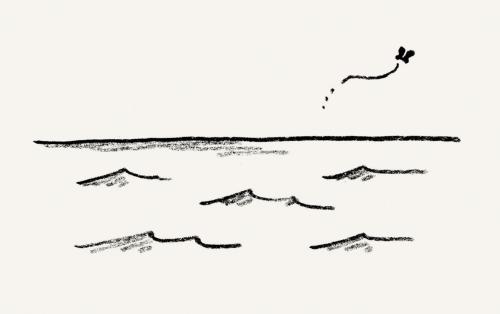
“You’ll still like this,” the guard said and shifted in his seat. The maneuvering wasn’t easy, but he angled himself so his left leg hung out of the cart, his pillowy orthopedic shoe resting on the ground. “When butterflies migrate south, they fly arrow-straight over the lake. They stay the course for miles and miles, not an inch of deviation, but then right in the middle of the water—bang!—they veer west. Season after season, same thing, same place. A ways later, they swerve back on track—You said you were the first one here this morning?”
“Guilty,” she said. In the woods, a rustling. Josie took it for a peacock or a cat kicking up leaves. She thought the guard would continue the butterfly story or say they needed to retreat into the office where it was safe, but he just took a long swig from his mug.
“Y’all live a ways away?” he asked.
“By the university,” she said, which was true enough. She checked her phone. Almost two hours since Jack read her last message. She texted: R U close? I’m COLD.
“Students?”
“Law school,” she said, which was a bald lie. She didn’t like him nosing around.
“Counselors! These old bandits can’t catch a break.”
The lamp pulsed, strobed for a few seconds. Josie longed for Jack to skid into the parking lot and prove her wrong. There was only the bulb’s weak sizzle, insects tambourining in the woods. Her breath issued in clouds.
She said, “I thought I’d get to pick which animal got our tree.”
“They need inspecting—ornament hooks and the like. Last year one came with a squirrel. He lived with the apes for a spell.”
“Mine was clean,” she said. “I followed the instructions.”
When she texted Jack to say the zoo was closing, the wiggling ellipses of his reply appeared, disappeared, reappeared, disappeared. Row by row, cars and SUVs receded from the parking lot like tides. By dusk, a lamp staked in the middle of the lot started flickering but never really came on.
The guard shrugged, unimpressed or unconvinced. With his leg out of the cart, he reminded her of a mall Santa too sapped to take off his costume.
“Do you do anything special on New Year’s Eve?” she asked. “For the animals, I mean.”
“Some get tranquilizers. Firework noise sounds too close to guns.”
“I hate fireworks,” she said. It was the truest thing she’d said all day. “They ought to be banned.”
“I’d shake hands with that,” he said, which made her feel like she’d won a point. “I’ll do extra rounds making sure nothing hot lands inside. I’ve got two fire extinguishers back yonder.”
“You’re protecting them,” she said.
“Most nights I’m asleep at the desk.”
“You’d rally if there was trouble. You’d call for backup,” she said. She wanted to gain additional ground but also believed he cared more than he’d admit. A retired veterinarian, she thought. A man who knew how to splint broken wings.
“It’s why we went into law,” she said. “We’re not lawyers who’d buy eagles. We’ll represent clients who get lost in the system.”
“Like whoever took your battery?”
“Hundred percent,” she said. She glanced at her phone out of habit. “One time we had a case with a guy who posed as a wedding photographer.”
The air smelled of woodsmoke again; someone had put another log in their fireplace.
“Like a scammer?” the guard asked. “Take their money and never show?”
“A thief,” she said. “He waited till the ceremony started then charged into the church with a camera bag. He raced around like he was all official but running late. No one doubted him. Then he slipped into the bridal suite and emptied their purses. His getaway driver waited behind the church.”
“Sounds like a winner,” he said.
“He wasn’t so bad,” she said.
“Sounds like the groom should’ve tuned him up.”
“He was in a rough patch,” she said. “He was trying hard.”
“Since when do law students have clients?”
“It was a case we studied,” she said. “We were learning to consider the angles, the facts.”
“The fact is those purses didn’t grow legs and waltz off. Another fact is neither did your battery.”
“Maybe whoever took it had good reasons,” she said. “Maybe if you knew the circumstances, you’d understand. Maybe you’d do the same thing.”
The guard took a drink, swallowed, shook his head. He rested his mug on his gut and surveyed the area like he expected a gang of criminals to descend. Wind pushed through the trees and spread their limbs, the woods drawing breath. Her eyes watered.
They’d only done that one wedding. When Jack had first laid out his bumbling photographer plan, she thought it was brilliant and volunteered to drive. It was only behind the wheel that she realized how conniving and cruel the scheme was, and she hated what it said about them together. Almost a year had passed, but the seasick feeling of waiting behind the church still ambushed her—in checkout lines, the shower, in dreams where she couldn’t flee. What she remembered most was how her teeth chattered while she poured sweat, how close she’d come to speeding off while Jack was still inside. They’d gone straight to the Choctaw and lost everything. Part of her wanted to believe Jack was still holding back a bridesmaid’s ring for her.
The guard was staring. She locked her knees to see her boots. With the night coming down, they appeared tired and scuffed, the ugly gray of mashed peas.
One of the big cats growled. A low rumble, gorgeous and terrifying, so deep it seemed a minor earthquake.
Josie said, “Was that the tiger or—”
“I didn’t finish about the butterflies.”
“Right,” she said, balling her fists in her sleeves. “I meant to ask.”
“So it turns out there used to be a mountain in the middle of Lake Superior. Eons ago, I’m saying. Back then, butterflies had to fly around it, and all this time later they’re still taking the detour. They’re programmed to think something’s blocking their path even though they can’t see it. Even though it ain’t there.”
“Insane,” she said.
The guard raised his mug to his lips but paused like he’d remembered or heard something. When he stayed quiet, Josie made a show of unlocking her phone and pretending to read. Because it sometimes guilted Jack into replying, she wrote: all good?
“How long does it take to buy a battery?” the guard asked. His tone was surly, but also just puzzled, like he’d grown impatient with a knot he didn’t remember tying.
“Everyone’s sold out. Like you said, it’s happening all over.”
“By now you could’ve hiked to the filling station and back,” he said. “Hell, if I’d known it’d take this long, I could’ve run you up to Costco in this little rig.”
“Or I could’ve stolen someone else’s.”
He dragged his hand over his mouth again. “I just don’t get it. Did he run out of gas?”
“That’d be our luck,” she said.
Miles away, the crackle of tiny firecrackers. Then the hiss and whine of bottle rockets, the muted concussions of a Roman candle.
The guard straightened his posture. She could feel him taking stock, estimating where the line lay. He said, “Listen, you ever think maybe he’s not coming?”
“He’s my fiancé,” she said. “He’s coming.”
The guard fixed her with his eyes. He nodded exactly once then raised his palms in glib surrender.
But he’d already begun the stilted labor of pulling his leg back into his safari cart. He twisted in the seat, leaned toward the passenger side, then finally grabbed his trousers and tugged. Josie wondered if he had a prosthetic, if he walked with an elaborately carved cane, if he’d once been a cop or soldier.
“I’ll circle back in an hour,” he said. “I trust you’ll be gone.”
“Hundred percent,” she said.
The guard released the parking brake and, gliding away, dumped the ice from his mug. Josie watched him vanish. She listened to the woods, the drum and throb and longing calls of creatureliness, and she gazed up through the rim of mesquite to the night that had laid itself over all of them. Stars powdered the sky.
When her phone vibrated, she startled. She fumbled with it, her thumbs unfeeling and inaccurate on the screen, but the message was only a push from the county: Extreme fire danger! Then another: ¡Peligro extremo de incendio!
She opened her text thread with Jack: It had been hours since she’d last heard from him. She wiped her runny nose with her sleeve. Without the guard nearby, she recognized that there had been, coursing beneath the day’s half-truths and trespasses, a swelling terrible fear that Jack had left the house and only stopped texting because of an accident, an injury, worse. It was possible, and if true, the blame would be hers alone. Why? Because her resolve not to test him had withered with the holidays. Because she’d seen the same battery bandit segment as the guard and she’d come up with her own plan. Because she wanted to be rescued at least once before the shelf life on such silly and damning make-believe expired.
Jack being hurt seemed even less likely than him winning big at the Choctaw. Neither had any ballast. She already understood that her life would not be capsized by tragedy; there would come no grim meridian dividing before and after. Instead, each day would wear her down a little, leave her slightly more diminished until she was so small and took up so little space that those who claimed to love her hardly realized she’d gone missing. Actual tragedy was a far worse lot. Hers was, in a way, its own kind of good fortune.
When she hopped from the tailgate, a jolt of wet pain shot from her blister through her knees to her temples. She squeezed her eyes, pinched her mouth tighter. She inhaled and kept the frigid air in her lungs. Once the pain ebbed, it occurred to her that she might be being watched. The guard peering through his binoculars, maybe; a camera hidden in the lamp; a nocturnal animal nesting in a tree. She felt neither threatened nor safeguarded, but simply like a stranger, an inscrutable woman who warranted some consideration. An outlaw. Creeping into the woods, she almost waved.
The battery was, of course, still behind the mesquite tree. It was heavier than she remembered. Before this morning, she’d never touched one. Now, lowering it back into its housing and attaching the cables, she worried she’d misremember the YouTube tutorials she’d watched. She worried she’d get electrocuted or short-circuit the whole engine. She worried Jack would finally arrive to find her ratcheting the bolts. She’d say the guard had delivered her to the filling station in his cute little safari cart. Or, no: she’d say the guard had helped her without hesitation. She’d make it sound like she was downplaying something, either how the guard had taken a shine to her or how poorly the day reflected on Jack. He’d get jealous, feel a little worse, act more contrite.
The ignition didn’t crank the first time she turned the key, but after a few more tries, the truck rumbled to life. It made Josie feel ten feet tall, all but invincible. She blasted the heat. The windshield fogged, and she wiped the glass with the cuff of her sleeve. If she texted Jack that she was on her way, she knew she’d soon hear the chirp of him hearting the message. She held off, slid her phone into her pocket. The dashboard clock read 8:24. Not so bad, she thought. Soon the sky would explode with noise and fire. She clicked on her headlamps and dropped the transmission into gear and eased out of the parking lot. Some sensation was already coming back into her toes in her boots, her fingers, her cheeks. As she gathered speed, the night conformed to the truck, and she followed the tunnel of light she was forging. She had no clue where it would lead. She gave the engine more gas.

Bret Anthony Johnston is the author of Encounters with Unexpected Animals: Stories (Random House, 2026); We Burn Daylight (Random House, 2024); Remember Me Like This (Random House, 2014); and Corpus Christi: Stories (Random House, 2005). He is the director of the Michener Center for Writers.

Agnes Lee is an illustrator living in Portland, Oregon.