Image

Nyibol had always breathed noisily when she had a cold. She would whistle through one nostril and wake up furious with her own little body, slapping the pillow, then glare at me until I laughed.
But when the fever came, there was another sound, deeper in the chest, a small animal turning over in dry leaves. At night, when the heat lay flat over us and mosquitoes whined against the net, I would listen to that sound and then to the silence after it stopped, lying rigid until it began again, my hand resting lightly on her back.
Abuk had heard it before I admitted I had heard it.
“She is working too hard to sleep,” she said one morning.
Nyibol sat barefoot on the woven mat wearing only her undershirt. She rubbed and moved her toes against the rough reeds, then pulled at a loose strand from the mat and tried to wrap it around her pinky toe.
“She has the flu,” I said.
“She’s had the flu for three weeks?” Abuk said. “What kind of flu lasts that long? It’s taking forever, like a government allowance.”
Nyibol gave a small, tired smile. “I want my allowance,” she said.
“Kids can be like that when they’re sick,” I said.
“No, they can’t,” Abuk said. She tightened her belt and lifted Nyibol under the arms as if she weighed nothing. “You carry her today, Baba Hero.”
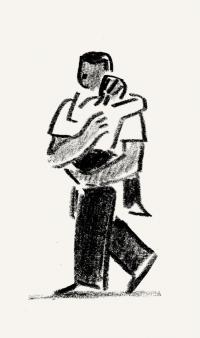
She handed her to me. Nyibol hooked her arms around my neck, rested her cheek on my shoulder, and we set out for the clinic, walking along the main road.
“Don’t drop me,” she teased.
“I will drop myself first,” I said, and felt her chest move in a small, sleepy laugh.
Mothers and babies crowded the bench outside the clinic, spilling into the dust where flies stitched slow patterns over their bare legs. Inside, a ceiling fan droned overhead, spreading the smell of sweat and disinfectant around the room. On the wall, a smiling cartoon child pointed at a tap and advised us to wash our hands. But the tap outside was dry; someone had wrapped a plastic bag around it like a bandage.
Nyibol leaned against me and slept with a heat I did not like. Every few minutes she woke enough to whisper, “Biscuit, Baba.” I promised her a biscuit, though the change in my pocket would get us home only if we were thrifty, or if the conductor found it in his heart to spare us the fare. To distract her, I counted the fan blades as they turned and made mistakes on purpose until she giggled.
The clinical officer saw us at last. He listened to her chest, frowned, tapped figures into a calculator, pushed syrup and tablets across the desk, said the word infection as if it were a full explanation. He told us to come back if there was no improvement.
Nyibol asked him, “Will this medicine make me taller?”
He blinked and said, “Maybe.”
She looked at me and said softly, “Then give me two.”
There were several such visits after that. Different clinics, different colors of syrup, one antibiotic, then another. Each bill seemed small under the clinic light, just a number on a slip, but when it reached the house it grew teeth.
At work, salaries had begun arriving late in earnest. Before, the delay had been an irritation. Then it became our climate. People came to the office because not coming would erase them from the payroll entirely, and because a desk, however useless, still gives a man a shape and a place to rest his elbows. We borrowed from one another in small, recurring amounts, many a loan repaid only by taking another, until no one could say where the debt began or ended. We joked bitterly about forming a savings group for our debts. Our laughter was short and sharp in the dry office air.
My supervisor was called Mr. Keror. He addressed every problem as if it were a fretful child one could distract with sweets.
“Be patient,” he said whenever the topic of salary was raised. “These are transitional difficulties. Even the arrears are being processed.”
Processed by whom, into what, and on which planet, he never explained. My colleagues said his heart beat in per diem.
One afternoon, after the mood of the office had gone soft with heat and hunger and the photocopier had given up before the rest of us, I said, “Sir, people are borrowing transport just to come and sit here unpaid. At some point there is no sense to the arrangement.”
He looked at me over his glasses, weighing whether my words were a complaint or an ideology. “You are becoming conspiratorial, Malak.”
“Yes, sir. It is cheaper than food.”
A few of the men snorted. Mr. Keror pretended not to hear. “It is understandable,” he said. “We are all under pressure.”
The injustice of that we are all nearly blinded me. He had a government vehicle, imported shoes that never met dust, and a per diem history that could have paid my rent for a year. If pressure had ever touched him, it had left no mark.
At home one evening, after our third visit to the clinic, Abuk was crouched by the charcoal stove, blowing through a metal pipe until the coals glowed like small, angry eyes. The pot held thin kisra batter and garlic; the smell was honest but not generous. We had no meat. Nyibol was asleep before full dark, one fist near her mouth, lashes stuck together with sweat. Abuk brushed the hair from her forehead with the back of her knuckles and left her hand there a moment longer than necessary.
“What did they say?” Abuk asked without looking up.
“The same.”
“There is always the same in your office,” she said.
“There is also no salary in my office.”
“And there is no child treatment in this house.”
Her voice was flat, cut clean of drama. That frightened me more than anger.
“We went to the clinic,” I said. “They gave medicine.”
“Medicine for what?”
“They said it was malarial infection again.”
She looked back at me. “Again? That’s what they told you?”
“What else am I supposed to think?”
“That it’s worse than malaria.” Her voice stayed low, but her hand tightened around the cup she was washing. “I hear her breathing at night. The cough. The way her chest rattles. Malaria doesn’t sound like that.”
“They gave her tablets.”
“Tablets don’t make them right.” She turned toward me. “She is getting thinner. She cannot sleep without waking up gasping. You see her in the daylight and tell yourself she is all right. I am beside her when she cannot breathe.”
I had no answer for that.
When the fever came, there was another sound, deeper in the chest, a small animal turning over in dry leaves. At night I would listen to that sound and then to the silence after it stopped, lying rigid until it began again.
The following Tuesday, we took Nyibol to the teaching hospital. A woman from church had told us that a good pediatrician saw patients there on Tuesdays, and we held on to that: If we arrived early enough, if the electricity stayed on, and if God looked our way, perhaps the doctor would see her. We reached the hospital before sunrise and still found ourselves already late in relation to human need. Mothers sat on kangas in the courtyard, wrapped in sleep and worry. Children cried, slept, vomited, watched the sky. A man sold tea and boiled eggs from a plastic bucket, moving through the crowd calling, “Strong tea, strong heart.”
Nyibol perked up at the sight of the eggs. “Are those hospital eggs?” she asked.
“They cure everything,” I said.
“Even your bad jokes?” Abuk added.
“Inshallah,” I said.
Nyibol’s laugh caught in her chest and broke into a rough cough. Abuk flinched, rubbed her back, then took the small Bible from her bag and held it shut between both hands.
We waited through the morning. Nyibol fell asleep on Abuk’s lap, woke to ask for water, and slept again before the doctor called us in.
The doctor, a young man, listened, asked questions, examined, listened again.
“She needs more evaluation,” he said.
“For what?” Abuk asked.
He hesitated. “It may be her heart.”
“There is medicine?” I asked.
“Maybe for now,” he said. “But she needs scans, proper assessment.”
“Here?” I said.
“If you have the means,” the doctor said, “take her to Nairobi.”
Nyibol looked up from the bench. Her feet hung above the floor. “Where’s Nairobi?”
“It’s far,” I said.
“Past the lions?”
The doctor smiled. “Past the lions.”
“Good.” Nyibol rubbed her nose. “I don’t want them hearing me cough.”
The doctor looked at the referral paper. He wrote a few lines, then handed it to Abuk.
“Nairobi has doctors who can do more tests,” he said. “It doesn’t mean the worst. It means she needs to be seen there.”
Abuk folded the paper and placed it inside the clear plastic cover of her Bible.
“We’ll go,” she said.
“Go as soon as you can,” the doctor said.
I looked at the paper. “We don’t know what it’ll cost.”
“Then we’ll ask,” Abuk said.
“And if we can’t pay?”
“Don’t say that.”
“I’m not saying we shouldn’t go.”
“You’re saying it as if we’ve already failed.”
“I’m saying we need to know.”
Nyibol looked at us. “Are you fighting?”
“No, baby.” Abuk pulled her close and kissed her hair. “We’re not fighting.”
“Then why are you talking like that?”
The doctor stood and gathered his things. “Parents can get scared,” he said. “Sometimes they speak too loudly when they’re scared.”
“I’m scared too,” Nyibol said.
Abuk held her close. “I know.”
“Of Nairobi?”
Nyibol shook her head. “Of numbers.”
Abuk laughed once. “Numbers?”
“Eight.” Nyibol drew it in the air. “It looks like it’s choking.”
The doctor smiled. “I can see that.”
Nyibol looked at me. “See?”
“You’re right,” I said.
The doctor picked up his bag and went to the door. He stopped there.
“I’m sorry,” he said. “I know this is hard.” He looked at Abuk, then at me. “Ask at the district office about referral support. They may help with transport.”
“Thank you,” Abuk said.
“Bring her back if the coughing gets worse,” he said. “Any time.”
After he left, no one spoke. Abuk kept her hand on Nyibol’s shoulder.
“We’ll ask tomorrow,” I said.
She looked at me. “We’ll ask tonight if we have to.”
Abuk sold her collection of earrings. “They pull my ears down anyway,” she said.
I sold my computer, my Egyptian secondhand suits, a watch that rarely kept exact time but looked respectable on my wrist and had once impressed Mr. Keror.
When I came home without it, Nyibol took my bare wrist in her small hand and said, “Now you can never be late.”
We borrowed from family, then from people who became close to us because we owed them money. Being just nine, Nyibol was spared much of what debt did to adults: the fear, the pleading, the calculations that never ended. She asked whether lions walked in the streets of Nairobi, whether the airplanes there had toilets, whether we could live inside the hospital if it had air-conditioning.
Once, she asked, “Do doctors in Kenya give you sweets before injections?”
“I heard they do,” I said. “Maybe even two if you cry loudly.”
She considered that seriously.
At night, as Nyibol slept, Abuk spread papers on the mat between us. Referral letter. Clinic cards. Receipts curling at the edges. A passport application half-done, my photograph staring up with an expression I did not recognize. The room was lit by one rechargeable lamp so dim it made everything look tired and older than it was.
Outside, a radio in the neighbor’s yard played a slow love song.
“How much exactly is left?” she asked.
I named the figure.
“And from your office?”
“Nothing yet.”
“Nothing or maybe?”
“Nothing today.”
Her eyes lifted to mine. “You are speaking around things.”
“There may be some allowance released soon,” I said.
“What does that mean?”
“It means there is talk of workshop funds.”
“Your salary or some other people’s money?” she asked, watching me carefully.
“Why are you asking like that?”
“Because I know your face when you are looking at a road and pretending you are not. It is the same face you make when you tell Nyibol that injections do not hurt.”
I tried to joke. “Sometimes roads come and stand in front of you. What can a man do?”
“Turn around,” she said. “Or close his eyes.”
“I said there was no road.”
She held my gaze a long moment, then sighed and leaned her shoulder against mine.
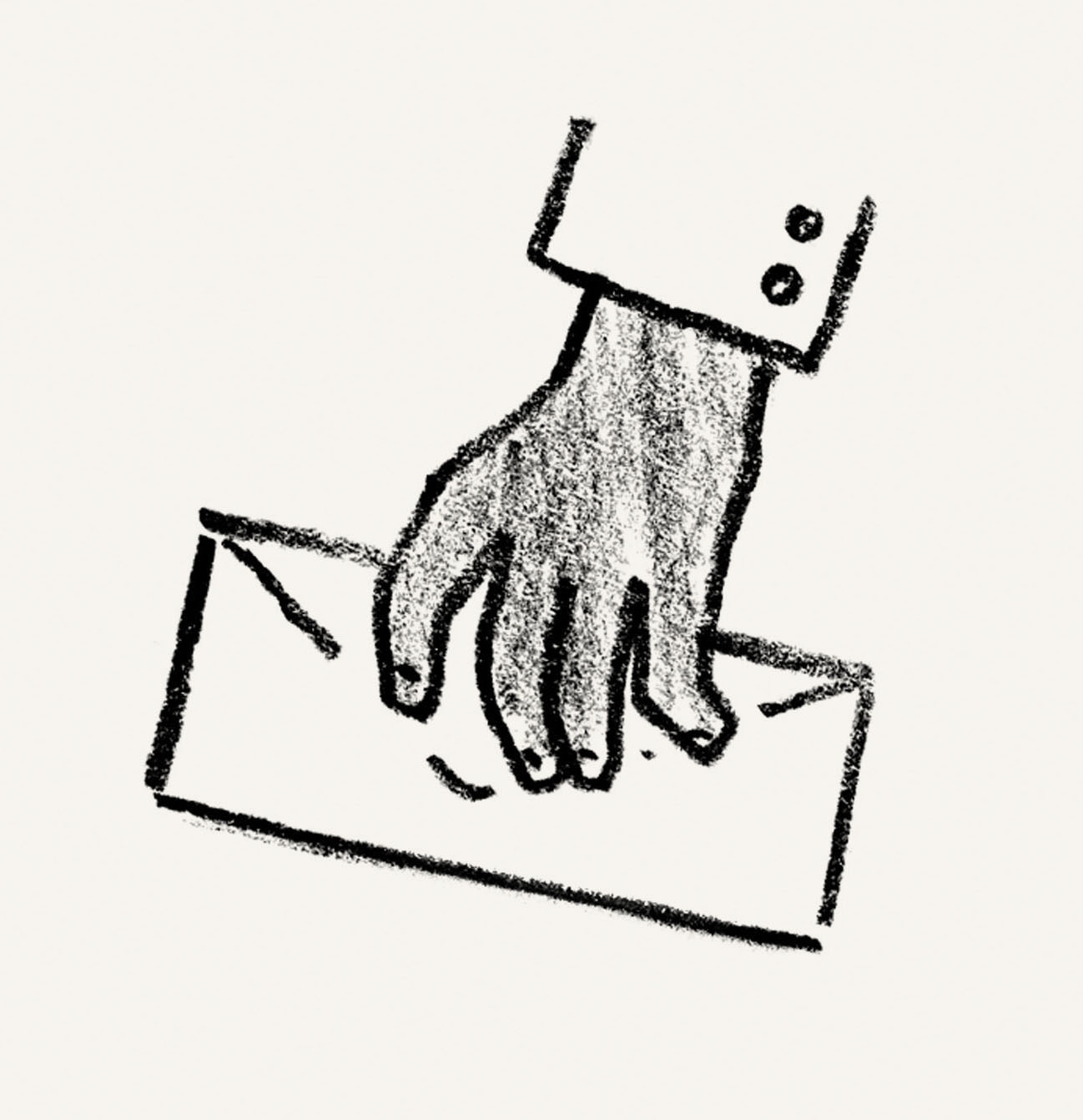
I went to the office early, while the streets were still quiet. The cashbox was where it had always been, and I sat for a while looking at it. I sharpened a pencil, straightened the papers, opened the ledger, and counted the notes. I prepared two envelopes and wrote the names carefully. Then I checked the total. One envelope held enough to get us to the border, pay for the papers, buy medicine for the road, and cover an initial hospital visit, though we would likely need more money for treatment.
I took one envelope and slid it into my bag beneath old memos. The sound of paper against paper was very small. I then altered the figures in the ledger—not expertly, but enough, I thought, to create a delay. Three days. Five at most. By then some cousin’s promise might harden into money. Some church pledge might come through. Some salary release might stop being rumor. I told myself I was borrowing from big people who had been borrowing from us for years.
Mr. Keror arrived late and nodded at the envelopes without counting them.
“When we all pull together, the institution moves.”
“Yes, sir,” I said.
I went home early under noon heat. Abuk was sitting on the mat with the passport forms spread before her. Nyibol slept beside her, one arm over her head.
I placed the envelope between us.
“What is this?”
“Money.”
“I can see it is money.”
“We should start packing now.”
“From where?”
“It came through the office.”
“In what way?”
I had prepared phrases on the walk home—routine adjustment, advance against arrears, workshop facilitation—but none of them survived her voice.
“I can replace it soon,” I said.
“Replace it?”
“I only took what was sitting. The accounts can be adjusted.”
“You took.”
“Listen to me.”
“No. You listen to yourself. You said there was no road,” she said.
“There was no road. Then this came.”
“This was another person’s money.”
“It is everyone’s money,” I said. “Money that managers and ministers pocket daily. If I don’t take it, it will feed their tires, their mistresses, their gym boys.”
“Return it,” she said.
“We cannot.”
“You can.”
“We need to move now. Every day matters.”
“And if they find out?”
“I will put it back before they do.”
“You have brought shame into our lives,” she said, her voice thick behind her raised finger.
Nyibol woke. “Water,” she said.
Abuk knelt and held the cup to her mouth. The child drank and smiled at us both, uncertainly.
The next day we set out before dawn to chase papers. Nyibol wrapped her arms around my neck and sang a hoarse little song about airplanes that Abuk had taught her.
At the passport office a clerk looked at our forms and said one photograph was the wrong size.
“Can it not be cut?” Abuk asked.
“This is not a barbershop,” he said, sliding the papers back with a bored flick.
By late afternoon we had accomplished only part of what the morning had promised.
Three days later, Mr. Keror called me into his office after lunch. The accountant was there, and another man from upper management whose neckties arrived before he did. On the desk lay the cashbook, open, my handwriting lined up on the page.
“There is a discrepancy,” Mr. Keror said.
“What kind?” I asked.
“The kind made of missing money,” the accountant said.
“There must be some error in the counting,” I said.
“It has been checked,” the other man said. His tie was red with small yellow stars.
There are moments when confession still has some dignity. I felt that moment pass by like a bus I could not afford to board. I watched it go and told myself another would come. I tried instead to explain the envelopes, the sequence of preparation, the possibility that one packet had not been recorded in duplicate.
“Can the funds be produced now?” the necktie man asked.
“No,” I said.
The accountant clicked his tongue.
Mr. Keror folded his hands. “Then the matter is straightforward.”
“Sir, I can explain.”
“You can explain to the proper authorities.”
We borrowed from one another in small, recurring amounts, many a loan repaid only by taking another, until no one could say where the debt began or ended. We joked bitterly about forming a savings group for our debts. Our laughter was short and sharp in the dry office air.
They brought me to the visitors’ room at Juba Central Prison on the second day. Even there, away from the cell blocks, the place felt crowded. Voices carried from the yard, guards moved people along the concrete wall, and coils of barbed wire ran above it. Abuk came with Nyibol on her hip and a plastic bag with bread and water.
Nyibol was still wearing the yellow dress. She put her fingers through the opening in the partition, and I held them.
“They checked the cashbox?” Abuk asked.
“Yes.”
“And the ledger?”
“That too. They know I took the money.”
“I told you they would check.”
“I know.”
Nyibol looked at me. “Baba, are they keeping you here for taking the money?”
“Yes.”
“When are you coming home?”
“I don’t know yet.” I rubbed her fingers between mine. “Nyibol, how are you feeling?”
She shrugged. “Tired.”
“Your chest?”
“It still hurts.”
Abuk shifted her higher on her hip. “She coughed most of the night.”
“Did you get the medicine?”
“Some. Not all of it.”
She put the plastic bag on the ledge between us. “Bread, cheese, apples. You need to eat.”
“What about the papers?”
“I run from police to office to hospital and still you ask about papers.”
“I am asking because—”
“Because if she reaches Nairobi then maybe what you took becomes something else?”
“Abuk,” I said, “the money under the wrappers. Use it.”
“You are a fool,” she said finally. “A complete fool.” The guard muttered that our time was short.
Nyibol began to cough, a hard little cough that folded her small body in half. Abuk bent with her, one hand under the ribs, counting the breaths the way nurses had shown her.
“Take her to the doctor today,” I said. “Please.”
“With what?”
“The money.”
“And after? When they search the house? When they ask why your wife still has the notes you stole?”
“They won’t.”
“You still speak as if the world obeys your hope.”
The guards took them away. Abuk’s yellow dress moved down the corridor, Nyibol’s head resting in the familiar place between her mother’s neck and shoulder.
The case moved quickly through the High Court in Juba. The justice sat above us while the public prosecution attorney read the charge: criminal breach of trust by a public servant. The cash had been in my care, I had taken it, and the ledger showed how much was missing. I did not deny any of that. I told the court my salary had gone unpaid for months, that Nyibol was sick, that I had taken only enough to get her treatment and meant to put every pound back. Those things had seemed enormous when I opened the cashbox. In court they became reasons I had given myself for taking money that was not mine. My lawyer asked that the justice consider the unpaid wages, Nyibol’s illness, my record at the office, and the fact that I had not tried to hide what I had done. The prosecution answered that a public clerk entrusted with government money does not decide when his need permits him to take it. He recommended a prison term that would deter other employees. That was when I understood what they wanted from the case. Returning the money would not be enough. They wanted other clerks to hear what happened to me. I kept thinking of officials accused of losing sums larger than I could earn in several lifetimes, people who still had drivers waiting outside government buildings. When the court clerk called my name again, I knew what to expect.
Abuk came again before they transferred me.
“Where is Nyibol?” I asked before I could greet her.
“At the clinic,” she said. “A church woman took her. They collected something.” She did not say how much. “She told the nurse you are in another town for work. It was easier than explaining.”
“How is she?” I said.
“Still arguing with the thermometer,” Abuk said. “She says it is lying.”
For a moment I could almost see Nyibol making that face, suspicious of the thermometer, suspicious of any object with numbers on it.
“We may move from the house.”
“Why?”
“Rent,” she said. “And neighbors ogling and gossiping.”
“Sell the TV,” I said.
“We sold it already,” she said. “You lugged it to the market.” She gave a small, tired smile. “There may be help to travel.”
“To Nairobi?”
“Maybe. Some people from church. A cousin of a cousin who works with buses. They say if we can add something, there might be a place.”
“With who?”
“People. The kind who say ‘God willing’ when they talk about money.” She looked at me steadily. “If there is a road, I will go.”
“If a road opens, you must go,” I said.
Abuk’s fingers curled around the edge of the partition. For a moment I thought she might reach through it. Instead she let go.
A year later, having completed my sentence, I stepped into the sun carrying a plastic bag with my shirt and old papers folded flat. I had thought someone might be waiting.
There was nobody.
The guard at the gate smiled and said, “Move on, brother.”
The road outside was the same road I had watched through gaps in the buildings. Yet from inside, it had looked like part of some larger life. Now it was only dust, heat, and traffic.
I tried the numbers I had. Abuk’s cousin had moved. My old landlord’s number did not go through. My office line did. A polished male voice answered in English. I hung up without speaking.
By then the heat had climbed. Along the roadside, men were digging a drainage ditch. One of them straightened up and I knew him before I remembered where I stood.
“Lazarus,” I said.
He stared, shovel hanging in his hand. Then he smiled slowly. “Malak?”
He came out of the ditch. We shook hands and let go quickly, because neither of us knew what kind of embrace fits a man just out of prison.
“They released you,” he said.
“This morning.”
He clicked his tongue. “Eh, you have eaten?”
“Tea.”
“That is not eating.”
He got a break from his foreman and took me to a stall under blue tarpaulin where a girl was frying mandazi in oil so dark it looked offended. We ate standing up, mandazi and beans and boiled eggs split with a spoon.
“You heard anything about Abuk?” I asked.
He chewed slowly. “I heard many things. You know this city.” He looked at me for a moment, chewing, then went on: “I heard she left the house after your case. Landlord wanted money. Your people were not helping. Some church women took her somewhere.”
“With Nyibol?”
“With the child, yes.”
The relief at hearing my daughter mentioned hit me so hard I had to set down the egg.
“Where did they go?”
He spread his fingers. “Brother, if I knew that, would I be making ditches?”
I said nothing.
“Sorry,” he said. “I mean nobody has a full story.”
He offered me a place to sleep. “It is small. Very small. My wife will complain with respect.”
That afternoon I went first to Hai Referendum. I turned into our old lane and knew before I reached the gate that the house had changed hands. The bougainvillea Abuk had tried to coax along the wall was gone. The door had been painted bright blue. A new padlock hung on the gate.
A woman came from the side yard carrying a basin of washed clothes. A baby was tied to her back in cloth printed with yellow birds, asleep with one cheek pressed between her shoulder blades. I did not recognize the woman, but she knew me, or knew enough of me to look embarrassed on my behalf.
“I am sorry,” she said.
She stood there with the basin balanced against her hip, waiting for me to say something kind that would make the business less strange. Behind her, somebody had hung small shirts on the line where Abuk used to dry her headscarves. There was a pot blackening on the same three stones by the wall, and a spoon laid across it in the familiar way, as if the house had gone on practicing its old manners after we left it. The baby gave a little cough in its sleep. The woman bounced her gently without looking down.
It was not that I thought the house had been waiting for me. Still, it unsettled me to see another family arranged inside it so quickly, their laundry, their water bucket, their way of making room for themselves. A house does not keep faith with anybody. It takes the next body that enters, the next pot on the fire, the next child waking up at night. But I knew the crack in the courtyard wall, the place where rainwater gathered by the back step, the door that stuck in the wet season. I knew where Abuk had kept the salt. Seeing someone else reach for those things made the years between then and now feel both very long and not long at all.
“I did not know you would come,” the woman said.
“Neither did I.”
She gave a small nod and said, “Go to the church in Jebel and ask for Mama Joyce. She knows about Abuk.”
Mama Joyce was the sort of person who became important without anyone deciding to make her so. She sold onions near the church, but she also knew who had arrived in the neighborhood, who had disappeared, who was sick, who had borrowed money and called it something else. People brought her news because she had a patient way of receiving it, though she did not always give it back gently. She had known Abuk through all the years when a person could disappear from one part of Juba and turn up in another, carrying a child, a bag, or nothing at all.
When I found her, she was sitting behind her onions on a low stool, one leg stretched out in front of her and wrapped in cloth. Her eyes were clouded, but they moved toward me at once.
“Yes, I knew your wife,” she said before I had fully introduced myself. “I know where you were. Sit.”
There was no chair. I sat on an upturned crate beside her.
She said the child had been breathing badly, that Abuk carried her like fire from clinic to church to house and back again, always with the same little bundle against her chest, always looking as if she had not slept but would not admit it. When they lost the house, Mama Joyce said, Abuk came to her first. Not because Mama Joyce had money, which she did not, but because she knew which women kept spare mattresses, which ones had cousins with room in Jebel, which ones would ask too many questions, and which ones would simply open the door.
“I told her to come here,” Mama Joyce said. “The church had a room for women sometimes. Not a room you would want, but a room.”
“Did she come?”
“She came. She always went where the child could breathe.”
Mama Joyce pulled an onion from the pile, rubbed the dirt from its skin with her thumb, and held it up as if examining evidence.
“Your wife was proud,” she said. “Do not go to her making explanations.”
“I am not making explanations.”
“No?” Her bad eyes narrowed toward me. “Then you have come very far to ask questions.”
I did not answer.
“She left Juba nearly a year ago,” Mama Joyce said. “There was a contact through the church, a woman who knew somebody taking people toward the border. First they went that way. After that, Nairobi, maybe. Nobody can tell you a clean story once people start moving.”
“With Nyibol?”
“Of course with Nyibol. What kind of question is that?”
I looked down at the ground between us.
“Was the child still alive?”
Mama Joyce stopped rubbing the onion. For a moment the churchyard carried on around us, women gathering under the neem tree with worn Bibles and handbags polished by use, children running between their knees, a motorcycle sputtering awake beyond the gate, somebody laughing too loudly at something that was not very funny.
“Alive when they left,” she said. “Alive enough for Abuk to carry her. That is what I know.”
“Did Abuk leave any message?”
Mama Joyce’s face changed slightly. Not softer exactly. More careful.
“She said if you came, you should first become steady.”
“What does that mean?”
“That is not my business.”
I nodded.
“She was tired,” Mama Joyce said. “That is what I can tell you.”
Then she set the onion back on the pile and called to a woman who had been waiting nearby, asking how many kilos she wanted.
Lazarus took me that evening to his place in Gudele. It was a row of rooms around a dirt courtyard with one shared tap and two mango trees. His wife Sifa greeted me, set out water to wash, and told him in front of me that next time he should bring home a goat if he intended to add another mouth. Then she gave me cassava, greens, and a piece of tilapia saved from their own meal.
After the children slept, Lazarus and I sat in the yard with a lantern between us.
“So?” he said.
“They left Juba.”
“That is something.”
In the morning Sifa gave me water in a yellow basin and a cake of soap silvered at the corners from use. She was dressed already, her skirt tied up for work and her hair wrapped in a scarf. She spoke while she moved around the room, folding a cloth, checking the pot, looking for something she had misplaced.
“There is a man in Nilotia who wants somebody to write invoices in school English,” she said. “He buys supplies for building sites. Cement, nails, pipes. He needs a person who can make the papers clear.”
“Does he pay?”
“He pays when he has been paid,” Sifa said. “But he buys tea in the morning, and he does not beat people. That is something.”
The man was known as Pac. He sold spare parts from a narrow shop beside the road. Belts, fan blades, cracked headlights, and other parts hung from wires above the counter. He wore a cream shirt with the sleeves rolled to the same height on both arms. His fingernails were clean enough to suggest he spent more time handling money than machinery.
When Sifa brought me to him, he was picking at the label on a bottle of engine oil with a toothpick.
“This is him?” he asked.
“This is a man who can write,” Sifa said.
Pac looked at me, then at my hands.
“Can he write numbers so they add up?”
“He can write them so nobody will know whether they add up,” Sifa said.
Pac considered this.
“Good,” he said. “That is closer to what I need. You can write English properly?”
“Yes.”
“Excel?”
“I know it.”
He studied me, then said, “I do not fear thieves. A thief already knows shame. It is the clean-faced men you must fear.”
That afternoon I wrote sample invoices behind his glass counter. By evening he gave me enough money for a meal and told me to come back the next day.
“Not salary,” he said. “Transport.”
The rhythm of those evenings began to hold me. Work by day. Return at dusk with bread or sugar when I could. Wash at the tap. Sit with Lazarus and Sifa in the yard while the neighborhood settled into generators, radios, babies, and arguments.
I gave Sifa a share from what Pac paid me. She refused once, then accepted.
“This is for flour,” she said. “Not because we are charging you hotel.”
“I know.”
“You do not know,” she said. “Men never know. They think cassava appears from steam.”
Lazarus laughed and ducked before she could hit him with the lentil tray.
It was not that I thought the house had been waiting for me. Still, it unsettled me to see another family arranged inside it so quickly, their laundry, their water bucket, their way of making room for themselves. A house does not keep faith with anybody. It takes the next body that enters, the next pot on the fire, the next child waking up at night.
Pac noticed before I spoke of it.
“Your face these days is already halfway to Kenya,” he said.
By then I had enough money for the journey. Lazarus found a contact of a contact in Eastleigh, a woman who rented beds to whoever arrived with cash and a story. There was no address, only directions: a mosque nearby, turn left at the pharmacy, right at the alley with roast meat.
The truck to Nimule smelled of fuel, cigarettes, and old socks. Drivers argued over music, taxes, and checkpoints. At the border everything slowed into lines. Mothers with children asleep on their shoulders. Students clutching files. People with folded papers gone soft at the edges. A pastor in a shiny suit prayed loudly by the kiosk; behind him, another man sold charms that promised the same protection.
Eastleigh was awake. Fabric shops lit like small stages. Men pushing handcarts. Women bargaining over sacks of rice. Somali voices, Swahili signs, South Sudanese faces that looked away too quickly. I found the lodging after circling the same block twice and paid for three nights.
In the morning I began with hospitals and offices, faith and paperwork woven together. At one hospital they asked for a patient number and full names. At another the receptionist waved me aside before I finished speaking. At the third office, a woman in a creased blouse, with red-rimmed eyes and a name tag that said Mwende, asked me to follow her inside. She said she had overheard my conversation with the receptionist.
“The child was very sick by the time they arrived,” she said. “There was surgery.”
“Did the child survive?”
She looked down at the papers in her hand, then back at me. “No,” she said. She gave the month and the day. I counted backward and knew exactly where I had been that week. Still inside.
“People who come here alone sometimes tell the nurses what happened to them,” she said. “Who hurt them, who threatened them, where they have been sleeping, whether someone has taken their money or documents, whether they are afraid to go back. Other things they do not tell us. They worry about the police, immigration, relatives back home, or what will happen if the wrong person finds out they asked for help. We do not force them to talk.”
She sat behind her desk and leaned forward. “Your wife said very little.”
She searched through a file and copied a phone number onto a scrap of paper.
“She did not say I could share it,” she said. “I am sharing it because grief has already crossed the line.”
I bought airtime and called beneath a jacaranda tree while traffic pressed by and schoolchildren spilled from a nearby gate. The phone was off. I called again. Off. The next morning it rang.
“Hello? Who is this?”
“Malak.”
“At least you found airtime,” she said.
“I am in Nairobi.”
“Why?” she asked.
“I was looking for you.”
“You found me.”
She was quiet a long breath. Then she told me to come the next day to a tea place near the old bus office in Eastleigh.
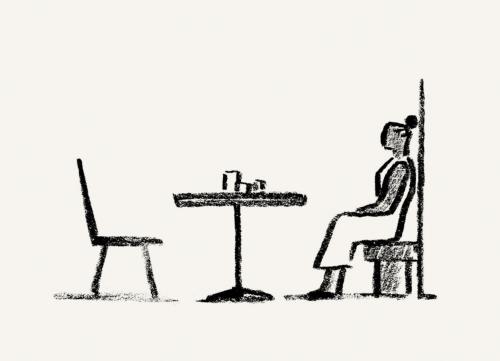
She was already there when I arrived, sitting with her back to the wall.
She was thinner. The softness around her mouth had gone. There was a small burn scar on one forearm I did not recognize. She wore a gray dress and flat shoes with cracked edges. Her hair was pulled back tight, the way she tied it on days when she needed her thoughts to stay sharp.
We sat in a small corner, our knees almost touching. “Nyibol died asking for water,” Abuk said.
The tea boy came. She asked for tea without milk.
“She had asked for water before,” Abuk went on. “But that time I knew from how she said it.”
The street kept moving. A man selling belts brushed past. Someone laughed at another table. A bus honked and pulled away. A loudspeaker somewhere played a worship song about victory; the world did not seem to notice us.
“She had your frown,” Abuk said. “Even at the end.”
For a second the corner of her mouth moved toward a smile.
“I should have been there,” I said.
“Yes,” she said.
She told me Nyibol was buried here. She could not carry the child’s body back across all those roads alone. She said the cemetery’s name, the section, the tree that stood nearby.
“Can I go see her?” I asked.
“You can go,” she said. “You are her father.”
She set down her glass and watched a matatu reverse with too much noise.
“I did not send for you,” she said.
“I know.”
“When she died,” Abuk said, “I looked at the doorway and thought of you. I thought if you came in I would tell you to leave. Then I thought if you came in I would tell you to stay. After that I stopped imagining it.”
She said people wanted the story in a shape they could use: Man steals, child suffers, lessons learned.
“What do you want from me now?” she asked.
“I wanted to find you,” I said.
“You’ve found me.”
“Yes.”
“And after?”
“I do not know,” I said.
“That is at least honest,” she said.
I looked at her. “How are you?”
She was quiet for a moment.
“I live with what happened.”
Buses belched smoke into the air. A waiter wiped a neighboring table and stacked empty cups. The tea between us cooled. At last she reached into her bag and slid a folded paper across the table.
“I brought this,” she said.
It was the hospital death summary. Nyibol’s name. Age. Date. Medical terms in English, exact and useless. At the bottom a hurried signature and a rubber stamp.
“My girl,” I said under my breath.
Abuk looked at the paper too. “Nyibol liked the Nairobi rain,” she said. “When it hit the window, she said it sounded like beans.” Her finger traced a crease in the page. “I tell myself she is wherever it rains often.”
She checked the time on her phone and pushed her chair back. “I have to go.”
“Can I see you again?” I asked.
“I do not know,” she said.
I stood too quickly and nearly tipped the table. She steadied her glass with two fingers, the same small gesture she used to stop Nyibol’s cup from falling.
“Thank you for meeting me,” I said.
She gave a small nod. Then she crossed the road between buses and handcarts and disappeared into the crowd.
I went to the cemetery the next day. A woman outside the gate sold me flowers, though I knew flowers were a city habit and not ours. She tied them with string anyway, leaves bruising under her thumbs. The groundsman checked the paper, nodded once, and pointed me between rows of graves.
Some were freshly painted, names bright. Others had already begun to lean into neglect, stones tilting, letters eaten by weather. Trees at the edges held the heat in their leaves and let it down slowly.
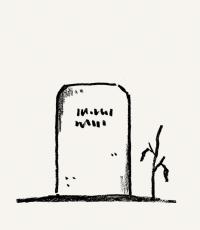
Nyibol’s grave was small. A stone with her name and the dates. Hard-packed earth around it. Someone had planted something there and it had failed. A brittle stem, two dry leaves, nothing more.
I crouched and put my hand on the stone and felt only heat. Just sun on rock. Beside the grave a little toy car was half-buried, cheap plastic, one wheel missing. For a moment I saw her on the mat at home, pushing a bottle cap along the floor and calling it a bus to Nairobi, making motor sounds through her nose when it was blocked. Whether another child had left the car there or Abuk had placed it there, I did not know. It was wrong and right at the same time that the car could go nowhere.
I said Nyibol’s name once. Then again. The sound of it felt smaller in the open air than it had in our rooms, when she would answer, “Yes, Baba?” or “I am here,” or “Bring biscuit.”
I stayed until the groundsman passed by again and gave me the look he gave all lingerers. On the way out I left the flowers.
I visited Nyibol every day for a month. I sat on the low concrete border and talked to her in my head about small things: the way Nairobi rain did sound like beans on the tin roof near my lodging. The matatus had names painted on them like jokes. Some doctors did give sweets before injections. Nyibol frowned at the ones who didn’t. And their eyes were sharper than injections.
Once, crossing a produce market with a sack in arm, Abuk saw me. Our paths bent toward each other. She lifted her chin and kept walking.
“So you found what you went to find,” Pac said after I had returned to Juba. When I did not answer, he nodded and handed me the daybook.
One evening after rain, when the yard smelled of wet dust and the mango leaves were still dripping, Sifa found the death summary tucked into the lining of my bag.
“You should put this somewhere proper,” she said.
“There is no proper place,” I said.
“Then make one.”
I have not called Abuk in many months. Sometimes I think I will go back to Nairobi one day, if only to sit by the small stone and tell Nyibol the stories she missed—the joke about government flu, the clerk who said the office was not a barbershop, how she once said eight looked like it was choking.
I imagine her rolling her eyes, saying, “I know, Baba.”
Most days I rise, wash at the tap, walk to Nilotia, and write receipts in a hand that looks steadier than the life behind it. Her name is not in any of the ledgers, but it is the weight that keeps my letters straight.

Agnes Lee is an illustrator living in Portland, Oregon.