Image
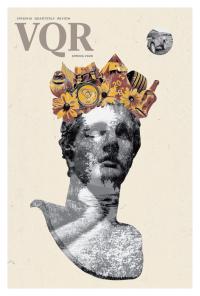

The dead, the missing, harbingers, the unfulfilled: They’re all here. We conceived this issue around a story that ultimately never materialized, though, fittingly, its anticipated presence attracted other pieces that fell into place—from the nervy to the mournful to the bizarre. The future barged in; rather, we began to recognize the ways in which anxiety over the future complements the emotional frequencies of conventional ghost stories. An agitated suspicion of Big Tech dominates this subset of the larger theme—in particular, over the woefully underregulated mission to create machines that think for themselves. I’m certainly haunted by the pace at which artificial intelligence is accelerating to ensure human obsolescence in several professional and creative endeavors. It’s a real threat. How long until this storyline of profit and progress imitates, in the darkest fashion, the most far-fetched art? The fun of science fiction used to be the ways in which plausibility could be stretched without breaking. Now you can watch proto-Terminator robots run obstacle courses or throw roundhouse kicks at each other, or read about drones being trained to plan and execute their own strategic strikes. At the risk of sounding like a Luddite, does any of this bode well? The future is the sound of footsteps on the floorboards upstairs. Maybe you know who they belong to; maybe you don’t. And maybe you recognize them as your own.
In this issue, we’ve collected different takes on ways of being haunted. In her standout essay, journalist Louise Bokkenheuser digs up the case file detailing her mother’s mysterious death. Louise was just a girl when her mother died from a fall in her building’s stairwell. Was she pushed? Did she jump? Would knowing offer any consolation? What good is a journalist’s training, a reporter’s cold discipline, when it comes to investigating such deep wounds?
To the extent that Bokkenheuser works to keep emotional aftershocks in check, photographer Alexey Yurenev seeks to evoke them and transform the distantly historical into something more visceral. Yurenev’s grandfather and great uncle both fought for the Soviet Union against the Nazis in World War II. His great uncle vanished during the war, and his grandfather enlisted a year before the age of mandatory conscription to search for him. He never did find him, and emerged from the war battle-scarred. Predictably, he never talked about it. For an insatiably curious grandson, finding a way to comprehend what his hero experienced became an obsession. But how to do this visually? Yurenev dug into family and state archives and headed to battlefield sites across Eastern Europe transposed with new conflicts. He used an early model of modern generative AI to process tens of thousands of archive images to recreate a palette of the uncanny that captures the hyper-sensory experience of the war. What he discovered was the machine’s tendency toward the grotesque, even after processing only quiet landscapes and unassuming portraits, thus revealing the ways in which technology and history can communicate in creatively serendipitous ways.
Elsewhere in the issue, we extend the conversation with technology further. Inaugurating a new interview column, associate editor Alexander Brock turns to ChatGPT to inquire who might be a good interview subject on the shortening shelf-life of speculative fiction. Querying the software turns into a conversation with the software, and ultimately into a thought experiment in self-awareness. He presses ChatGPT on where it sits in time, and whether it might be less a ghost in the machine than the ghost of the machine as we knew it. At turns funny and baffling, Brock’s interview corkscrews toward profound observations about the nature of the self, and whether that concept articulates a truth or obfuscates it.
Across these pages, the unreal stares back at us. Photographer Vik Muniz resurrects priceless relics lost in the 2018 fire that destroyed Brazil’s National Museum. Adam O. Davis turns to a horror classic for a close reading of our current age. Colin Dickey confronts the fact that his digital doppelgänger has been giving TED talks that never actually happened. In a pair of #VQRTrueStory columns, photographer Louie Palu riffs on the visual motif of whispers between members of the political class; and VQR publisher and executive editor Allison Wright discovers an accidental channel for buried grief. And in classic scary-story fashion, poet Traci Brimhall chases down the devil in a cycle of lyrical essays.
In fiction, Daniel Gumbiner, Shauna Seliy, and Naomi J. Williams construct plots laced with the inextricable specters of loved ones, where fear hums underneath cherishing. Poets Caylin Capra-Thomas, Robert Wood Lynn, Patrick Rosal, and Felicia Zamora provide work that channels the ancients, tunnels toward long-faded friendships, and uses language to frame the unspoken and unspeakable.
One poem in particular, Capra-Thomas’s “Reading The Machine in the Garden While Billy Mows the Lawn,” is punctuated with the sounds of death and violence disrupting a suburban backdrop where people and nature crash together. These noises get psychologically closer by the stanza. They provoke a feeling of being stalked, of ominous encroachment, of menace. In this way, her poem signals a national mood, fit for an issue built around remembrances of what has been lost and the fear of the unpredictable.
Some horrors never materialize; others we pray never will. Then there are the horrors we need to face.
— Paul Reyes